
What Are Real-Time Travel Alerts?
When planning or managing travel, especially for business, staying informed is key. Real-time travel alerts are immediate updates about events that can impact a journey as they happen.
Here’s a quick overview:
- What they are: Instant notifications about events that affect travel, like weather, security issues, or transit delays.
- How they differ: Unlike traditional travel advisories (which give general, periodic warnings), real-time alerts offer specific, dynamic information right now.
- Why they matter: They allow travelers and managers to react quickly, improve safety, and reduce travel disruptions.
For corporate travel managers, these alerts are a game-changer. Did you know that 29% of travel managers don’t know how long it would take to locate all their travelers in a crisis? And 57% of business travelers now agree that any destination could be "high-risk."
In today's fast-moving world, unexpected events can quickly turn a routine trip into a challenge. Real-time travel alerts provide the crucial information needed to make smart decisions. They help businesses protect their employees and ensure peace of mind. They turn reactive situations into opportunities for proactive safety.
From Static Advisories to Dynamic Alerts: The Evolution of Travel Safety
Remember the good old days when planning a trip meant just glancing at a government warning issued months ago? While those traditional travel advisories are still super important for getting the big picture, real-time travel alerts have truly changed the game when it comes to keeping travelers safe.
Think of traditional advisories, often shared by government bodies like the U.S. Department of State or Canada's Travel Advice and Advisories, as your essential guide. They give you a broad overview of what to expect in a country or region – general tips on health, safety, and security. They're usually updated periodically, maybe every 6 to 12 months, or when something major changes. These are fantastic for understanding the overall risk before you even pack your suitcase! We always recommend checking these resources before any international journey. You can learn about U.S. Travel Advisories and explore the International Travel Advisory map for comprehensive insights.
But here’s the thing: those general advisories can’t tell you about the sudden, unexpected events that pop up during your trip. That's where real-time travel alerts step in. They’re like having a personal safety radar, giving you super specific, dynamic information about incidents as they happen. This means travelers and their organizations get actionable details right when they need them most.
To really see the difference, let’s compare:
| Feature | Traditional Travel Advisories | Real-Time Travel Alerts |
|---|---|---|
| Speed | Periodic updates (monthly, quarterly, or as needed) | Immediate, as-it-happens notifications |
| Specificity | General country/region-level risks (e.g., crime, health status) | Specific incident details (e.g., specific road closure, flight delay, security incident in a particular neighborhood) |
| Delivery | Government websites, official publications | Mobile apps, SMS, email, web platforms, dedicated dashboards |
| Actionability | Pre-trip planning, general preparedness | Immediate decision-making, rerouting, seeking shelter, communication |
This shift from static information to dynamic communication makes us all much more proactive. Instead of just knowing a country has a "high crime rate," imagine getting an alert about a specific protest route to avoid, or a sudden airport closure that means you need to re-book your flight right away. This incredible precision and speed are what make real-time travel alerts an absolutely essential tool for today's travelers and the companies dedicated to their care.
What Triggers an Alert? Events That Impact Your Journey
So, what exactly prompts one of these timely real-time travel alerts? The short answer is: anything that can disrupt your travel plans or compromise your safety. We monitor a vast array of potential incidents, from the mundane to the catastrophic, to ensure our travelers are always informed.
Here are the primary types of events that trigger real-time travel alerts:
- Weather Events: This is perhaps the most common trigger. From severe thunderstorms causing flight delays, to blizzards shutting down highways, or dense fog impacting airport operations, weather can quickly turn a smooth journey into a chaotic one. Alerts can warn of impending conditions, provide updates on closures, or advise on alternative routes.
- Natural Disasters: Earthquakes, tsunamis, volcanic eruptions, floods, and wildfires can have devastating and immediate impacts on travel infrastructure and safety. Our alerts provide critical information on affected areas, evacuation routes, and potential long-term disruptions. We’ve even put together six tips for prepping for a natural disaster while away on business to help our travelers stay safe.
- Security Threats: This category covers a wide range, from general civil unrest and political demonstrations to more specific threats like terrorism alerts, active shooter situations, or increased crime in particular areas. These alerts often include advice on areas to avoid, security precautions to take, or instructions to shelter in place.
- Transit Disruptions: These are the everyday headaches that real-time travel alerts excel at mitigating. Think unexpected road closures due to accidents or construction, train delays, subway service changes, or airport operational issues. For instance, local transportation hubs like Port Authority Alerts and 511 systems (like 511NY or 511 SF Bay) are constantly updating on these matters. You can check for Transit Alerts in the Bay Area, for example, to see how granular these updates can be.
- Health Warnings: While less frequent, significant health events can trigger alerts. This includes outbreaks of infectious diseases (remember the Coronavirus pandemic?), major public health advisories, or even localized environmental health concerns. These alerts provide guidance on necessary precautions, medical resources, or travel restrictions.
- Planned Events: Sometimes, disruptions are entirely predictable but still require alerts. Large public gatherings, major sporting events, concerts, or even planned maintenance on infrastructure (like the I-87 Champlain Port of Entry overheight vehicle restriction we saw due to ongoing construction) can lead to significant traffic or transit changes. Alerts for these help travelers plan around anticipated congestion or closures.
The goal is always to provide timely, relevant, and actionable information, no matter the source of the disruption. By understanding what triggers these alerts, travelers can better appreciate their value in navigating an unpredictable world.
The Ecosystem of Real-Time Travel Alerts: Providers, Technology, and Trust
Have you ever wondered how those incredibly timely real-time travel alerts actually reach your phone or inbox? It's not magic, but it is a pretty impressive system! Delivering these vital updates is a complex, round-the-clock operation. It brings together incredible human expertise, smart technology, and careful data handling. Think of it as a vast, interconnected network, all working to keep you informed and safe, 24/7.

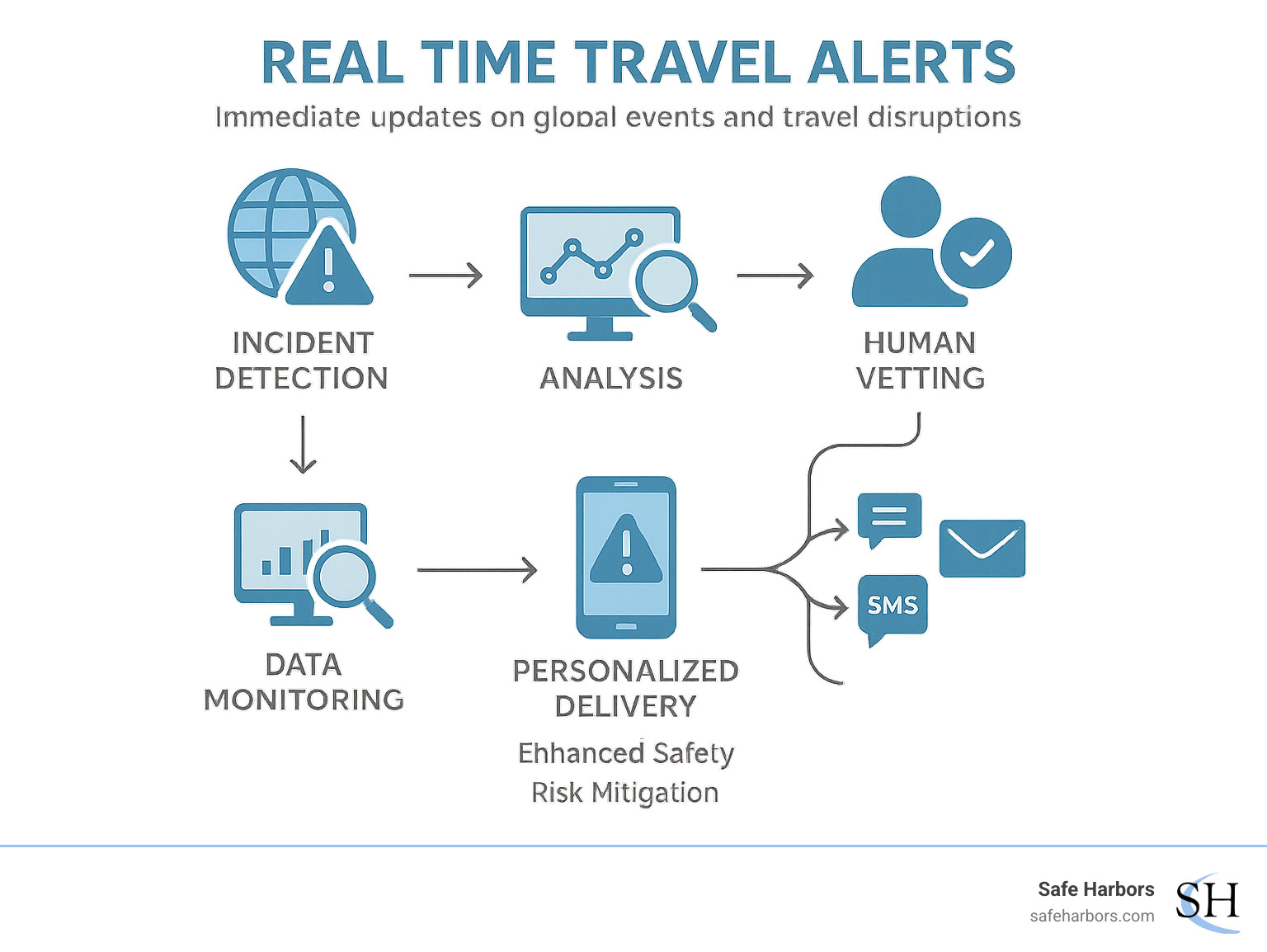
At the heart of this system is a constant flow of information. Expert analysts are always on duty, monitoring a huge number of sources—over 100,000, in some cases! This includes everything from breaking news and social media to official government warnings, local emergency service updates, and weather reports. Even some crowdsourced information gets a look. All this data pours in, gets filtered, carefully analyzed, and then, most importantly, is checked by real people. We know that some providers send out more than 34,000 real-time travel risk alerts every year. That's a lot of things that can happen while you're traveling! This careful process makes sure the alerts you get are correct, useful, and something you can act on, not just confusing noise.
How Real-Time Alerts Are Delivered
Many different groups help deliver these crucial alerts. Each plays a special part in keeping you in the loop.
First, government agencies often provide alerts for their own areas or for their citizens traveling abroad. While the U.S. Department of State's Travel Advisories might not be "real-time" in the instant sense, they're part of the bigger picture of travel safety information. Closer to home, local groups like the Port Authority of New York and New Jersey offer specific alerts for bridges, tunnels, airports (like JFK, Newark, and LGA), and transit lines. They often use social media like Twitter and Facebook to get quick updates out to everyone.
Then there are the local transit authorities. These folks are truly experts at providing real-time travel alerts for daily commutes. Think about apps that show live vehicle locations, like SEPTA's system maps, or services that send personalized email and text alerts for freeway issues, like Houston TranStar. Even smaller systems, like Santa Cruz METRO, offer estimated bus times and text tracking. They know that things like detours, traffic, and even weather can cause delays, and they work hard to keep you informed about those changes.
And finally, for businesses, there are corporate travel management teams, like ours at Safe Harbors! We take all these different streams of data and bring them together into a complete real-time travel alert system. Our solutions are designed specifically for corporate travelers. This means employees and their managers get important updates that are actually relevant to their exact trip and location, no matter where they are in the world.
The Technology Delivering Your Safety Updates
Behind every quick alert is some seriously smart technology. This tech makes sure those real-time travel alerts get to you fast and are custom just for you.
Mobile apps are often the first place these alerts show up. They give you instant push notifications, interactive maps, and all the details about what's going on. Many apps also include flight status updates and even let you send messages back and forth in a crisis. But what if you're somewhere with bad internet? That's where SMS/text messages shine. They're super effective for urgent alerts, even with limited connectivity. Services like Houston TranStar and 511 often let you sign up for text alerts.
Email notifications might be a tiny bit slower than texts or app notifications, but they're perfect for sending more detailed advice, summaries of ongoing situations, and links to helpful resources. And don't forget web platforms! These dedicated websites give you a full dashboard where you can see alerts, check specific routes, and find extra information. Many even let you choose exactly which types of alerts you want to get or track specific "My Routes."
For corporate solutions like those at Safe Harbors, API integration is key. This fancy term just means our systems can smoothly pull data from all sorts of alert providers. This gives us a complete picture of global events right within our own platforms. And with geolocation tracking, alerts can be super local. You only get notified if an event is happening right near you. This is also vital for companies, helping them know where their people are during an emergency. Finally, Artificial Intelligence (AI) is increasingly used to sift through huge amounts of data. It helps find patterns and can even predict problems before they happen, making alerts even faster and more relevant.
All this amazing technology, combined with the watchful eyes of human experts, is how Safe Harbors delivers the safety updates our travelers depend on. You can see how Safe Harbors delivers Realtime Alerts as part of our comprehensive business travel solutions.
Ensuring Accuracy for Effective Real-Time Travel Alerts
An alert is only useful if you can trust it, right? The real power of real-time travel alerts comes from how accurate and reliable they are. What's the point of an alert if it's wrong, old, or doesn't apply to you? Making sure you can trust the information is super important.
Professional alert providers don't just grab data from anywhere. They use trusted sources, like official government channels, respected news organizations, verified social media accounts, and established weather services. Any piece of information that seems important goes through a very strict checking process. Even with all the tech, human analysts are incredibly important. They sort through huge amounts of data, compare information from different places, and decide if an incident is truly credible and relevant. Some providers even say their analysts "personally verify data before it is pushed live." This human touch stops bad information from spreading and makes sure you only get the most reliable intelligence.
Sometimes, crowdsourced data (information from the public) is used, but always with great care. For example, some systems might work with apps like Waze. This can give real-time, on-the-ground insights. But this kind of data is always double-checked against official reports to make sure it's accurate. Leading alert systems also use reliability metrics. They track how fast and accurate their alerts are, always working to make their process better. The main goal is to give you information that's not just fast, but also completely trustworthy. This mix of automatic detection and human checking is what makes real-time travel alerts truly effective, helping you make smart choices with confidence.
Beyond Information: Integrating Alerts into Your Travel Risk Management Strategy
If you're managing business travel, you know it's about more than just booking flights. It's about keeping your team safe, no matter where their journeys take them. That's where real-time travel alerts truly shine. They're not just a handy notification; they're a critical part of a strong Travel Risk Management strategy and a fundamental way for businesses to show their corporate responsibility and duty of care.
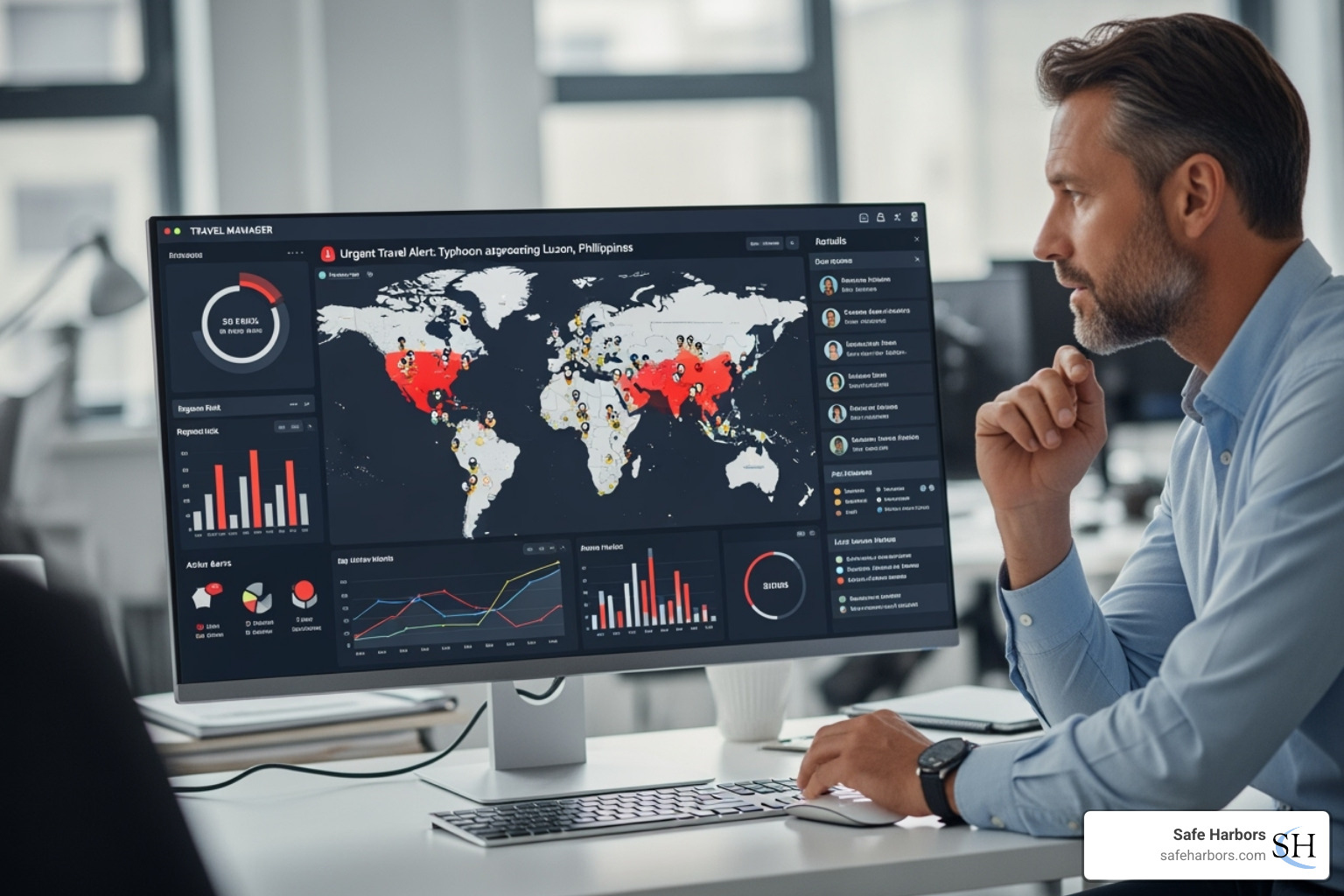
Think of it this way: when an unexpected event hits, like a sudden storm or a local disruption, you need to know exactly where your people are and how they're doing. It's part of your commitment as a business owner or travel manager – your corporate responsibility to them. Unfortunately, we know that nearly a third (29%) of travel managers aren't sure how long it would take to find all their travelers if a crisis popped up. Scary thought, right?
But with a solid Travel Risk Management strategy that includes real-time travel alerts, you can turn that worry into confidence. These alerts are your proactive shield, helping you ensure business continuity and protect your most valuable asset: your amazing team.
How Travelers Can Improve Their Safety
For the travelers themselves, these alerts are like having a super-smart travel companion. They empower you to be in the know and make smart choices on the go.
Imagine getting an alert about a sudden road closure ahead. You can then make informed decisions – maybe grab a coffee and wait it out, or quickly find an alternative route. This means you can avoid high-risk areas before you even get close, steering clear of anything from a busy protest to a flooded street.
If your original path isn't safe, these alerts help you reroute travel swiftly. It's all about minimizing hassle and wasted time, and that's a big part of our Immediate Response philosophy at Safe Harbors. Knowing that you'll be instantly updated about anything that might affect your journey brings immense peace of mind. It keeps you aware of your surroundings, boosting your situational awareness so you can react calmly and effectively to any changing conditions.
The Business Case for Proactive Real-Time Travel Alerts
Now, let's talk about why this isn't just nice to have, but a smart business move. Investing in proactive real-time travel alerts isn't just about employee well-being (though that's huge!); it directly impacts your company's success and reputation.
First off, it's a clear way to show you're taking your Duty of Care Business Travel seriously. When 57% of business travelers feel any destination could be "high-risk," showing you're prepared is vital. It helps you avoid potential legal issues and builds immense trust with your team.
When a crisis hits, being able to locate employees in a crisis quickly is paramount. Our systems, powered by these alerts, often include traveler tracking. This means you can pinpoint who might be in harm's way, get their last known location, and access their itinerary details in a flash. 29% stat? We help you flip that number.
And it's not just one-way communication. Top-notch alert systems also allow for two-way communication. Your travelers can check in as safe, ask for help, or even share on-the-ground updates. This vital chat channel is a lifeline during emergencies.
Finally, think about the bottom line. Travel disruptions, big or small, can cost a fortune—think missed deals, canceled projects, stranded employees, and pricey last-minute changes. By giving your team the heads-up they need to adjust quickly and avoid trouble, real-time travel alerts help you mitigate financial loss. That's why implementing a travel risk plan for employees is crucial. It's a proactive step that saves time, money, and headaches. We've even seen that more managers are using technology to keep track of traveler data, even for bookings made outside official policies, which just shows how much companies value having that clear oversight and proactive risk management in place.
So, when you invest in real-time travel alerts, you're really investing in your people, your business's resilience, and that priceless feeling of confidence and calm. It's a win-win!
The Future of Travel Safety: What's Next for Alert Systems?
The world of real-time travel alerts is always on the move, just like you! It’s constantly getting better, thanks to amazing leaps in how we handle data, use artificial intelligence, and stay connected. Looking ahead, we’re super excited about systems that will be even smarter, more personal, and better at predicting what might happen. All of this means your travels will be even safer and smoother.

Imagine a world where your alert system doesn't just tell you about an event after it happens, but actually predicts it. That’s where predictive analytics and AI-driven risk forecasting come in! Right now, systems react to events. But soon, they’ll anticipate them. AI will look at tons of information—like weather patterns, global news, past incidents, and even what people are saying on social media. This will help it guess potential problems before they even start. Wouldn't it be great to get a heads-up about likely flight delays days in advance because of an unusual storm brewing? Or know about a potential protest before it’s even public knowledge? That's the power of looking ahead.
These alerts will also become incredibly personal. Think hyper-personalization! Beyond just knowing your location, future systems will consider your exact travel plans, any health needs you might have, your preferences, and even how you usually travel. This way, you only get the information that’s truly important and helpful to you. It means less noise and more clear, actionable guidance.
And guess what? Your smartwatch might become your new best travel buddy! Wearable technology integration means smartwatches and other devices could buzz with critical updates or show you essential info right on your wrist. This hands-free delivery could be a real lifesaver when you’re busy or in a fast-moving situation.
One of the most exciting developments is automated itinerary adjustments. Picture this: a major disruption happens, and instead of you scrambling, your real-time travel alert system automatically rebooks your flight, finds you a new hotel, or reroutes your ground transport. It all happens seamlessly, with very little input needed from you. While today's systems can suggest alternatives, the next big step is truly effortless, automated re-planning.
We might even see improved biometric integration. While we always need to be mindful of privacy, using things like facial recognition at airports could make travel smoother. In an emergency, this could also link directly to those personalized alerts, helping streamline processes even further.
Our big goal at Safe Harbors is to create a safety net that’s super smooth, intuitive, and always responsive around every single traveler. We want to make your journeys not just safer, but also more efficient than ever before. We're thrilled to be a part of this amazing future, constantly adding the newest innovations to our services to keep our clients protected, no matter where their business takes them.
Conclusion: Travel with Confidence in an Unpredictable World
In today's world, things can change in an instant. From unexpected weather to global events, the unexpected is often just around the corner. But here's the good news: traveling with confidence is more achievable than ever before. How? Thanks to the amazing power of real-time travel alerts.
We've seen how these clever updates have completely changed the game. Gone are the days of just relying on old, general advisories. Now, you get immediate, super-specific insights into anything that might shake up your plans. Whether it's a sudden storm, a transit hiccup, or something more serious, these alerts keep you ahead of the curve. It’s all thanks to a fantastic network of experts and smart technology working tirelessly to get you the right information, right when you need it.
For you, the traveler, real-time travel alerts are like having a super-smart guardian angel in your pocket. They help you make smart choices, steer clear of tricky spots, and steer any bumps in the road with a calm, clear head. That means less stress and more peace of mind, no matter where your journey takes you.
And for businesses, these alerts are an absolute must-have. They're key to fulfilling your duty of care, protecting your amazing team, and keeping your operations running smoothly. Think of it as a proactive shield that helps you prepare, respond quickly, and even save money by avoiding costly disruptions. It's all about proactive planning and ensuring business continuity, even when the world throws a curveball.
At Safe Harbors, we understand that your team's safety and your company's strength are incredibly important. That's why we're dedicated to providing lightning-fast support and a personalized, white-glove service, all backed by top-notch technology. We truly believe that with the right information at your fingertips, every single journey can be safer and more successful.
Ready to give your travel safety strategy a real boost? Learn how our business travel services can protect your team and help them travel with the confidence they truly deserve.