What Is Business Class Air Travel (And Why It Changes Long-Haul Flying)

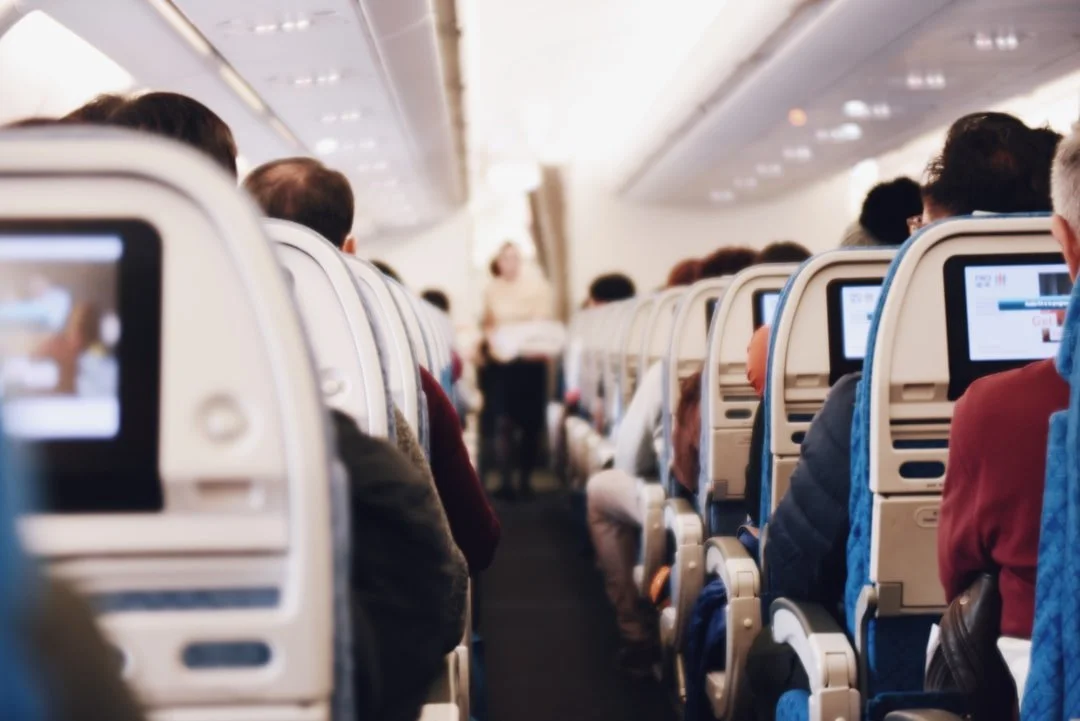
Business class air travel sits between economy and first class — and on long-haul international routes, it can be the difference between arriving exhausted and arriving ready to perform.
Here's a quick look at what business class typically includes:
| Feature | Business Class |
|---|---|
| Seating | Lie-flat bed or recliner with direct aisle access |
| Dining | Gourmet meals, fine wines, often on-demand dining |
| Lounge access | Yes, at most major airports |
| Priority services | Check-in, security, boarding, and baggage |
| Amenity kit | Skincare, sleepwear, noise-cancelling headphones |
| Entertainment | Large personal screens, Wi-Fi on most aircraft |
| Baggage allowance | Higher weight limits than economy |
For a 10-hour overnight flight, those features aren't just perks — they're tools that protect your health, your sleep, and your effectiveness at the other end.
The gap between economy and business class widens significantly on international routes. Average round-trip business class fares run around $3,945, but discounted fares through consolidators and flexible booking strategies can bring that figure down considerably.
I'm Jay Ellenby, President of Safe Harbors Travel Group, and I've spent decades helping corporate travel managers navigate the complexities of global travel — including getting executives into the right business class air travel options at the right price. In this guide, I'll walk you through everything you need to know to make long-haul flying not just survivable, but genuinely productive.
The Evolution of Business Class Air Travel
To appreciate where we are in July 2026, it helps to look at where we started. Premium air travel wasn't always the highly segmented, hyper-engineered experience it is today.
Historically, commercial flights offered a simple, two-class system: first class and economy. However, as global business boomed in the late 1970s, airlines realized they needed a dedicated product for corporate travelers who paid full fare but did not require the extreme extravagance (or cost) of first class.

Qantas claims to have launched the world's very first dedicated business class in 1979, offering seats that were 15 percent larger than standard economy. Soon after, legacy carriers like KLM, British Airways, and Pan Am introduced their own versions.
Over the decades, this specific class of service—usually designated as "J" or "C" in airline reservation systems—has undergone a massive transformation. As airlines began phasing out international first class on many routes due to shifting corporate budgets, business class stepped up to fill the luxury void. What started as slightly wider seats with free champagne has evolved into private, high-tech suites in the sky.
To understand how the modern landscape is structured, let's look at the basic differences in the cost and comfort spectrum.
Comparing the Classes of Service
| Feature | Economy Class | Premium Economy | Business Class | First Class |
|---|---|---|---|---|
| Average Seat Pitch | 30–32 inches | 38–40 inches | 60–80 inches (Lie-flat) | 80+ inches (Private Suite) |
| Aisle Access | Shared (climbing over neighbors) | Shared | Direct aisle access (mostly) | Direct aisle access / Private door |
| Airport Lounge | No (unless paid/status) | No (usually) | Yes | Yes (Exclusive First Lounges) |
| Baggage Priority | Standard | Priority | High Priority | Top Priority |
| Pricing Base | Standard Base Fare | 1.5x–2x Economy | 3x–5x Economy | 8x–10x Economy |
Defining the Premium Cabin Experience
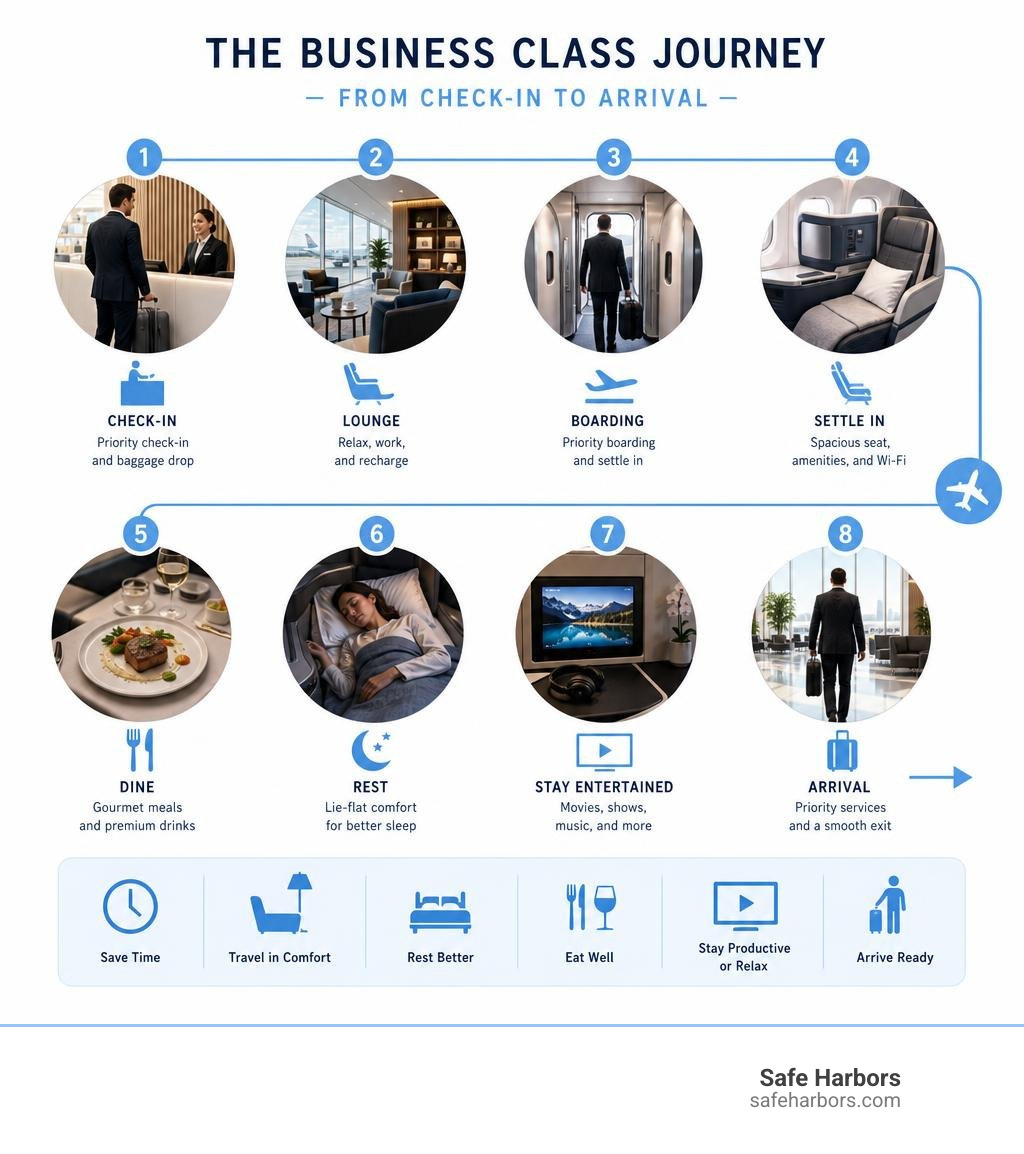
At its core, business class air travel is designed to eliminate the friction points of long-distance journeys. The premium experience begins long before you step onto the aircraft.
When you book a business class ticket, you are purchasing an ecosystem of efficiency. This includes:
- Dedicated Check-In Lines: Skip the main terminal queues with dedicated premium counters.
- Expedited Security: Fast-track security access at major global hubs.
- Generous Baggage Allowances: Typically, business class passengers can check two pieces of luggage weighing up to 32 kg (70 lbs) each, alongside increased carry-on allowances.
- Lounge Access: A quiet sanctuary featuring complimentary hot meals, premium bars, high-speed Wi-Fi, and private shower suites to freshen up between connections.
For modern Business Travelers, these ground services are not just luxury additions; they are essential for maintaining productivity and reducing travel-induced stress.
Long-Haul vs. Short-Haul Configurations
It is vital to note that not all business class cabins are created equal. The experience varies dramatically depending on whether you are flying a short-haul regional route or a long-haul international flight.
Domestic and Regional Business Class
On short flights—such as domestic routes within the United States or regional hops within Europe—the premium cabin is often branded as "Domestic First Class" or regional business class.
- In North America: Expect a wider recliner seat with more legroom, a hot meal, and free drinks, but rarely a lie-flat bed.
- In Europe: Many short-haul business class configurations simply utilize standard economy seats with the middle seat blocked out for extra elbow room. This practice has faced criticism from travelers for offering poor value-for-money compared to long-haul standards, though it still provides priority ground services and upgraded catering.
Long-Haul International Business Class
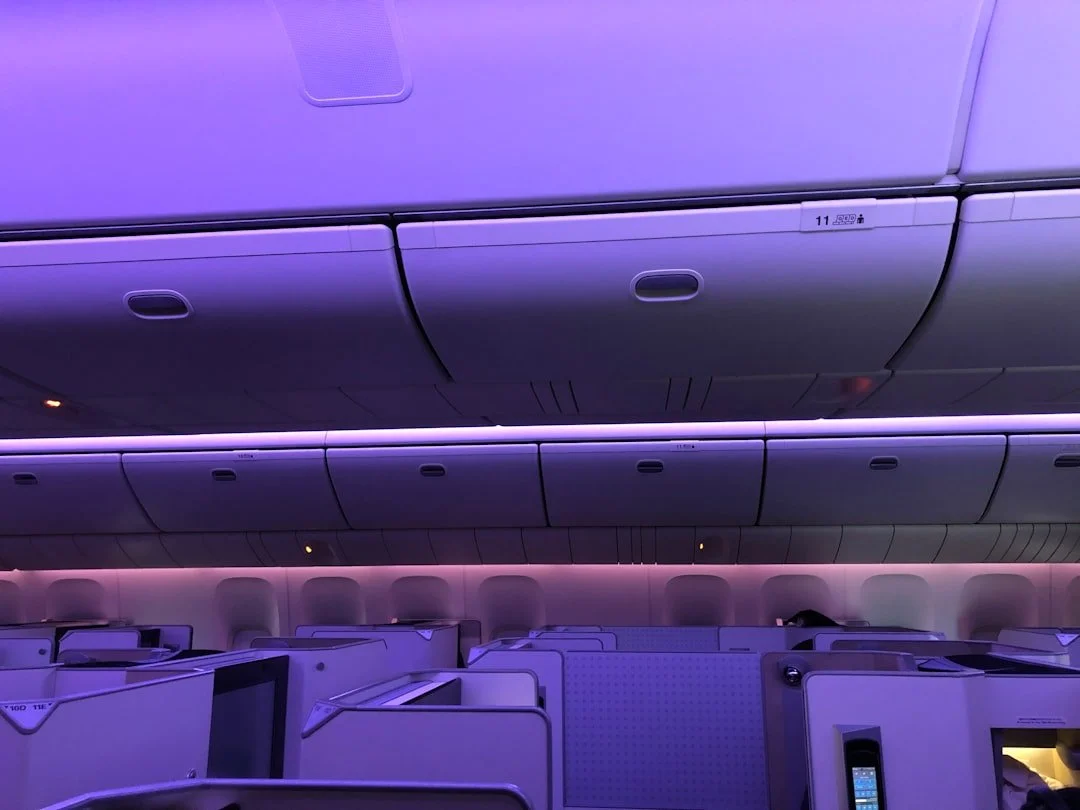
This is where the magic happens. On flights spanning ocean crossings or continents, airlines deploy wide-body aircraft (like the Airbus A350, Boeing 777, or Boeing 787) equipped with true lie-flat beds, extensive privacy partitions, and high-end dining programs. If you are flying overnight, this is the configuration you want to secure.
Why Choose Business Class for Long-Haul Flights
When your flight duration stretches past seven or eight hours, the physical toll of travel accumulates rapidly. Choosing a premium cabin is an investment in your physical and mental well-being.

The primary benefits focus on three core pillars:
- Restorative Sleep: Sleeping upright in economy restricts blood flow and prevents deep REM sleep. A 180-degree lie-flat bed allows you to sleep naturally, dramatically reducing the effects of jet lag.
- Uninterrupted Productivity: With large tray tables, universal power outlets, USB ports, and complimentary high-speed Wi-Fi, your seat becomes a highly functional mobile office.
- Physical Health: More room to stretch and move reduces the risk of deep vein thrombosis (DVT) and alleviates the back and neck pain associated with cramped seating.
The Premium Amenities of Business Class Air Travel
The modern business class cabin is a showcase of curated partnerships and high-end hospitality. Airlines collaborate with luxury brands to craft an environment that rivals boutique hotels.
- Gourmet Dining & "Dine Anytime": Gone are the days of mystery meats served in foil tins. Business class dining features multi-course meals designed by celebrated culinary experts. Leading carriers like Qatar Airways offer a "Dine Anytime" service, allowing you to order à la carte meals whenever you are hungry rather than on the airline's schedule. To explore their onboard culinary offerings, check out the Business Class | Qatar Airways details.
- Designer Amenity Kits: Passengers receive custom travel kits packed with premium skincare products, dental kits, eye masks, and socks. For instance, ITA Airways partners with QC Terme for wellness products, while Cathay Pacific provides sustainable luxury Bamford amenities.
- Sleep Amenities: To ensure the perfect night's sleep at 35,000 feet, expect plush mattress pads, dual-sided pillows, and high-thread-count duvets.
Cabin Layouts and Seat Configurations
The layout of a business class cabin determines how much privacy and space you will enjoy. When booking, it is helpful to understand the common configurations:
- 1-2-1 Layout (Direct Aisle Access): The gold standard of modern business class. Every passenger can access the aisle without stepping over anyone else.
- Herringbone and Reverse Herringbone: Seats are angled toward or away from the windows. First pioneered by Virgin Atlantic, this layout maximizes privacy and legroom.
- The Collins AirLounge (Finnair): A unique, innovative approach to seating. Instead of a traditional reclining mechanism, this seat features a wide, contoured fabric shell that allows you to lounge in multiple natural positions and convert the space into a spacious flat bed. Read more about this design on the Finnair Business Class | Finnair page.
- Privacy Doors: The latest trend in business class design is the addition of sliding doors, effectively turning your seat into a private suite. Notable examples include British Airways' Club Suite—which you can explore via Club World | Travel classes | British Airways business class —and Qatar Airways' Qsuite.
The Environmental Impact of Premium Travel
While business class offers undeniable comfort, it is important to address its environmental footprint. Aviation accounts for roughly 2% of global carbon emissions, and premium seating carries a disproportionate share of that impact.
Because business class seats occupy significantly more physical space (footprint) and weigh more than economy seats, they carry a higher environmental cost. On long-haul flights, carbon emissions per passenger-kilometre are roughly three to four times higher for business class than for economy class.
To combat this, the aviation industry is investing heavily in Sustainable Aviation Fuel (SAF), which can reduce lifecycle CO2 emissions by up to 80–85%. Additionally, seat manufacturers are designing lighter premium seats—such as Recaro's CL6710, which weighs significantly less than older models—to reduce overall fuel burn.
It is also worth noting that commercial business class remains a far more sustainable and cost-effective choice than private aviation. Private chartered jets emit at least 10 times more pollutants per passenger than commercial flights, making commercial business class the responsible choice for eco-conscious corporate travel programs.
The Cost of Premium Comfort
There is no sugarcoating it: premium travel is a major investment. Globally, the average round-trip business class fare hovers around $3,945, while a highly competitive "good deal" sits around $3,354.
Prices fluctuate based on seasonality, route demand, and how far in advance you book. For example, October is historically the high season for business-class travel, experiencing an average 8% price increase during the final two weeks of the month as corporate travel peaks.
For businesses, justifying this expense requires a careful value assessment. If an executive flies economy overnight and loses a full day of work to exhaustion, the hidden cost of lost productivity can easily exceed the price of a business class ticket. A progressive corporate travel policy balances traveler well-being with budgetary limits.
Top Airlines for Business Class Air Travel
If you are looking to book the absolute best experiences in the sky, several global airlines consistently lead the pack in innovation, service, and cabin design:
- Qatar Airways (Qsuite): Widely considered the best business class in the world, featuring sliding doors, double beds for couples, and a dine-on-demand menu.
- Cathay Pacific (Aria Suite): An award-winning design featuring wrap-around seats, a 24-inch 4K screen, and exceptional human-centric comfort. Discover more about their regional and long-haul cabins on the Business | Cabin Classes | Cathay Pacific page.
- British Airways (Club Suite): A major upgrade from their older layouts, offering direct aisle access, private doors, and partnerships with local brands like Grind coffee.
- ITA Airways: Blends Italian style with Michelin-starred menus and custom wellness kits. Read about their long-haul product at Business class long haul | ITA Airways .
- Finnair: Known for its Nordic-inspired design, Marimekko textiles, and the innovative AirLounge seat.
How to Book and Upgrade to Business Class
Navigating premium ticketing can feel overwhelming, but you don't have to pay full retail price to sit at the front of the plane.
Many of the best deals are never published on standard search engines. Airlines frequently partner with consolidators to sell excess premium inventory at steep discounts—sometimes 15% to 60% off standard published rates.
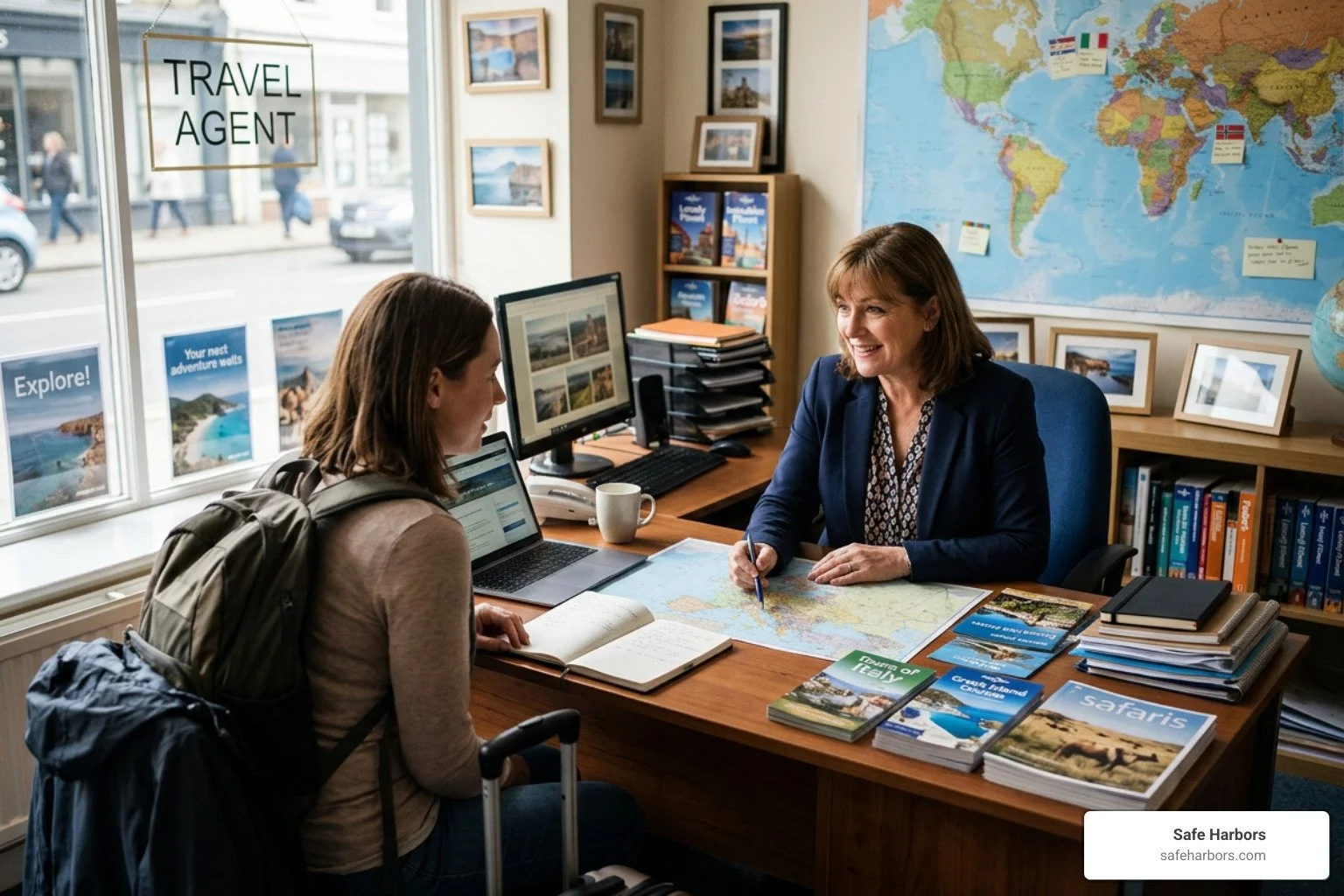
To navigate these complex fare structures and secure the best rates, partnering with a professional service for your Business Flight Booking is the most reliable path to securing affordable luxury.
Strategies for Securing Discounted Fares
If you want to maximize your budget, consider utilizing a structured approach to upgrades and bookings:
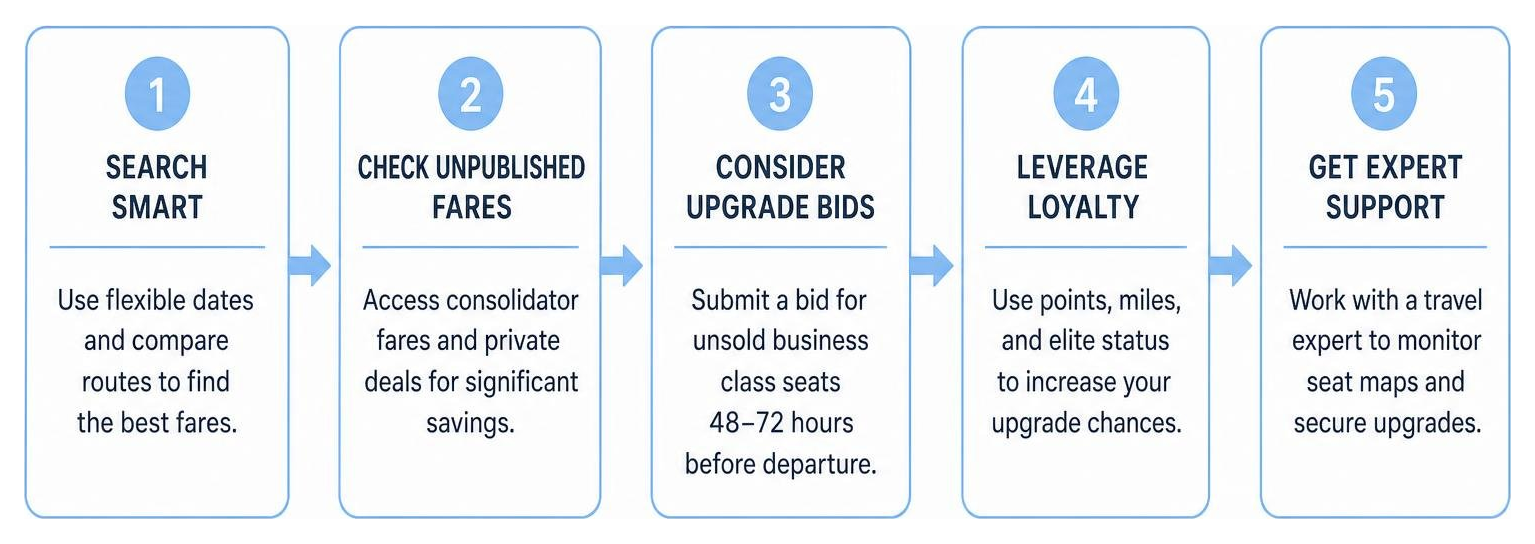
- Unpublished Consolidator Fares: Specialized travel management companies have access to private contracts that offer massive savings compared to public retail fares.
- Flexible Date Searches: Shifting your departure by just ±3 days can save thousands of dollars on long-haul routes.
- Upgrade Bidding: Many international carriers allow economy ticket holders to submit a blind cash bid for unsold business class seats 48 to 72 hours before departure.
- Leverage Concierge Support: A dedicated Concierge Travel Service can monitor seat maps, manage complex multi-city itineraries, and process elite status upgrades seamlessly.
For those searching for independent booking tools and consolidator deals, platforms like Business Class Flights – Affordable Luxury & Exclusive Deals , Skylux Travel® | Business Class Flights | Cheap Business Class ... , and Business Class Flights - Cheap Tickets & Best Deals offer excellent entry points to compare market rates.
Maximizing Your First Experience with Business Class Air Travel
If you are flying business class for the first time, a little preparation goes a long way:
- Arrive Early: Give yourself at least two to three hours before departure to fully enjoy the airport lounge amenities, hot buffet, and pre-flight relaxation.
- Pre-Select Your Meals: Many airlines allow you to view the menu and pre-select your gourmet dishes up to 24 hours before boarding.
- Explore the Seat Controls: Modern business class seats have multiple lumbar, massage, and recline settings. Take a few minutes to customize your position.
- Accept the Pre-Departure Beverage: It’s a classic premium tradition—settle into your suite with a complimentary glass of champagne or juice before takeoff.
Frequently Asked Questions about Business Class
Is business class worth the extra cost for long-haul flights?
Yes. For overnight flights longer than seven hours, the ability to sleep horizontally in a lie-flat bed directly impacts your health, recovery time, and mental clarity upon arrival. It eliminates the need for a "recovery day," saving valuable business time.
Do you earn frequent flyer miles on discounted business class tickets?
In most cases, yes. While extremely cheap consolidator fares or upgrade bids may occasionally earn miles at a lower rate, standard business class tickets typically earn a significant mileage bonus (often 150% to 200% of flown miles) compared to economy fares. Always verify the specific fare class rules with your booking agent.
What is the difference between business class and premium economy?
Premium economy is essentially an upgraded economy product—offering wider seats, 5-8 inches of extra legroom, and slightly better food. However, premium economy seats do not lay flat, they do not offer direct aisle access for every passenger, and they rarely include airport lounge access. Business class remains a far superior, fully flat-bed experience.
Conclusion
Surviving and thriving on long-haul international flights doesn't have to be an endurance test. By choosing business class air travel, you transform transit time into a tool for productivity and physical recovery.
At Safe Harbors, we specialize in high-touch, white-glove corporate travel management. From fast-response support to flexible booking tools and comprehensive duty of care, we ensure your business travelers travel safely, comfortably, and cost-effectively.
Ready to elevate your corporate travel program? Explore our comprehensive Business Travel Services and let us handle the details of your next global journey.