

Why Your Company Needs a Business Travel Specialist (Not Just a Booking Tool)

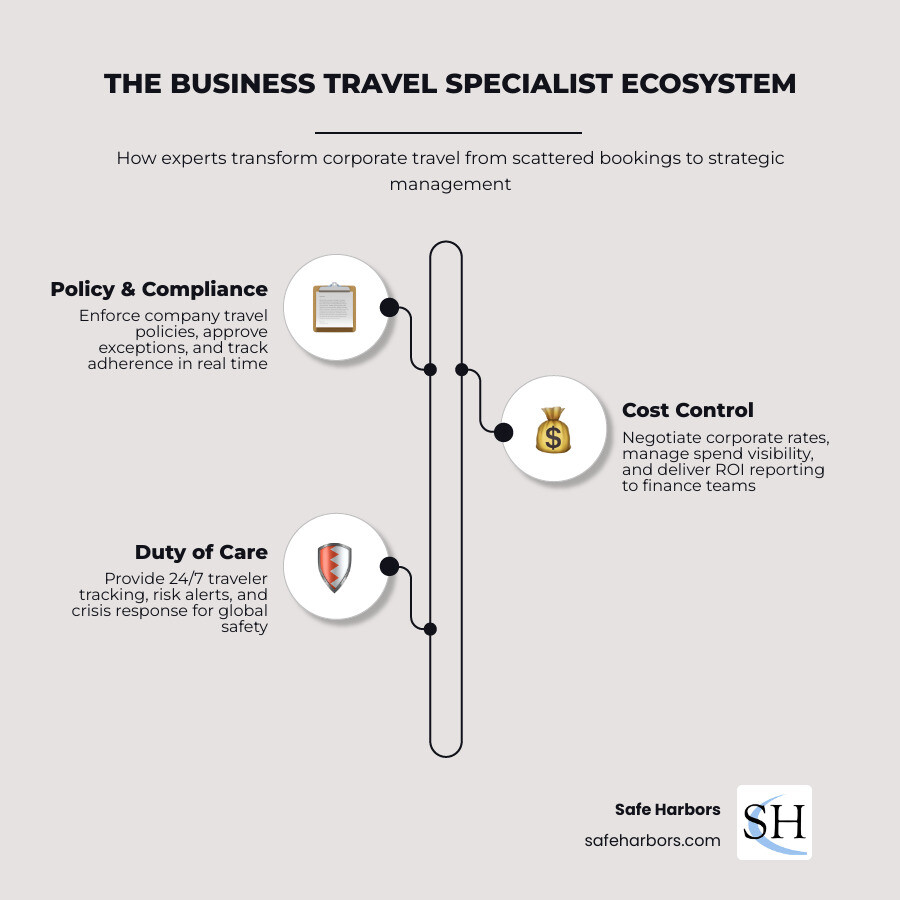
A business travel specialist is a dedicated expert who manages every aspect of corporate travel — from booking flights and hotels to enforcing travel policy, controlling costs, and keeping travelers safe worldwide.
Here's what a business travel specialist does for your company:
- Negotiates corporate rates with airlines, hotels, and ground transport providers
- Ensures every booking aligns with your company's travel policy
- Monitors traveler safety and provides 24/7 emergency support
- Manages complex, multi-leg international itineraries
- Tracks spending and delivers reporting to finance and procurement teams
- Handles disruptions — cancellations, rebooking, crisis response — in real time
Business travel is a $700 billion global industry. In the US alone, 1.3 million people travel for business every year. Yet many companies still rely on scattered booking tools, inconsistent policies, and no real support when things go wrong.
That gap — between what companies need and what they actually have — is exactly where a business travel specialist earns their keep.
The stakes are real. Slow response times, missed duty-of-care obligations, and unmanaged spend don't just cause headaches. They create risk — for travelers and for the business.
I'm Jay Ellenby, President of Safe Harbors Travel Group, and I've spent decades building travel management programs that solve exactly these problems — from complex international logistics to VIP executive travel — making me a trusted voice on what a true business travel specialist partnership should look like. In the sections below, I'll walk you through everything you need to know to stop winging it and build a smarter corporate travel program.
Defining the Role of a Business Travel Specialist
A business travel specialist sits at the intersection of service, technology, policy, supplier strategy, and traveler support. That is very different from simply issuing tickets.
In practical terms, we help companies build a travel program that works in the real world, not just in a spreadsheet. That includes traveler profiles, approval paths, preferred suppliers, exception handling, reporting, unused ticket tracking, emergency response, and support for travelers who are one delay away from sending an all-caps email.
A specialist may work inside a travel management company, as part of an in-house team, or as a dedicated outsourced partner. The key difference is focus: business travel specialists are trained around corporate needs, not leisure-style trip planning.
For a deeper look at the consultative side of the role, see our guide to Corporate Travel Consultants.
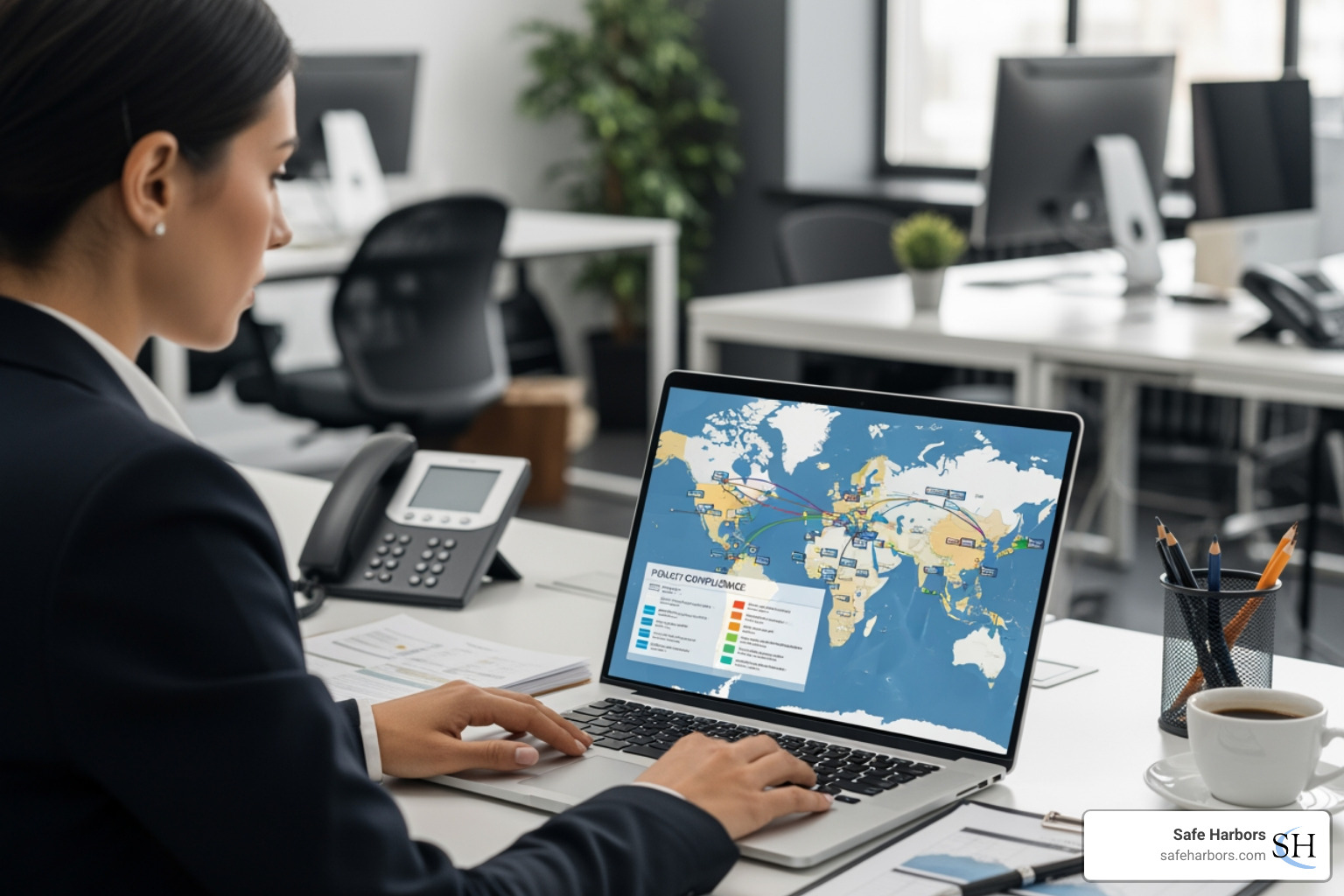
A modern specialist typically handles:
- Corporate air, hotel, rail, and car bookings
- Policy enforcement and exception management
- Negotiated or preferred supplier use
- Approval workflow coordination
- Duty of care and traveler tracking support
- Rebooking during disruptions
- Reporting for finance, procurement, HR, and risk teams
- Support for international documentation and entry requirements
- High-touch traveler service for executives and VIPs
A Travel Management Company, or TMC, is the broader organization that provides infrastructure, technology, supplier access, support teams, and account management. The business travel specialist is often the person or team doing the hands-on work inside that system. Put simply:
- A general travel agent books trips
- A business travel specialist manages corporate travel outcomes
- A TMC delivers the platform, program, and service framework around that work
How a Business Travel Specialist Differs from a General Agent
A general travel agent may be excellent at vacations, cruises, or custom leisure itineraries. But corporate travel has different rules, different risks, and much less patience for mistakes.
A business traveler is not asking, "Which beach resort feels relaxing?" They are asking, "Can I get to three cities in two countries, stay inside policy, preserve loyalty benefits, arrive in time for a board meeting, and still have a backup plan if the first flight cancels?"
That requires specialized knowledge, including:
- Fare rules and change flexibility
- Company travel policies
- Approval logic
- Traveler profile management
- Expense coding
- Duty of care obligations
- Last-minute rebooking under pressure
- Industry-specific needs like privacy, security, or connectivity
Our Corporate Travel Agency Services article breaks down these differences in more detail.
Service Models: From Dedicated Teams to VIP Support
Not every company needs the same setup. One of the biggest advantages of working with a specialist is choosing the right service model.
Common models include:
- Dedicated agent
- One primary specialist or small pod handles your account consistently
- Best for high-volume programs or companies with complex policy rules
- Designated team
- A trained team supports your travelers, usually with shared notes and account standards
- Good for balancing continuity and scalability
- VIP or white-glove service
- Reserved for executives, boards, founders, and other high-touch travelers
- Includes personalized planning, proactive monitoring, and fast escalation
- Emergency support team
- 24/7 assistance for urgent changes, missed connections, weather disruptions, security events, or medical issues
- Hybrid model
- Self-service booking for simple trips, agent service for complex ones
If concierge-level service is part of your program, our Corporate Travel Concierge Ultimate Guide is a useful next read.
Controlling Costs and Ensuring Policy Compliance
A good business travel program is not about buying the cheapest seat and hoping for the best. It is about controlling total trip cost while still protecting productivity, safety, and traveler experience.
That is where a business travel specialist earns measurable value.
We help control cost by:
- Steering travelers to preferred suppliers
- Applying policy rules at booking
- Catching out-of-policy choices before they become spend
- Using negotiated rates and corporate inventory
- Tracking unused ticket credits
- Reducing avoidable change fees
- Consolidating data for supplier negotiations
- Identifying patterns, such as last-minute booking behavior
Here is the simplest comparison.
| Travel approach | Main strength | Main risk |
|---|---|---|
| DIY booking tools | Fast for simple trips | Weak policy control, scattered data, limited support |
| General travel agent | Basic booking help | Limited corporate reporting and compliance structure |
| Managed specialist program | Policy, savings, support, visibility | Requires thoughtful setup and partner selection |
For more on structured travel programs, visit our Business Travel Services page and The Best Practices of a Travel Management Company.
Cost control is only half the story. Policy compliance matters because unmanaged bookings create downstream problems:
- Finance gets inconsistent expense data
- Procurement loses visibility into supplier performance
- HR and risk teams cannot reliably locate travelers
- Managers spend time approving exceptions that should have been prevented upfront
A specialist turns policy from a PDF nobody reads into actual booking behavior.
Leveraging Technology for a Modern Business Travel Specialist
In 2026, no serious travel program runs on email threads and luck alone.
Modern specialists use a mix of tools to streamline booking, reporting, approvals, expense capture, and traveler communication. The best setup combines digital efficiency with human expertise, not one at the expense of the other.
Core technology often includes:
- Online booking tools for air, hotel, rail, and car
- Mobile trip management apps
- Traveler profile systems
- Approval workflow automation
- Policy guardrails and exception alerts
- Expense management integrations
- Real-time reporting dashboards
- Risk intelligence and traveler messaging
- Sustainability tracking and emissions reporting
- API-based connections between booking, HR, and finance systems
AI is also changing the role. We are seeing more use of AI for:
- Fare prediction and booking recommendations
- Personalized hotel and airline suggestions
- Automated itinerary cleanup
- Smart rebooking options during disruption
- Faster support triage
- Reporting summaries for procurement and finance
But AI is a tool, not a substitute for judgment. When a traveler misses a connection in the middle of a complicated international trip, nobody wants a chatbot that responds with cheerful nonsense. They want help.
Our Travel Managers resource explains how people and platforms work together in a managed program.
Managing Traveler Safety and Duty of Care
Duty of care is one of the biggest reasons companies move from unmanaged travel to a specialist-supported model.
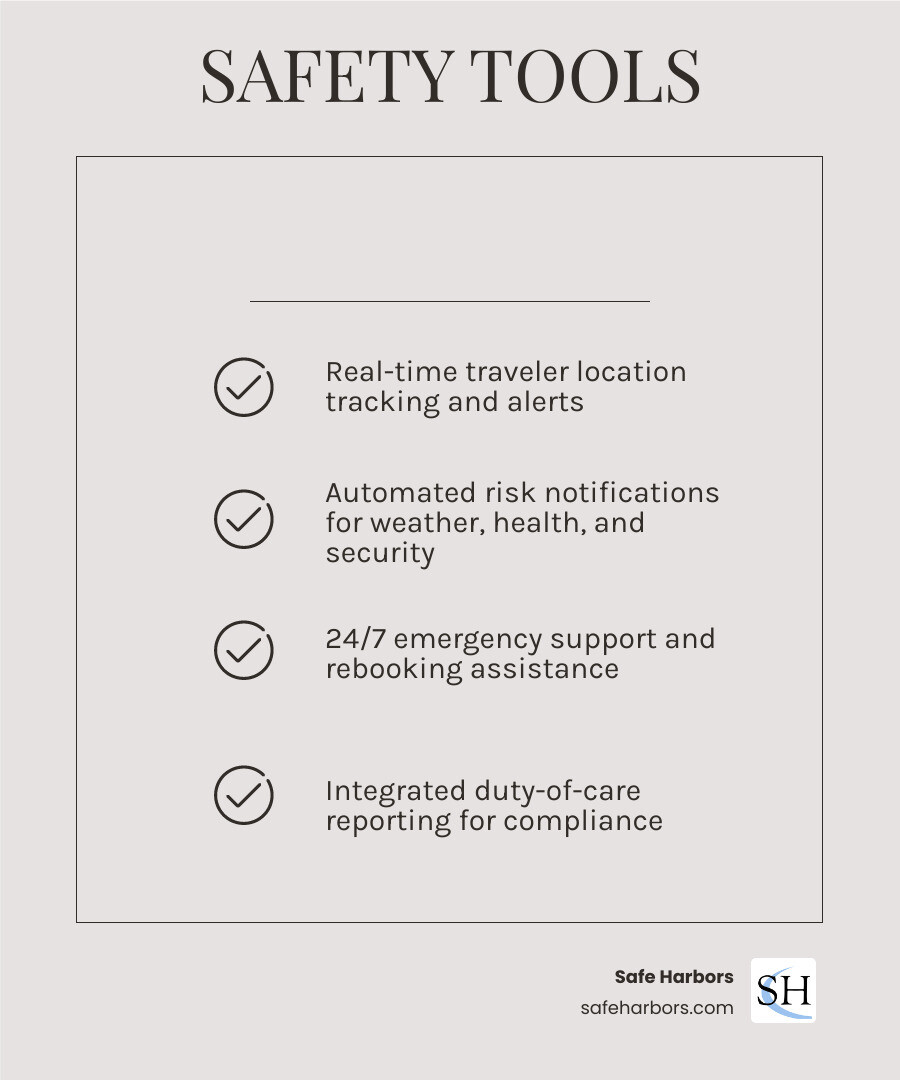
If your employees travel for work, your company has a responsibility to take reasonable steps to support their safety. That includes knowing where travelers are, warning them about disruption or risk, and helping them when plans go sideways.
A business travel specialist supports duty of care through:
- Centralized booking visibility
- Real-time itinerary tracking
- Traveler alerts and communication
- Destination risk information
- Emergency support escalation
- Coordination during weather, strikes, political unrest, or medical issues
- Preferred supplier choices that support safer itineraries
- Documentation and reporting for internal stakeholders
This is especially important for international trips, overnight connections, higher-risk destinations, and executive travel.
Our Global Travel Management solutions are built around that broader worldwide view.
Navigating Complex Global Itineraries and Group Travel
Simple point-to-point travel is easy to automate. Complex travel is where specialists really prove their value.
That includes:
- Multi-country itineraries
- Open-jaw and multi-leg routing
- Cross-border approvals
- Regional fare strategy
- Visa and documentation support
- Meetings and event travel
- Group air coordination
- Executive travel with changing schedules
- Travel for acquisitions, site visits, or project teams
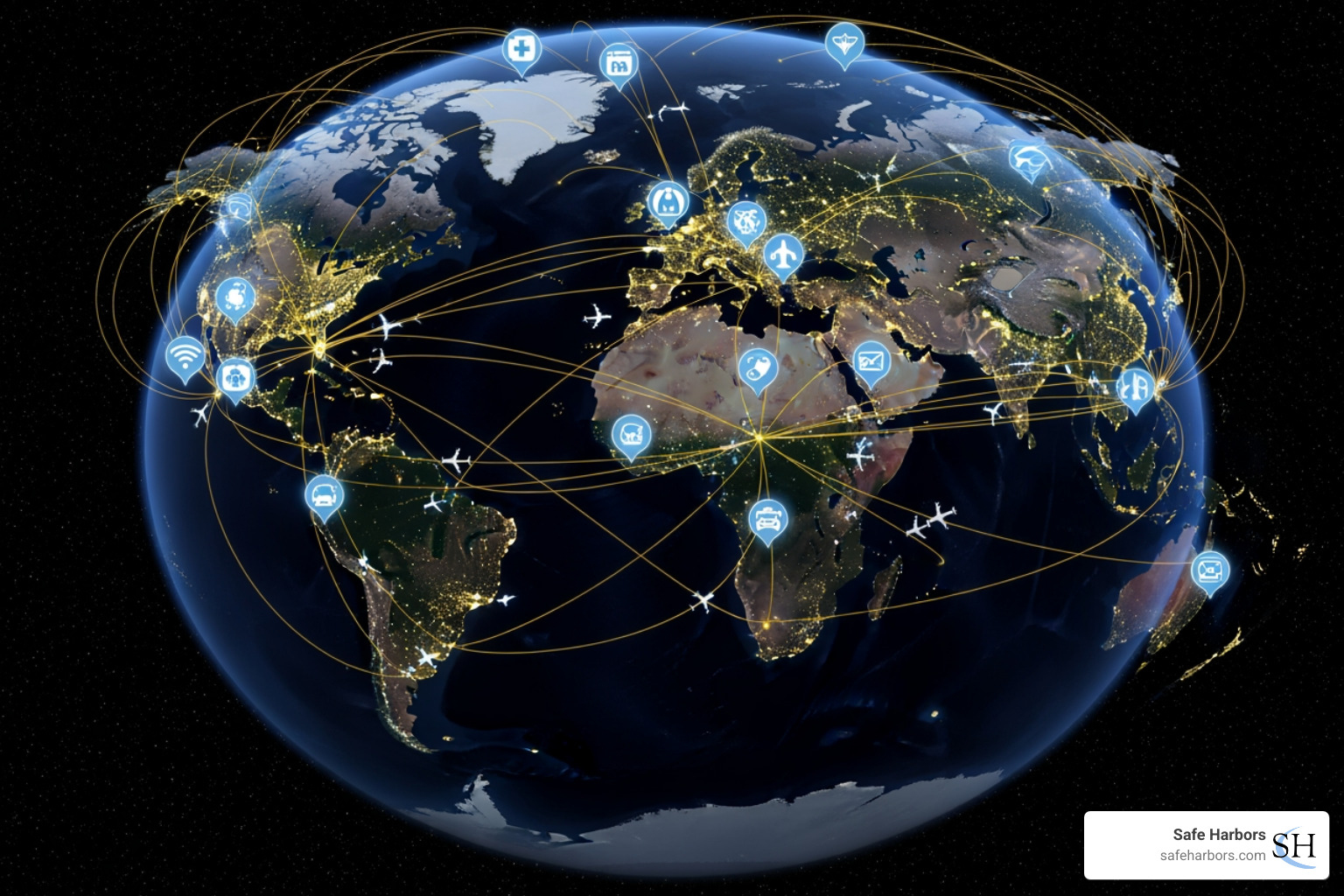
International trips are not just domestic trips with longer flight times. They involve fare rules, border requirements, local supplier variation, time-zone coordination, and often multiple internal stakeholders.
A specialist helps reduce friction by:
- Designing practical route options
- Building contingency plans
- Aligning bookings with policy and local requirements
- Consolidating traveler data
- Coordinating changes across multiple passengers
- Managing special requests and service recovery
If you are evaluating providers for this kind of work, our guide on Finding a New Travel Management Company can help.
Group travel is another common pain point. Booking one executive is one thing. Booking 40 people to arrive from different cities, on approved fares, with the right seating, hotel allocations, and payment setup is a completely different sport.
A specialist can coordinate:
- Group air contracts and inventory
- Arrival and departure windows
- Rooming lists
- Meeting venue logistics
- Ground transportation
- Change management for attendee swaps
- Post-trip spend reporting
The VIP360 Experience for High-Touch Travelers
High-touch travel is not just about luxury. It is about protecting time, reducing friction, and making sure key people can stay focused on business.
VIP support is often used for:
- C-suite leaders
- Board members
- Revenue-critical teams
- Speakers and public-facing executives
- Travelers with security or privacy concerns
- Travelers managing intense schedules across multiple stops
A white-glove model usually includes:
- Priority access to experienced agents
- Proactive flight monitoring
- Personalized booking preferences
- Tight control of schedule buffers
- Premium service recovery when disruption happens
- Coordination of private transfers or special access where needed
This level of service matters because one missed connection for a senior executive can cost far more than the fare difference that might have prevented it.
Handling High-Touch Needs for a Business Travel Specialist
Some travel requires more than booking support. It requires orchestration.
Examples include:
- Last-minute international changes
- Multi-traveler executive roadshows
- Private transportation coordination
- Premium hotel sourcing near secure meeting locations
- Family accompaniment for long-term assignments
- After-hours issue management across time zones
This is where experience, judgment, and speed make all the difference. Our approach at Safe Harbors is built around fast response support, flexible booking tools, and concierge management. In high-stakes travel, speed is not a perk. It is the product.
Frequently Asked Questions about Corporate Travel Specialists
What are the typical pricing models for travel specialists?
Pricing usually falls into a few common models:
- Transaction fees
- A fee per booked segment, trip, or reservation
- Management fees
- A monthly or annual fee for program oversight, reporting, policy administration, and account service
- Subscription models
- Flat recurring pricing tied to service level or traveler volume
- Hybrid models
- Management fee plus transaction charges for certain bookings or after-hours support
Potential hidden costs to ask about:
- After-hours service fees
- Exchange or refund processing fees
- Offline booking surcharges
- Implementation fees
- Reporting customization charges
- Premium support charges for VIP service
- Markups hidden inside hotel or air rates
Transparency matters. If pricing looks suspiciously simple, ask what is not included. That question alone can save you a great deal of pain later.
How do specialists integrate with existing company systems?
A strong specialist should fit into your existing processes, not force your finance team into interpretive dance.
Typical integrations include:
- HR systems for traveler profiles and employee status
- Approval tools for manager signoff
- Expense platforms for receipt and coding flow
- ERP or finance systems for reporting
- Risk and security tools for traveler location data
- Calendar and itinerary sync tools
- Single sign-on for easier access
In practice, we usually map the travel policy, traveler groups, approval paths, and expense categories before rollout. Then we configure the booking environment around them. That helps travelers book correctly from day one and gives finance cleaner data after the trip.
If you are comparing providers, review our 10 Factors to Consider When Searching for the Right Travel Management Partner.
What trends are shaping the future of business travel in 2026?
Several trends are reshaping the business travel specialist role right now.
- AI-assisted personalization
- More programs use AI to surface better options based on policy, traveler preference, and trip purpose.
- Hybrid work and flexible travel patterns
- Travel is less routine for many companies, but often more intentional and higher value.
- Sustainability expectations
- Companies increasingly want emissions data, lower-carbon options, and better visibility into travel impact.
- Stronger duty-of-care expectations
- Risk visibility and rapid support are no longer optional add-ons.
- Consumer-grade booking expectations
- Travelers want business tools to feel as easy as leisure apps, without losing controls.
- Blended service models
- Companies want self-service for simple trips and expert support for complex ones.
- More emphasis on traveler experience
- Better support leads to better adoption, stronger compliance, and less policy evasion.
Industry examples also show that travel programs with intuitive platforms can achieve very high employee adoption, and customer satisfaction improves when technology is backed by responsive human support. That combination is exactly where the specialist role is heading. For broader context on how the category is defined across the industry, it can also help to review an independent overview of business travel.
If you want to compare broader industry models, it is helpful to review independent business travel publications, analyst research, and provider evaluation criteria focused on service levels, technology, reporting, and duty of care.
Conclusion
A business travel specialist is not just a nicer way to book flights. The role is about building control, consistency, cost discipline, traveler support, and resilience into your travel program.
When companies try to manage business travel with disconnected tools and improvised processes, the same problems show up again and again:
- Spend leaks
- Policy drift
- Poor traveler experience
- Weak reporting
- Slow disruption response
- Higher risk exposure
That is why we believe business travel should be managed, not winged.
At Safe Harbors, we combine response speed, white-glove service, and elite tech partnerships to support travelers worldwide. Whether you need help with everyday policy compliance, global program structure, or concierge-level executive support, we are built for the moments when travel gets complicated.
For more perspective on whether outsourcing is right for your organization, read The Pros and Cons of Outsourcing Travel Management.
And when you are ready to stop improvising your travel program, Stop winging it and secure your travel program today.