
Why Duty of Care in the Travel Industry is Your Most Critical Business Priority

Duty of care in the travel industry is an organization's legal and moral obligation to protect employees from foreseeable harm during work-related travel. It involves taking reasonable steps to ensure their physical safety, mental well-being, and security before, during, and after every trip.
What duty of care covers:
- Legal responsibility to prevent harm
- Physical safety with secure transport and lodging
- Mental health support to manage stress
- Emergency response protocols for global crises
- Risk assessment for destinations, health, and security
The COVID-19 pandemic exposed a harsh truth: many companies were unprepared to fulfill their duty of care obligations, leaving travelers stranded. Today, the stakes are higher, with risks ranging from natural disasters to political instability. Yet, a staggering 22% of traveling employees haven't been briefed on who to contact in an emergency.
Effective duty of care is more than avoiding lawsuits; it's about building trust, ensuring business continuity, and creating a supportive culture. Companies with strong programs see higher morale and retention because their teams feel valued and protected. This guide will show you how to build a program that protects your people and strengthens your business.
What is Duty of Care and How Does it Relate to Travel Risk Management?

Duty of care in the travel industry is a legal mandate in over 50 countries and a fundamental moral obligation for all employers. When you send an employee to travel for work, you are responsible for taking reasonable steps to protect them from foreseeable harm. This responsibility covers everything from physical safety and mental health to providing emergency support. For a deeper dive, our guide on Business Travel Duty of Care and Risk Management offers more detail.
Defining Duty of Care in the Travel Industry
Duty of care in the travel industry is a legal and practical framework for protecting traveling employees. The core principle is taking all reasonable steps a prudent person would to avoid harm. This extends beyond safe flights and hotels to include mental health support, manageable schedules, and 24/7 assistance. It's about anticipating what could go wrong—from natural disasters to travel stress—and preparing for it. Our article on What is duty of care and travel risk management? explores these elements in greater depth.
Duty of Care and Travel Risk Management: How They Work Together
People often confuse duty of care in the travel industry with travel risk management. Think of it this way:
- Duty of Care is the "why": Your overarching moral and legal obligation to protect employees.
- Travel Risk Management is the "how": The practical processes and procedures you implement to fulfill that obligation.
Travel risk management is your action plan. It involves identifying and mitigating risks, from destination analysis and traveler tracking to emergency response protocols. We align our approach with ISO 31030:2021, the international standard for travel risk management, yet 31% of travel buyers have never heard of it. Our Travel Risk Management solutions are designed to bridge this awareness gap.
Why It's a Critical Component for Modern Organizations
A robust duty of care in the travel industry program is a strategic investment. It boosts employee morale and retention by showing you genuinely care for their well-being. In a crisis, it ensures business continuity by enabling a swift, organized response. A strong program also protects your brand reputation and improves productivity, as employees who feel safe are more focused and effective. Duty of care is a competitive advantage that builds a resilient, responsible corporate culture.
The Legal and Ethical Stakes: Why Duty of Care in the Travel Industry Matters

Discussions about duty of care in the travel industry go beyond best practices; they involve legal obligations and ethical responsibilities that are critical to your organization's success. Understanding these stakes is the first step in protecting your employees and your business, a core focus of our approach to Duty of Care Compliance.
Understanding Your Legal and Ethical Obligations
As an employer, you are legally responsible for your employees' safety during business travel. This is not optional. In the U.S., OSHA guidelines apply, while international standards like ISO 31030 Guidance provide a global framework. Ethically, sending an employee on a trip creates a moral obligation to ensure their safety. Fulfilling this builds deep employee trust and loyalty.
In practice, this means taking reasonable steps to avoid causing harm, such as vetting accommodations, providing safety information, and ensuring access to support. The standard is not perfection, but reasonableness—what a prudent organization would do in similar circumstances.
The Consequences of Failure
Failing to meet duty of care in the travel industry obligations has severe consequences. These include:
- Financial Penalties: Lawsuits and regulatory fines can be crippling. Proactive investment in a duty of care program is far more cost-effective than managing a crisis.
- Reputational Damage: In a connected world, news of failing to protect employees spreads fast, harming your brand and ability to attract talent.
- Lost Productivity and Turnover: Unprotected travelers become hesitant, stalling projects. The best employees may leave for companies that prioritize their safety.
This is Why Implementing a Travel Risk Plan for Employees is Crucial; it's about protecting your entire organization.
Domestic vs. International Travel Considerations
It's a dangerous myth that duty of care in the travel industry only applies to international trips. Domestic travel carries its own risks, including regional variations in road safety, medical care access, and natural disasters like hurricanes or wildfires.
International travel adds further complexity. You must account for varying local laws, health risks requiring vaccinations, and geopolitical instability. The CDC Travel Health Notices are a key resource for pre-travel health planning. Additionally, cultural norms, security threats, and an increase in weather-related disasters require thorough risk assessments. Whether travel is domestic or international, your commitment to assessing risks, preparing travelers, and providing support must be consistent.
Building a Comprehensive Duty of Care Program
Creating a strong duty of care in the travel industry program requires thoughtful planning and a commitment to employee safety. A well-designed Travel Policy is the foundation, empowering employees with clear guidelines and reliable support.
Key Elements of a Robust Travel Policy
Your travel policy is the backbone of your duty of care in the travel industry program. It should be a clear roadmap for every stage of the journey. Essential components include:
- Pre-travel approval process to vet trips for risk.
- Centralized booking procedures through approved channels for tracking.
- Clear emergency contacts and communication protocols.
- Risk assessment guidelines for specific destinations.
- A list of approved, safe vendors and accommodations.
- Health, wellness, and insurance information.
- Explicit traveler responsibilities for their own safety.
- Clear expense guidelines to reduce travel-related stress.
For help with common policy questions, see our guide on Corporate Travel Policy: 9 Common Business Travel Policy Questions.
Assessing and Mitigating Travel-Related Risks
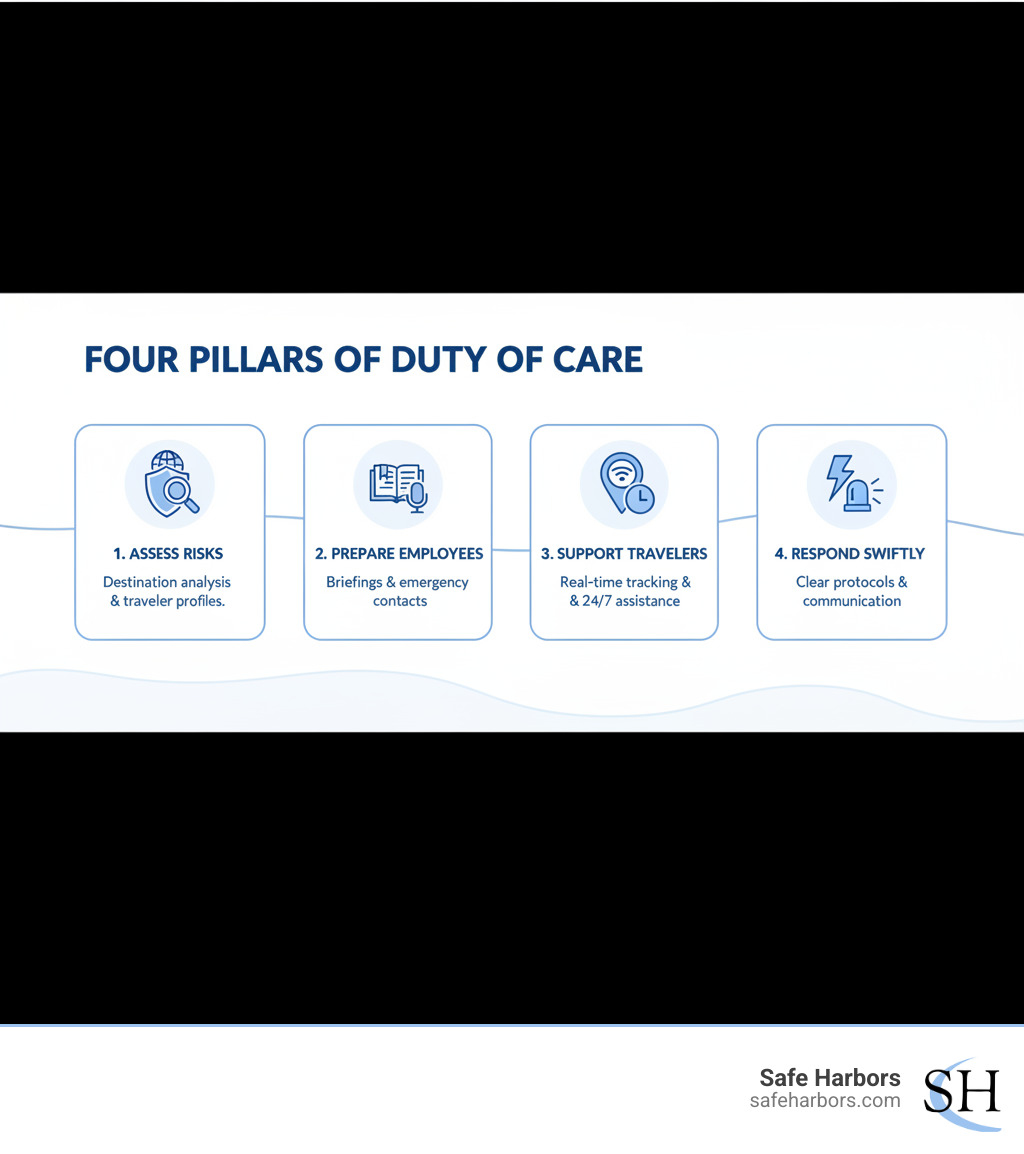
A policy is just the start. Proactive risk management is crucial for your duty of care in the travel industry program. Key actions include:
- Destination Analysis: Scrutinize the safety profile of every destination before approval.
- Traveler Tracking: Use technology to maintain real-time visibility of your travelers' locations for emergency response.
- Pre-Travel Briefings: Arm employees with knowledge about destination-specific risks and emergency procedures.
- Vetted Partners: Use only approved accommodations and transportation providers with proven safety records.
- Insurance and Technology: Ensure comprehensive travel insurance is in place and use technology for real-time risk alerts.
Our Risk Mitigation Strategy is built on these evolving principles.
Supporting Employee Mental Well-being on the Road
Duty of care in the travel industry extends to mental and emotional health. The strain of frequent travel is a real threat that employers must address.
Prevent burnout with reasonable expectations and manageable schedules that allow for rest and recovery. Provide access to stress management and wellness resources, such as mental health support services. Fostering open communication where employees feel safe to voice concerns about their travel load is critical. Healthy, well-rested employees are more productive and loyal. For actionable advice, share our 10 Tips for Staying Healthy During Frequent Business Travels with your team.
Roles, Responsibilities, and Technology in Fulfilling Duty of Care
Effective duty of care in the travel industry is a team effort, combining human collaboration with powerful technology to create a reliable safety net. Our approach to Global Travel Management integrates all these essential pieces.
Who is Responsible? A Collaborative Effort
Duty of care in the travel industry is a shared responsibility. Leadership sets the tone, but execution requires collaboration across the organization:
- Travel Managers manage policies and vendor relationships.
- HR Teams handle communication, training, and employee support. This partnership is vital, as we've seen with our Human Resource Managers clients.
- Security, Finance, and Legal teams provide risk intelligence, budget oversight, and compliance checks.
- Employees have a responsibility to follow policies and report concerns.
When everyone understands their role, the system functions seamlessly.
The Role of Technology and Travel Management Solutions
Great policies are ineffective without the right technology. Fulfilling duty of care in the travel industry today requires tools that provide speed and visibility.
Key technologies include real-time alerts for emerging threats and traveler tracking software to locate employees during a crisis. 24/7 support is non-negotiable, as emergencies don't follow business hours. At Safe Harbors, our immediate response capability provides instant assistance, anywhere in the world. We also leverage emergency communication tools and data consolidation to create a complete picture of traveler safety.
Safe Harbors automates these functions through elite tech partnerships, ensuring consistency and reducing costs. Our white-glove service is powered by systems designed for rapid response, reflecting The Best Practices of a Travel Management Company.
Implementing Your Duty of Care in the Travel Industry Program
Implementation is where your program comes to life. Start with effective communication to ensure policies are clear and accessible. It's shocking that 22% of traveling employees lack emergency contact information—a gap that must be closed.
Provide hands-on employee training on safety protocols and the use of support tools. Conduct regular policy reviews and establish feedback loops with travelers to keep your program relevant and effective. Finally, ensure seamless technology integration between your booking, communication, and duty of care platforms. For critical incidents, our Emergency Travel Service combines people, processes, and technology to protect your travelers.
Frequently Asked Questions about Travel Duty of Care
Implementing a duty of care in the travel industry program can seem complex. Here are answers to common questions we hear from organizations.
What are the first steps to creating a duty of care policy?
First, assess your organization's specific travel patterns and risks. Then, assemble a team of stakeholders from HR, legal, and finance to draft a comprehensive policy. It should cover pre-travel approvals, risk assessments, emergency procedures, and communication protocols. To streamline the process, start with a customizable travel policy template and adapt it to your company's needs.
How can we ensure employees follow the duty of care policy?
Compliance hinges on clear communication and training. Make the policy easily accessible and integrate safety checkpoints into your booking process. Use technology for automated compliance checks and real-time alerts. Given that 22% of traveling employees haven't been briefed on emergency contacts, proactive communication is vital. Regular training and reminders reinforce that these policies are for their protection, which encourages adoption.
Does duty of care apply to remote workers or "bleisure" travel?
Yes, your duty of care in the travel industry obligations extend beyond traditional business trips. If an employee travels for work-related purposes, including to a temporary remote work location, your duty of care applies. For "bleisure" (business + leisure) travel, your responsibility typically covers the business portion. It is crucial that your policy clearly defines where your obligation begins and ends to avoid confusion. Documenting these boundaries and communicating them clearly is the best practice.
Conclusion
Protecting your traveling employees is fundamental to building a resilient business built on trust. A comprehensive duty of care in the travel industry program is not a legal checkbox but a statement of your company's values, fostering loyalty and confidence.
Effective duty of care combines clear policies, proactive risk assessment, and powerful technology. However, the right tools require the right partner—one who understands that every second counts in an emergency.
That's where Safe Harbors excels. Our best response speed, white-glove service, and elite tech partnerships provide immediate assistance and real-time protection. With a robust Travel Risk Management strategy, you can face global uncertainties with confidence, knowing your team is protected.
Investing in duty of care in the travel industry pays dividends in retention, productivity, and reputation. Let's empower your team to travel smart and achieve more, wherever their journey takes them.