
What Enterprise Travel Solutions Actually Do (And Why Most Companies Get Them Wrong)

Enterprise travel solutions are platforms and services that help companies manage business travel end-to-end — from booking flights and hotels to controlling costs, enforcing policy, and keeping travelers safe.
Here's a quick breakdown of what they cover:
| Component | What It Does |
|---|---|
| Booking management | Centralized flight, hotel, and ground transport booking within policy |
| Expense integration | Connects travel spend directly to expense reporting and reconciliation |
| Policy enforcement | Automatically guides travelers toward compliant choices |
| Duty of care | Tracks traveler location and responds to safety incidents |
| Reporting & analytics | Gives visibility into spend patterns and supplier performance |
| Support services | Provides 24/7 help for changes, emergencies, and complex itineraries |
The problem? Most enterprise travel platforms were built for Fortune 100 corporations — and they show. For many corporate travel managers, the day-to-day reality looks more like wrestling with slow response times, fragmented booking systems, and employees quietly booking on consumer sites just to avoid the official tools.
That gap between what enterprise travel platforms promise and what they deliver is exactly why so many companies are rethinking their approach right now.
I'm Jay Ellenby, President of Safe Harbors Travel Group, and I've spent decades helping organizations navigate the full complexity of enterprise travel solutions — from global logistics and risk management to duty of care and cost control. In this guide, I'll walk you through what a high-performance travel program actually looks like and how to build one without losing your mind in the process.
The Shift from Legacy Models to Modern Enterprise Travel Solutions
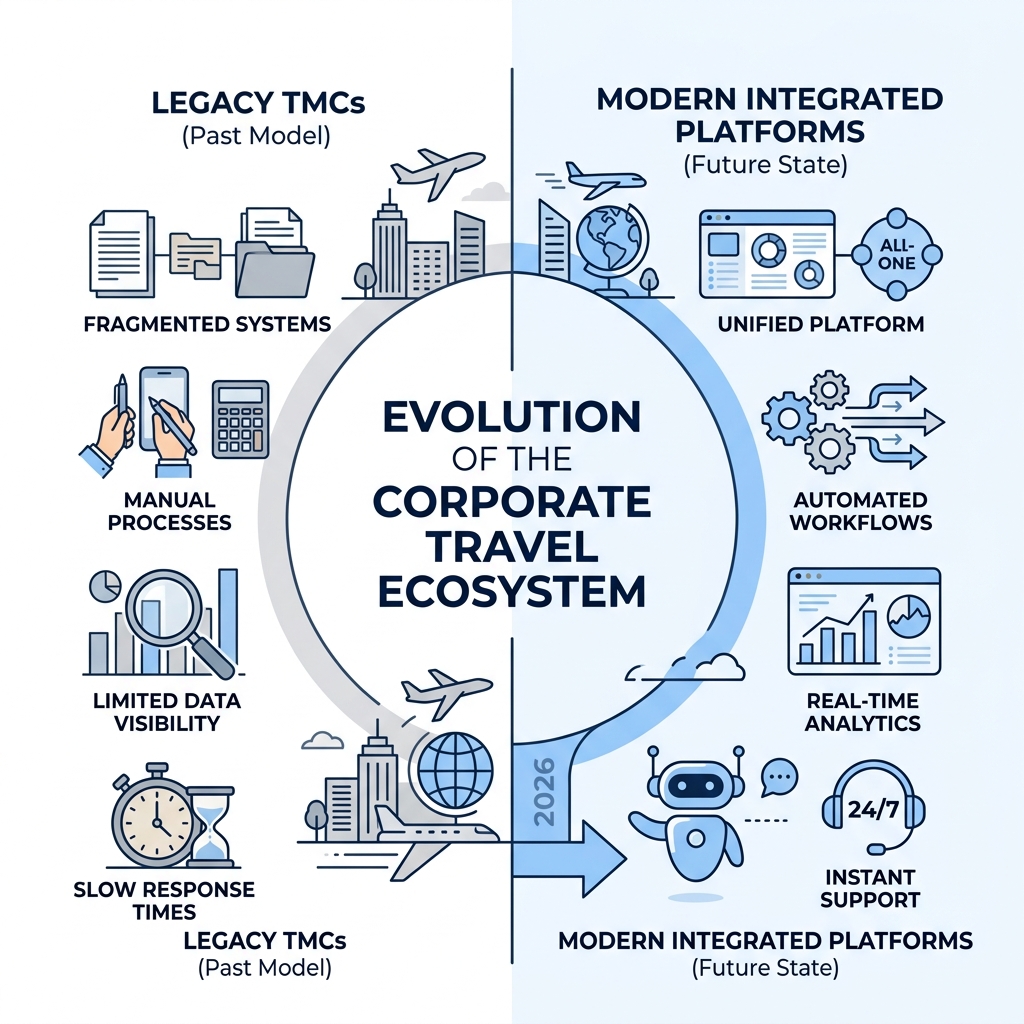
There is a significant and accelerating trend in corporate travel management that the big, legacy Travel Management Companies (TMCs) don’t want to discuss: mid-market companies are quietly abandoning them. For years, these businesses were told they needed "mega-TMC" status to access global inventory, but the reality has been a "small fish in a big pond" experience.
Legacy enterprise travel solutions were often built for Fortune 100 companies with massive edge cases. For a mid-market firm with a seven-figure travel spend, these platforms are often an "operational boat anchor." They are too complex, too slow to implement, and too expensive to maintain. We are seeing a rational market correction where companies move toward agile, modern platforms that prioritize speed and user experience over sheer size.
| Feature | Legacy Enterprise Models | Modern Agile Platforms |
|---|---|---|
| Implementation | 9 months on average | 6 weeks to 3 months |
| User Adoption | Low (leads to rogue booking) | High (intuitive UX) |
| Support | 30-minute average hold times | <90 second response times |
| Pricing | Hidden fees and "gotchas" | Transparent, often fee-free models |
| Integration | Fragmented "stitched" systems | Unified T&E supersystems |
For more insights into how these models are evolving, explore our Global Travel Management resources.
Addressing the Administrative Burden
One of the biggest failures of traditional enterprise models is the administrative weight they drop on your team. These systems often come with thousands of irrelevant configurations. Because mid-market companies rarely have a dedicated team of travel system analysts, the travel manager ends up wrestling with a tool that wasn't built for them.
Modern enterprise travel solutions focus on simplicity. Instead of a nine-month grueling implementation that requires a full day of employee training, newer platforms can be rolled out in weeks. This allows your team to focus on corporate travel booking optimization rather than troubleshooting software.
Solving the Rogue Booking Crisis
When a booking tool is slow or confusing, employees do what comes naturally: they book on Google or Expedia. This "rogue booking" (or program leakage) is the silent killer of cost control. If you can’t see the spend, you can’t manage it.
Modern platforms solve this by offering a consumer-grade user experience. When the corporate tool is as easy to use as a vacation site, adoption skyrockets. This gives finance teams 100% cost visibility and ensures that every trip is within policy, effectively closing the loop on spend management.
Why Traditional Models Fail Mid-Market Companies
The "service gap" is where the legacy model truly falls apart for growing companies. In a mega-TMC environment, a mid-market account is often assigned a junior account manager. When things go wrong—a missed connection in Tokyo or a canceled hotel in London—you find yourself waiting on hold for 30 minutes while your traveler is stranded.
This "small fish" syndrome leads to inadequate support and a lack of proactive management. If you are currently feeling like a number rather than a partner, it might be time to learn how to find a new travel management company that values your business.
The Three Core Failures of Legacy Models
- Complexity: Irrelevant features that create administrative friction.
- Poor UX: Clunky interfaces that drive travelers to book outside the system.
- Inadequate Support: Slow response times that compromise traveler safety and productivity.
By moving away from these failures, companies can see 7 fundamental ways corporate travel management saves money, from negotiated rates to recovered unused tickets.
The Myth of the Mega-TMC
Many companies fear that leaving a legacy provider means losing global reach. This is a myth. Modern, cloud-based enterprise travel solutions provide the same—if not better—global inventory by connecting directly to airlines (via NDC) and aggregators. You get 24/7 support and localized compliance without the baggage of an outdated tech stack.
Core Features of a High-Performance Mobility Program
A true enterprise solution doesn't just stop at flights and hotels; it encompasses total mobility. Ground transportation is a massive part of the travel budget that is often overlooked.
Streamlining Ground Transportation
Managing car rentals is crucial for efficiency and duty of care. High-performance enterprise travel solutions provide tools like Enterprise Travel Direct (ETD), which guides employees toward compliant choices.
- Fleet Access: Direct access to diverse fleets in 90+ countries.
- Contracted Rates: Ensuring base rates are honored at 100% of locations.
- Mileage vs. Rental: Tools that help employees decide when a rental is more cost-effective than mileage reimbursement.
With ground transportation available in 35k+ locations across 200+ countries, your program needs to be as mobile as your workforce. Ensuring these rentals are tracked is a key part of your guide to corporate duty of care.
Integrating Travel and Expense
The "T&E supersystem" is the gold standard for modern business. Instead of travelers manually entering data into an expense report, the booking data should auto-populate.
- Automated Reconciliation: Matching receipts to corporate cards instantly.
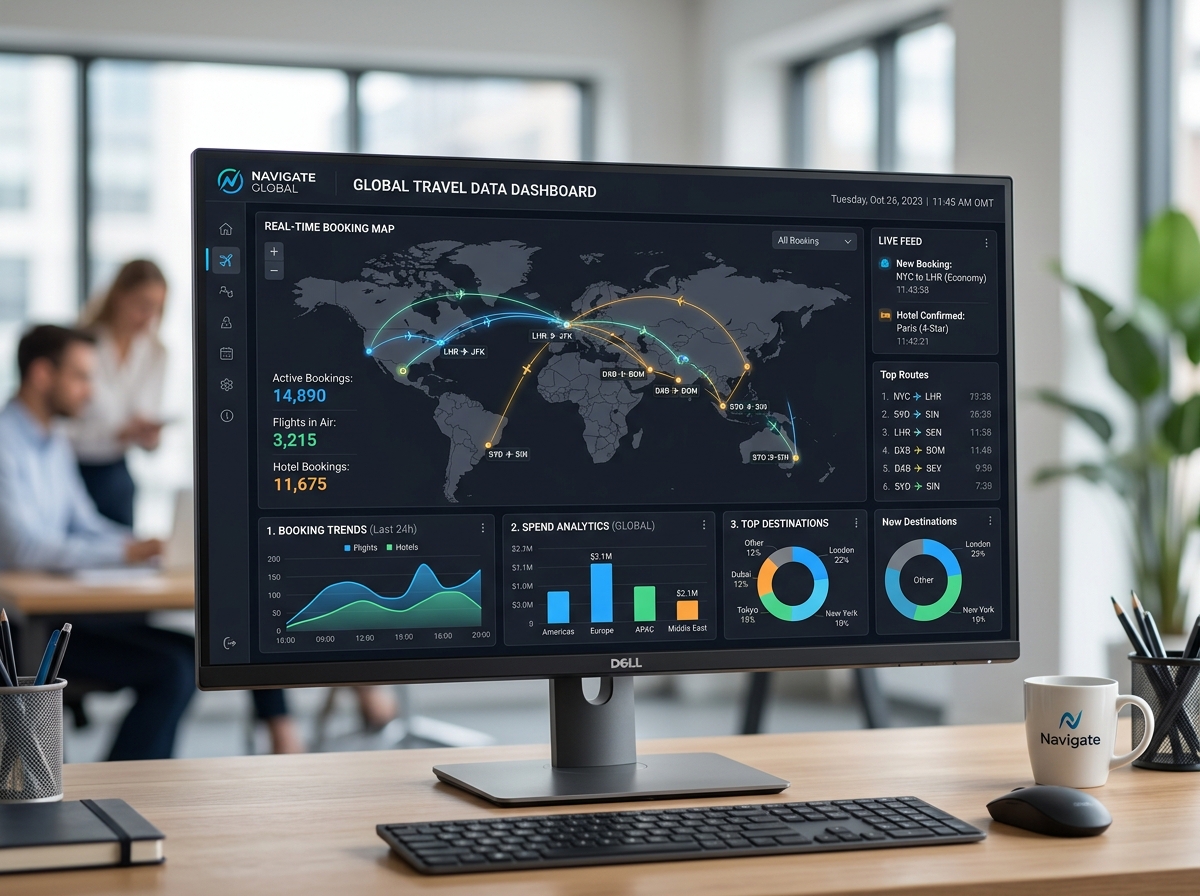
- Real-Time Reporting: Seeing exactly where the money is going as it's being spent.
- Fraud Detection: Using AI to flag out-of-policy spending before the reimbursement happens.
For a deeper dive into how this works, check out our guide on automated spend analysis.
Building the Business Case for a Modern Platform
To convince leadership to switch, you need to quantify the "hidden costs" of your current system. This includes lost productivity from employees wrestling with clunky tools and the thousands of dollars lost to rogue spending.
Migrating Without Disruption
One of the biggest myths is that switching platforms is a nightmare. In reality, modern providers have implementation teams that can extract your data and migrate your policies in as little as 6 weeks. You don't lose your negotiated airline or hotel rates; they are simply loaded into the new, faster system.
Quantifying the ROI of White-Glove Service
What is it worth to have a call answered in under 90 seconds? For a traveler stuck in an airport, it's everything. For the company, it means faster resolutions and less downtime. Proactive management also includes:
- Unused Ticket Recovery: Ensuring credits are actually used before they expire.
- Supplier Negotiations: Using data to get better deals with the airlines you use most.
- Duty of Care: Real-time monitoring to keep your team safe.
Our commitment to unparalleled service quality ensures that your travel program becomes a strategic asset rather than a headache.
Frequently Asked Questions about Enterprise Travel Solutions
Do we need a mega-TMC for global enterprise travel solutions?
No. Modern, cloud-based platforms offer the same global inventory (millions of properties and hundreds of airlines) with much higher agility. You get 24/7 expert assistance and regional flexibility without the slow service associated with legacy giants.
How do modern enterprise travel solutions handle complex approvals?
They use hierarchical policy structures and dynamic rules. This allows for multi-level workflows (e.g., a manager approves, then a VP for international trips) and "policy localization" where rules change based on the traveler's home region or department.
Will we lose negotiated rates when switching platforms?
Absolutely not. Modern systems are built to load your existing GDS and NDC content, ensuring your volume discounts and preferred supplier rates are honored from day one.
Conclusion
Building a world-class travel program doesn't have to be a "bumpy ride." By choosing enterprise travel solutions that prioritize the user experience and provide lightning-fast support, you can drive your business further while keeping your sanity intact.
At Safe Harbors, we provide the white-glove service and elite tech partnerships you need to scale globally. From concierge management to robust duty of care, we act as a true extension of your team.
Optimize your enterprise travel program today and see how fast response times and human expertise can transform your corporate travel.