Why Meeting and Incentive Travel Is One of the Smartest Investments Your Company Can Make

Meeting and incentive travel is a structured corporate strategy that uses curated group travel experiences to reward top performers, drive business results, and strengthen company culture.
Here's what you need to know at a glance:
| Element | What It Means |
|---|---|
| What it is | Organized travel programs tied to performance goals or company meetings |
| Who it's for | Employees, sales teams, channel partners, and executives |
| Why it matters | Boosts motivation, loyalty, engagement, and revenue growth |
| Average spend | ~$5,100 per person globally; ~$6,000 in North America |
| Key trend | 55% of senior leaders now consider it essential to company success |
Every October, the global incentive travel community gathers to take stock of where the industry is heading. And the message from recent years is consistent: this is no longer just a perk. It's a strategic tool that top organizations use to retain talent, align teams, and move the needle on performance.
But planning these programs isn't simple. Rising costs, shifting generational expectations, complex logistics, and destination safety concerns are making execution harder than ever for corporate travel managers.
This guide gives you a clear, practical blueprint — covering budgets, trends, destination strategy, technology, and contracts — so you can plan programs that actually deliver results.
I'm Jay Ellenby, President of Safe Harbors Travel Group, and I've spent decades helping organizations navigate the full complexity of meeting and incentive travel, from global logistics and risk management to duty of care and concierge-level execution. Let's walk through exactly what it takes to get this right.
The Strategic Value of Incentive Programs
In the modern workplace, a simple "thank you" or a year-end bonus often disappears into a savings account or pays off a credit card bill. While appreciated, these material rewards rarely create the lasting emotional connection that a well-executed meeting and incentive travel program provides. We’ve seen how these experiences transform "employees" into "brand ambassadors."

The core value of incentive travel lies in its ability to foster deep employee loyalty. When you take your top performers out of the office and into an aspirational environment—whether it’s a luxury beachfront resort or a rugged mountain lodge—you are signaling that their contribution is worth more than just a line item on a paycheck. This recognition drives performance goals; when the "carrot" is a once-in-a-lifetime trip, teams are naturally more motivated to hit their KPIs and exceed revenue growth targets.
Furthermore, these programs are increasingly adhering to high industry standards, such as those recognized by the CMI 25, which highlights the top meeting and incentive agencies in North America. By focusing on professional execution, companies ensure that the "reward" doesn't become a logistical nightmare for the attendees.
One of the first decisions we help our clients make is choosing between group and individual programs. Both have their place, but they serve different strategic ends:
| Program Type | Pros | Cons |
|---|---|---|
| Group Incentives | Builds culture, fosters networking, allows for exclusive "money-can't-buy" events. | Higher logistical complexity, less flexibility for individual schedules. |
| Individual Incentives | Maximum flexibility, highly personalized, great for "always-on" recognition. | Loses the team-building and networking benefits of shared experiences. |
Aligning Incentives with HR and Business Goals
For an incentive program to be truly successful, it must have buy-in from the top. Today, 55% of senior leaders view incentive travel as essential to their company’s success. It isn't just about the trip; it’s about culture building. When executives participate in these trips, it flattens the organizational hierarchy and allows for organic relationship building that simply cannot happen in a boardroom.
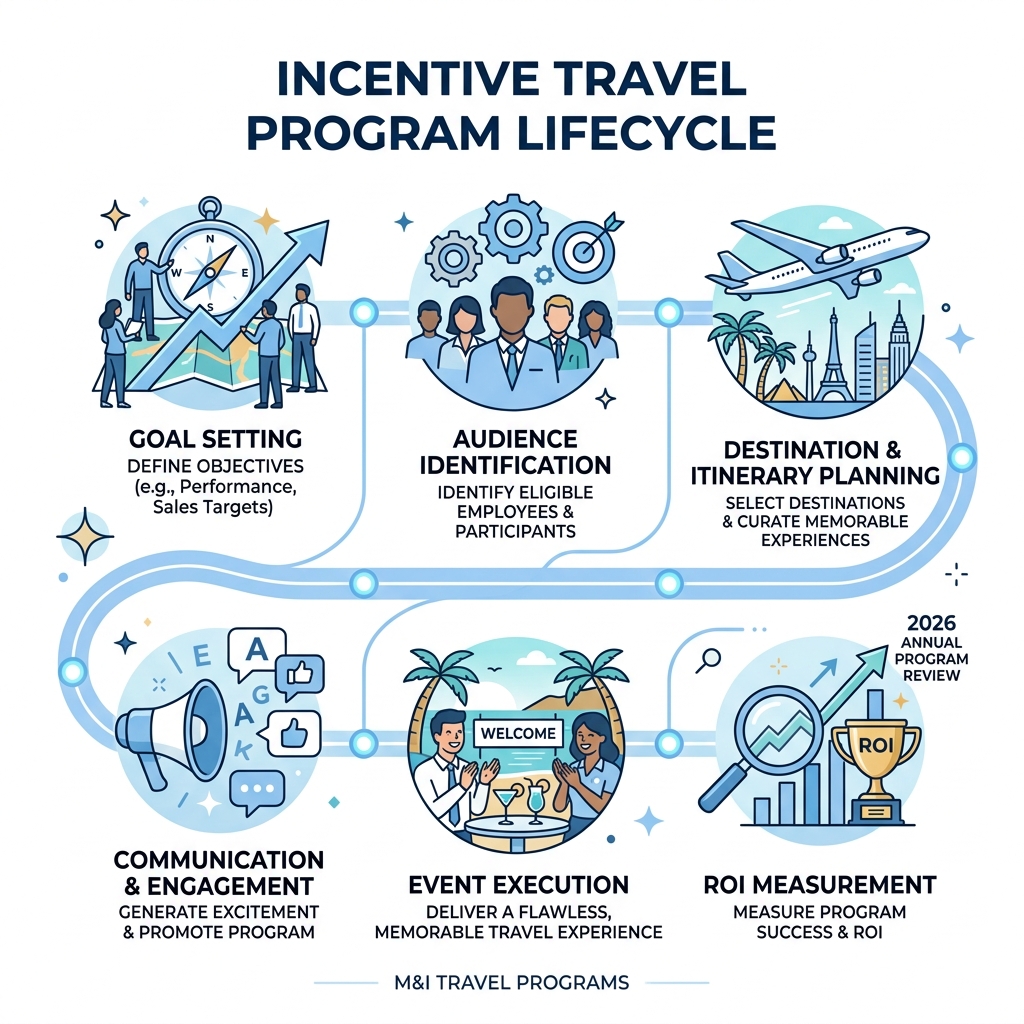
To prove the value to stakeholders, we focus heavily on ROI measurement. This isn't just about the revenue generated during the qualification period; it’s about retention rates, employee engagement scores, and the long-term impact on productivity. Effective event attendee management ensures that every touchpoint—from the initial invitation to the post-trip survey—is aligned with these broader HR goals.
Navigating Budgets and Economic Pressures
We would be remiss if we didn't address the "elephant in the room": the rising cost of travel. As we look toward 2025 and 2026, the industry is facing significant economic headwinds.
According to the latest data, 38% of planners cite inflation and cost escalation as their top concern. The Incentive Travel Index 2025 highlights that while budgets are rising, they are often struggling to keep pace with the actual cost of airfare, food and beverage, and hotel rates.
Currently, the average per-person spend on incentive travel has climbed to $5,100 globally. In North America, that figure is even higher, leading the pack at approximately $6,000 per head. Meanwhile, APAC is showing incredible confidence, with 46% of buyers forecasting increased activity by 2027.
Planners must also stay vigilant regarding tariff mitigation. Rising tariffs on materials like aluminum, copper, and textiles—often used in staging, signage, and exhibit builds—can sneakily inflate a budget if not accounted for early in the planning process. At Safe Harbors, we recommend a "value-first" approach: instead of cutting the guest list, consider shorter-haul destinations or trimming "pillow gifts" to preserve the quality of the core experience.
Trends, Technology, and Global Logistics
The landscape of meeting and incentive travel is shifting beneath our feet, driven largely by new generational preferences and a renewed focus on the planet.
The "Taylor Swift" Effect and Gen Z
We are seeing a massive shift in what "luxury" means. For older generations, it might have been a gold-plated hotel room. For Gen Z, it’s about access and authenticity. Interestingly, the "Taylor Swift effect" is a real topic of discussion in the industry—when asked if younger qualifiers would rather see a marquee concert like Taylor Swift than visit a traditional destination like Hawai‘i, 39% of professionals agreed. This tells us that programs must be more experiential and culturally relevant than ever before.
Sustainability and Quest Zero
Sustainability is no longer a "nice-to-have." Initiatives like the Quest Zero Initiative are leading the charge, with a commitment to reach net-zero emissions by 2050. This influences everything from venue selection to waste management. We encourage our clients to download visitor tips to help attendees participate in these eco-friendly efforts.
Global Networking and Education
Staying ahead of these trends requires constant education. Events like IMEX Frankfurt 2025 and the Global Meeting & Incentive Travel Exchange (GMITE) are vital for sourcing new venues and networking with global suppliers. These platforms allow us to vet the 135+ new and upcoming hotels and venues across six continents to ensure they meet our clients' rigorous standards.
Ironclad Logistics and Contracts
When preparing for corporate meetings abroad, the details matter. This includes securing ironclad contracts with speakers and entertainers. In an era of geopolitics and unpredictability, your contracts must account for force majeure, cancellation policies, and precise service-level agreements. We also recommend leveraging co-located events like the Luxury Travel Advisor’s ULTRA Summit to stay informed on the latest "Trends & Topics" driving the industry.
Fostering Attendee Interaction and Engagement
The best meeting and incentive travel programs prioritize connection. We’ve moved away from "death by PowerPoint" toward neuroscience-informed design. This means creating "brain-friendly" environments that encourage interaction through:
- Innovative Icebreakers: Moving beyond the standard "two truths and a lie" to tech-driven, interactive games.
- Unstructured Downtime: Especially in North America, attendees are craving more free time to explore destinations at their own pace.
- Space Design: Using flexible seating and outdoor venues to break down social barriers.
- Event Technology: Utilizing custom apps and AI to help attendees find like-minded peers for networking.
Frequently Asked Questions about meeting and incentive travel
What are the top destinations for meeting and incentive travel in 2026?
Destinations like Florida and Colorado remain perennial favorites due to their diverse infrastructure and outdoor appeal. However, 69% of buyers are actively seeking destinations they have never used before. Personal safety is the number one consideration for 73% of planners, followed closely by direct air access. We are seeing a surge in interest for "shorter-haul" emerging locations that offer luxury without the 15-hour flight.
How is AI transforming the planning of meeting and incentive travel?
AI is a game-changer for efficiency. Tools like ChatGPT and Microsoft Copilot are being used by over 90% of planners for initial destination research, program design, and content creation. AI helps us personalize the attendee experience at scale—from customized itineraries to real-time translation services, making the "global" part of global travel feel much more local.
What are the primary challenges affecting destination selection?
Geopolitics and safety are the most significant hurdles today. 70% of respondents in recent surveys predict a decline in US inbound travel due to political perceptions. Accessibility (air lift) and budget constraints due to the 4% YoY increase in per-person spend also play a major role. Planners must balance the desire for a "new" destination with the practical need for a capable DMC and stable local environment.
Conclusion
Planning successful meeting and incentive travel requires a delicate balance of strategic vision, fiscal responsibility, and creative flair. In an era of rising costs and complex global dynamics, you need a partner who can provide more than just a booking engine.
At Safe Harbors, we specialize in providing global business travel solutions with a "white-glove" touch. Our USP is our unmatched response speed and comprehensive concierge management. Whether you are looking for a premier golf experience, a relaxing spa retreat, or a world-class winery backdrop for your next executive meeting, we handle the logistics so you can focus on your people.
From newly renovated luxury guest rooms and private villas to global culinary tours, the possibilities for rewarding your team are endless.
Start planning your next meeting and incentive travel experience with Safe Harbors today.