What Is End-to-End Travel — and Why It's Changing How Companies Move

End-to-end travel is a comprehensive approach to managing every stage of a journey — from initial planning and booking to in-trip support and post-trip expense reconciliation — through a single, integrated service or platform.
Here's a quick breakdown of what it covers:
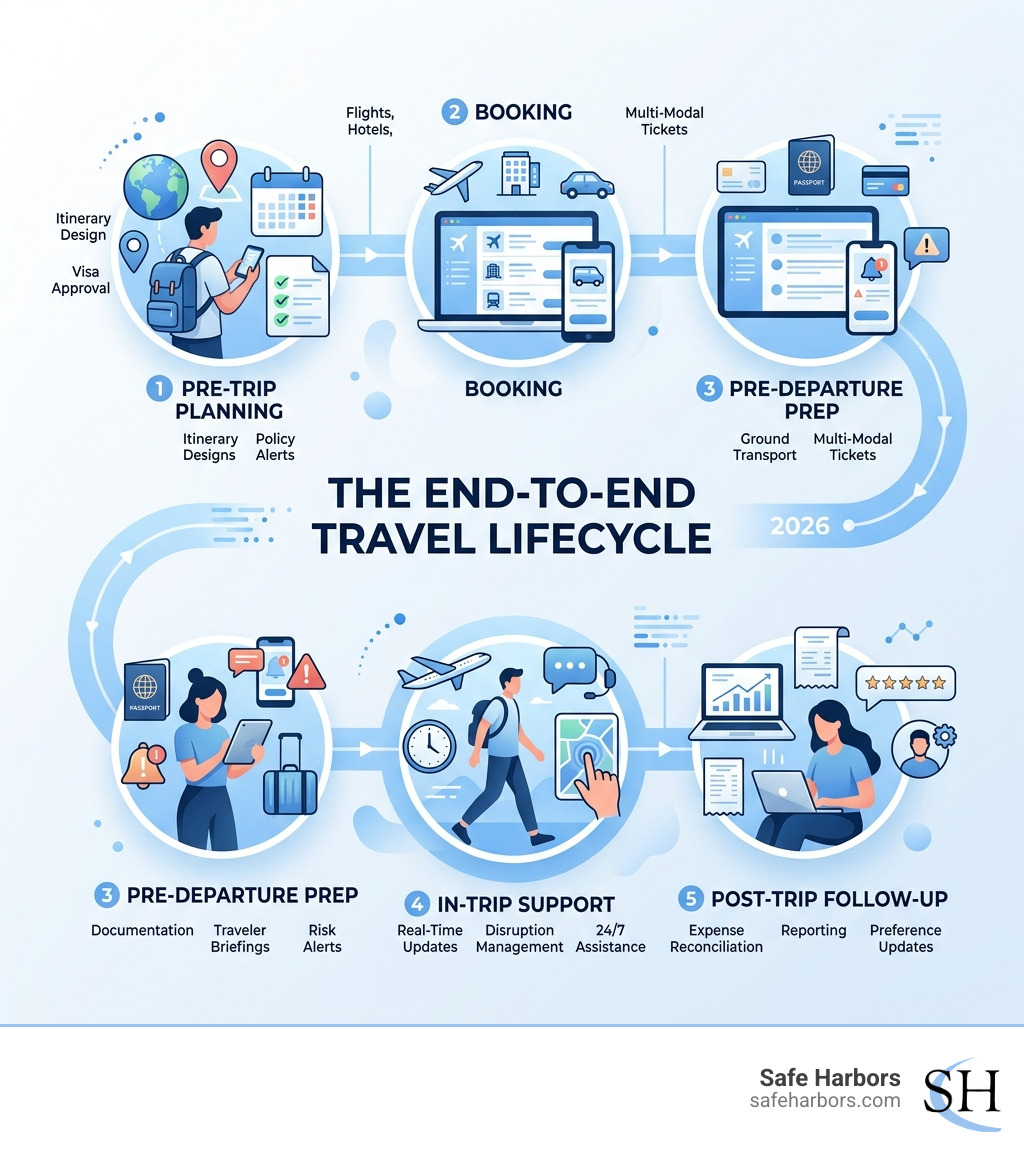
| Stage | What's Included |
|---|---|
| Pre-trip planning | Itinerary design, visa coordination, policy approval |
| Booking | Flights, hotels, ground transport, multi-modal tickets |
| Pre-departure prep | Documentation, traveler briefings, risk alerts |
| In-trip support | Real-time updates, disruption management, 24/7 assistance |
| Post-trip follow-up | Expense reconciliation, reporting, preference updates |
For corporate travel managers, the old way of doing things — juggling multiple booking platforms, chasing down approvals, and reacting to disruptions after they've already derailed a trip — simply doesn't work anymore.
Travelers' expectations have shifted dramatically. According to SITA research, 42% of passengers want a single booking across multiple modes of transport, and 35% expect real-time journey updates delivered through one digital app. Meanwhile, businesses need tighter cost control, stronger duty of care, and less administrative overhead.
The travel industry is following the same path as banking, music, and TV before it — moving from fragmented, transactional services toward unified, customer-first experiences. End-to-end travel management is that next step for corporate travel.
I'm Jay Ellenby, President of Safe Harbors Travel Group, and over decades of leading full-service global travel management, I've seen how end-to-end travel solutions transform the way organizations manage risk, control costs, and support their people on the road. In the sections ahead, I'll walk you through everything you need to know to implement these solutions effectively.
Defining End-to-End Travel: A Holistic Approach
When we talk about an end-to-end travel solution, we are describing a service that removes the "seams" between different parts of a trip. In the past, travel was a series of disconnected events: you booked a flight on one site, a hotel on another, and hoped the taxi showed up on time. If the flight was delayed, you were the one stuck on the phone trying to move your hotel reservation.
The Evolution of Managed Travel Services has moved us into what many call "Travel 3.0." This era is defined by service integration, where data flows freely between the traveler, the agency, and the vendors. Instead of a fragmented mess, you get a unified experience.
| Feature | Traditional Booking | End-to-End Management |
|---|---|---|
| Booking Source | Multiple websites/apps | Single integrated platform |
| Support | Reactive (you call them) | Proactive (they alert you) |
| Policy | Manual checks | Automated enforcement |
| Expenses | Manual receipts | Automated capture & reconciliation |
| Risk | Unknown/Manual tracking | Real-time GPS & risk alerts |
The Shift from Transactional to Experiential
Today’s travelers don’t just want a ticket; they want an experience that mirrors their digital lives—fast, intuitive, and helpful. As of April 2026, the demand for "intermodal" journeys is skyrocketing. In fact, nearly 70% of passengers are planning trips that involve more than just a flight, such as combining rail, air, and ride-sharing.
Meeting these passenger expectations requires Comprehensive Trip Planning Strategies. It’s no longer enough to just get someone from Point A to Point B. We must ensure they have real-time updates, shorter waiting times (requested by 64% of passengers), and a sense of being cared for throughout the entire process.
The Core Components of End-to-End Travel Coordination
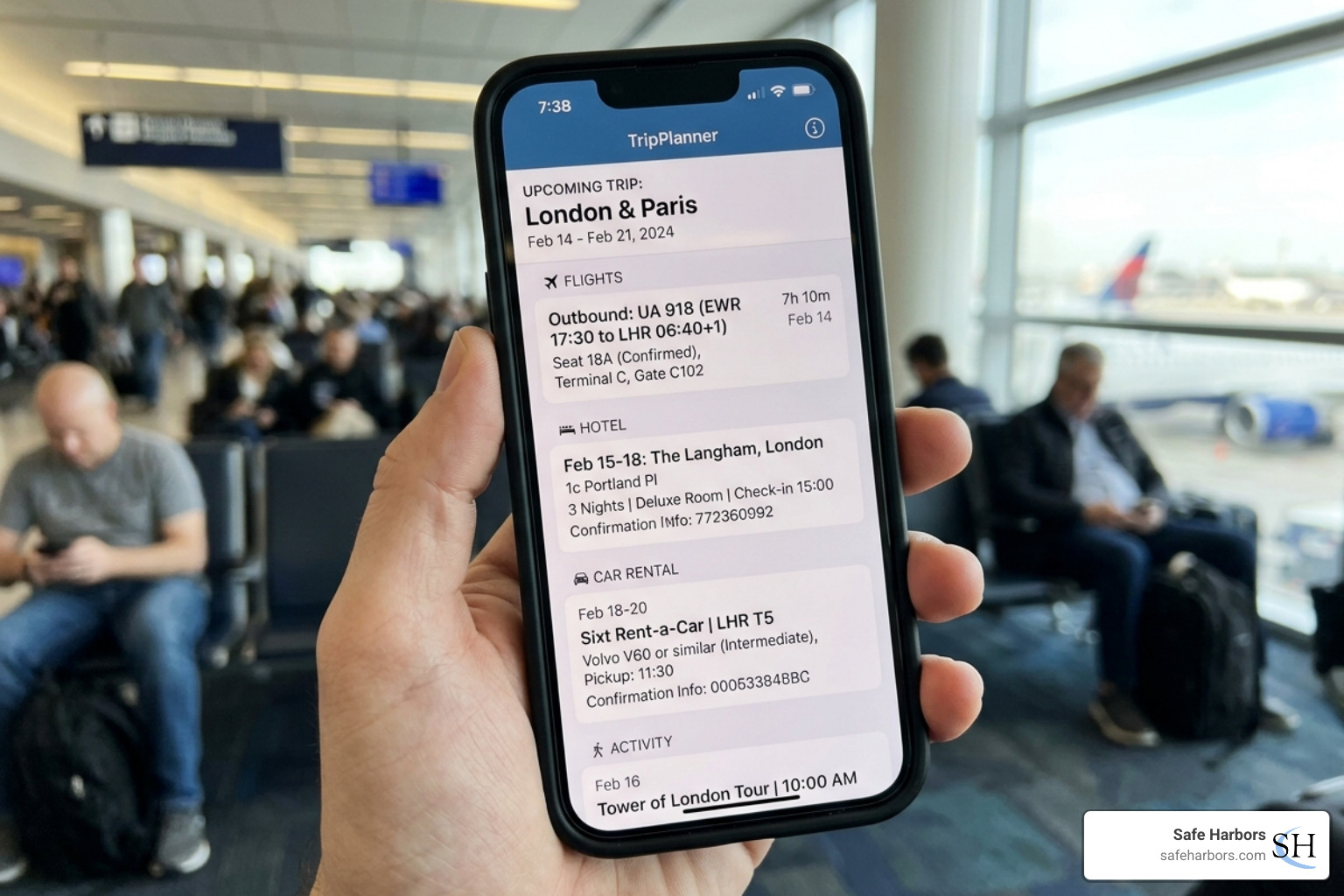
Effective End-to-end travel coordination is built on five pillars. If one is missing, the whole experience can crumble.
- Pre-Trip Planning: This is where we clarify the "why" of the trip. It involves strategic itinerary design—choosing hotels near meeting venues and ensuring flight times allow for adequate rest.
- Booking Automation: Using an Online Booking Tool ensures that every choice stays within company policy while giving the traveler the freedom to choose their preferred brands.
- In-Trip Support: This is the "safety net." It includes 24/7 traveler support services to handle the inevitable flight delay or lost luggage.
- Post-Trip Reconciliation: The trip isn't over until the paperwork is done. Modern solutions automate expense capture, which feeds directly into Travel Spend Management.
- Strategic Management: Every trip provides data. We use this data for Corporate Trip Management to refine future travel, negotiate better rates, and improve the traveler's profile.
Safety and Compliance in the Modern Journey
Duty of care is the legal and moral obligation of a company to ensure its employees are safe while traveling. In an End-to-end travel model, Travel Risk Management is baked into the system.
By following a Duty of Care Policies Complete Guide, companies can implement real-time alerts for political unrest or weather events. For example, 78% of passengers are now willing to share biometric data ahead of travel to speed up airport processing. This digital identity integration allows us to track where travelers are and get them to safety instantly if a crisis occurs.
The Role of AI and Technology in Modern End-to-End Travel Planning
The year 2026 has seen a massive leap in how we use technology. We've moved beyond simple chatbots to "Agentic AI." This is a system where multiple AI agents collaborate—one finds the best flight, another matches it with a hotel, and a third validates the logistics to ensure there's enough time for the airport transfer.
The Impact of AI on Corporate Travel is most visible in its ability to reduce 10+ hours of research to mere seconds. These tools use "Multi-LLM validation" to check transit gaps and hotel proximity that older systems might miss. When you use a modern Corporate Booking Tool, you aren't just seeing a list of flights; you're seeing a validated, logical plan.

Contactless Travel and Digital Identity
"Contactless" is no longer a buzzword; it’s the standard. From biometric airport processing to digital hotel keys, the goal is to reduce physical touchpoints.
- 79% of passengers are now comfortable storing their passport on their phone.
- Digital Identity: Sharing data ahead of time reduces airport queues.
- Automated Capture: Contactless payments mean travelers don't have to keep a folder full of paper receipts.
Scientific research on autonomous travel agents shows that AI can now handle open-ended tasks without human intervention, making the "pocket concierge" a reality for every business traveler.
Strategic Benefits for Businesses and Executives
Why do companies make the switch? It usually comes down to three things: money, time, and people.
- Cost Efficiency: By consolidating spend through one Global Travel Management partner, companies can access negotiated rates that aren't available to the general public.
- Time Savings: For busy executives, travel logistics are a major friction point. End-to-end travel solutions allow them to focus on their business objectives rather than their boarding passes.
- Traveler Well-being: Frictionless travel means less stress. When a traveler knows that a 24/7 support team is monitoring their flight for delays, they arrive at their destination rested and ready to perform.
Maximizing Efficiency with End-to-End Travel Solutions
Many of our clients use remote executive support to handle the micro-details. These assistants act as the human layer on top of the tech, managing "preference Bibles"—knowing exactly which seat an executive prefers or which hotel chain they find most comfortable.
When a disruption happens, Streamline Business Travel protocols kick in. Instead of the executive waiting in a 30-minute phone queue (the industry average), our "white-glove" service aims for response times under 90 seconds. This proactive disruption management is the difference between a successful business trip and a wasted day at the airport.
Best Practices for Implementing End-to-End Travel Solutions
Moving to a managed model requires a plan. We recommend following Your 6-Step Guide to Making the Move to Managed Travel.
One of the first steps is defining a clear Travel Policy. A good policy isn't just about what people can't do; it’s about making the right choices the easiest choices. By setting up Standard Operating Procedures (SOPs), you ensure that every trip follows the same high standard of safety and efficiency.
Timing and Logistics for Domestic and International Trips
Timing is everything. For pre-decided trips, our rule of thumb for 2026 is:
- Domestic Travel: Plan at least three weeks ahead to secure the best rates and room availability.
- International Travel: Plan four to six weeks ahead. This allows ample time for visa coordination and managing complex multi-leg logistics.
Effective itinerary design also involves creating "buffer zones." We don't just book the meeting; we book the travel time to the meeting, ensuring the executive isn't sprinting through a foreign city.
Frequently Asked Questions about End-to-End Travel
What is the difference between a travel agent and an end-to-end solution?
A traditional travel agent often focuses on the transaction—selling you a ticket. An End-to-end travel solution focuses on the journey. It includes pre-trip risk assessment, in-trip support, and post-trip data analysis. It’s a partnership that manages the entire lifecycle of travel, not just the booking.
How does AI improve the end-to-end travel experience?
AI acts as a 24/7 assistant. It can predict price fluctuations, suggest personalized itineraries based on your past preferences, and automatically rebook you if a flight is canceled before you even realize there's a problem. It turns reactive travel into proactive travel.
Why is Duty of Care essential in end-to-end travel management?
Risks can change in an instant. Duty of care ensures you know where your employees are and that you have a system to reach them and bring them home. Without an end-to-end solution, you might have travelers booked on various sites, making it impossible to track them during an emergency.
Conclusion
At Safe Harbors, we believe the future of travel is human-centric but tech-powered. Our business travel services are designed to provide that "white-glove" experience where you never feel like a number in a queue.
By embracing End-to-end travel, your organization can transform a complex, fragmented necessity into a streamlined strategic advantage. Whether it's through our unmatched response speed or our elite technology partnerships, we are here to ensure that from the moment you leave to the minute you return, every detail is handled.
The world is moving fast—make sure your travel program is keeping up. For more information on how to modernize your approach, explore our Global Travel Management Guide 2025 and see how we can help you navigate the future of travel.