
Why Corporate Travel Data Analytics Is the Smartest Investment Your Program Can Make
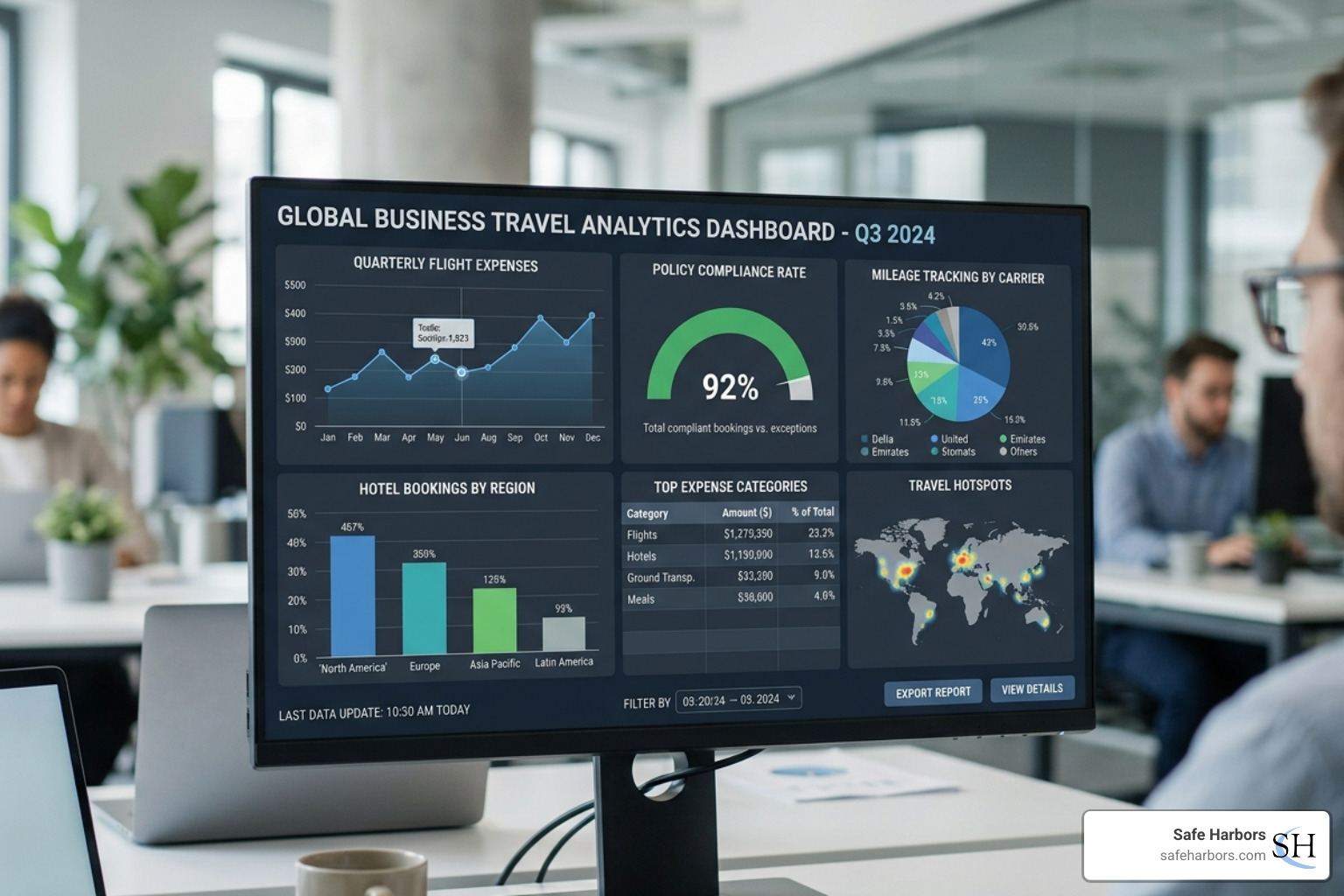
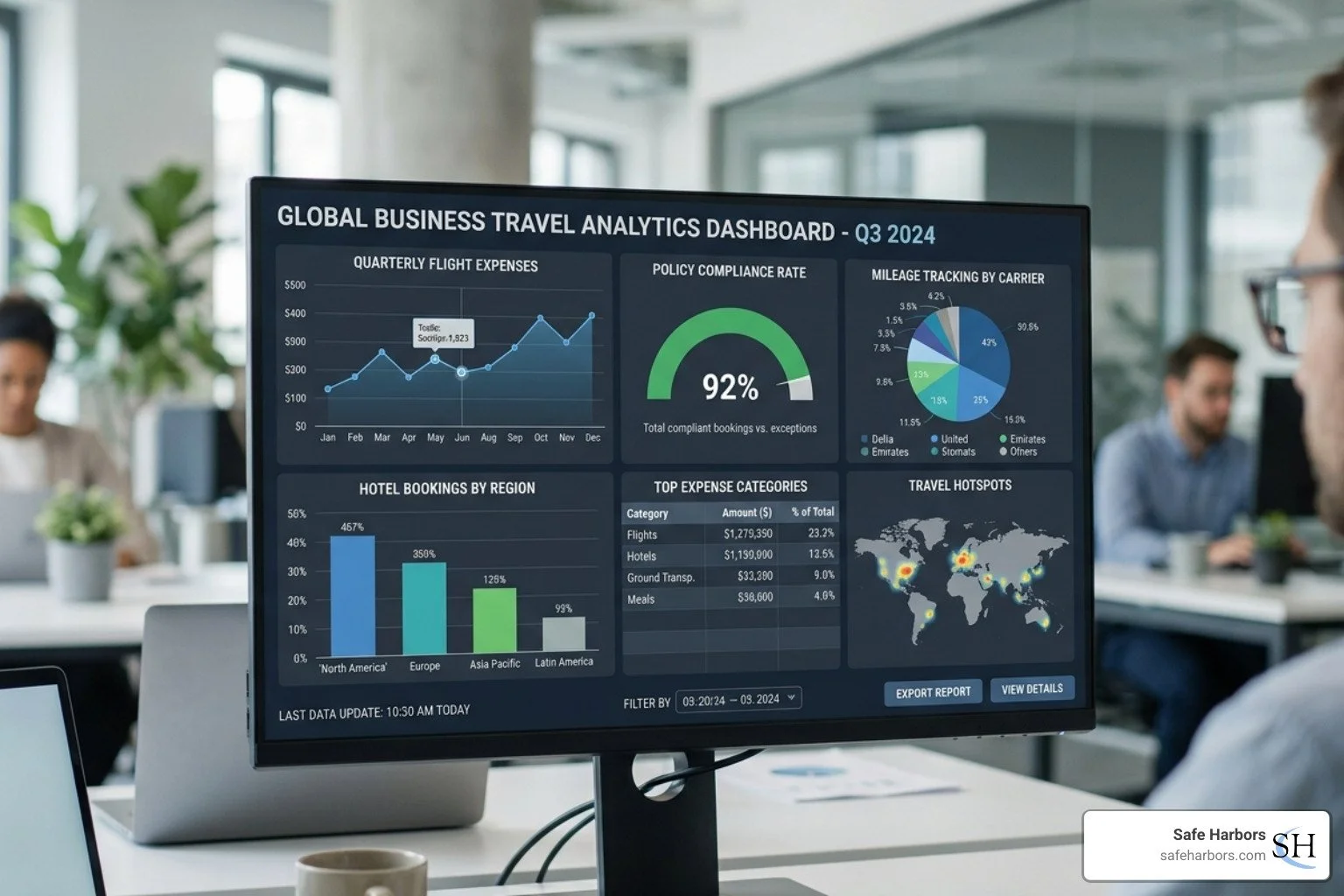
Corporate travel data analytics is the practice of collecting, analyzing, and acting on data from your company's travel and expense (T&E) program to reduce costs, improve policy compliance, and make smarter decisions.
Here's what it can do for your program at a glance:
| Goal | What Analytics Delivers |
|---|---|
| Reduce costs | Identify overspending, leakage, and missed savings |
| Enforce policy | Shift compliance from post-trip audits to point-of-booking |
| Negotiate with vendors | Use real spend data to secure better rates |
| Protect travelers | Real-time location tracking and duty of care alerts |
| Report on sustainability | Track carbon emissions and traveler wellness metrics |
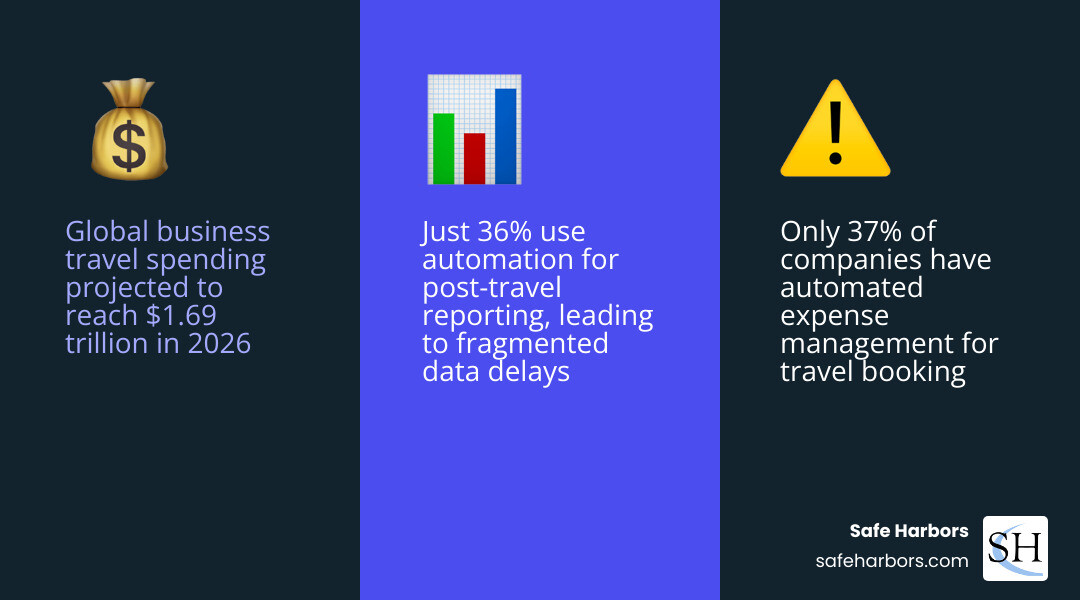
Right now, global business travel spending is on track to hit $1.69 trillion in 2026. Yet despite that scale, only 37% of companies have automated their expense management for travel booking, and just 36% use automation for post-travel reporting.
That gap is expensive.
Most travel programs are still running on fragmented data, manual spreadsheets, and monthly reports that arrive too late to change anything. Meanwhile, costs quietly climb and policy violations go unnoticed until they show up in a budget review.
The good news? The data you need to fix this already exists inside your travel program. You just need the right tools and strategy to put it to work.
I'm Jay Ellenby, President of Safe Harbors Travel Group, and I've spent decades helping organizations take control of their travel programs through smarter data strategies — including implementing corporate travel data analytics frameworks that drive real, measurable results. In the sections below, I'll walk you through exactly how to stop guessing and start tracking.
Understanding the Power of Corporate Travel Data Analytics
When we talk about corporate travel data analytics, we aren't just talking about looking at a credit card statement at the end of the month. We are talking about a fundamental shift in how businesses view their travel investments. In 2026, data is no longer a byproduct of travel; it is the strategic intelligence that fuels growth.
As business travel activity sees a 16.1% year-over-year growth, the volume of data generated is staggering. Every flight search, hotel booking, and Uber receipt tells a story. Leading organizations use these insights to elevate business travel with data-driven analytics, moving away from "gut feelings" toward evidence-based strategies.
The Shift from Reactive to Proactive Management
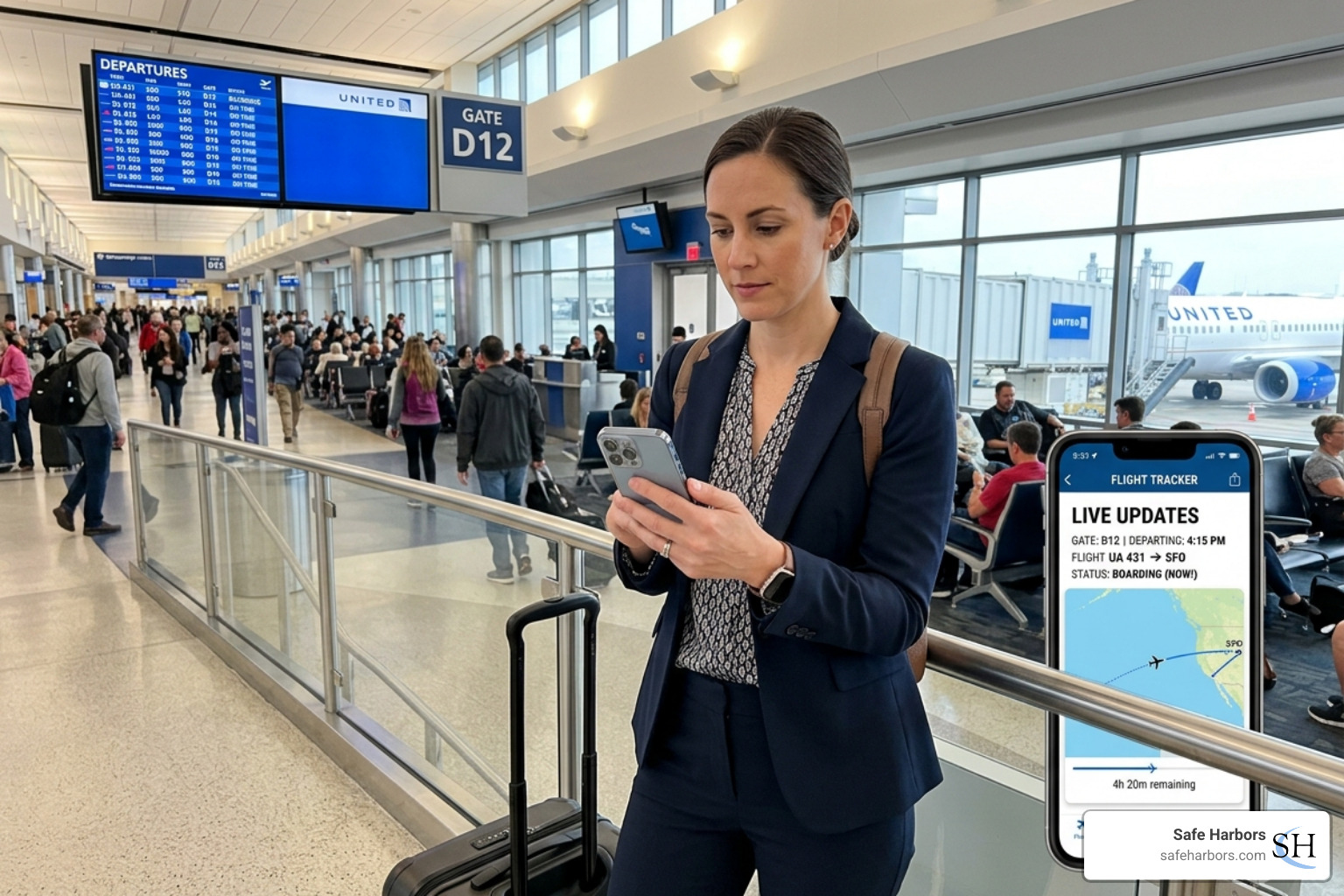
For years, travel management was reactive. You’d receive a report in June showing that your team overspent in April, and by then, the money was gone. Today, advanced analytics allows for real-time budgeting and proactive intervention.
By integrating your analytics with your booking tools, you can implement "point-of-decision" guidance. Instead of scolding an employee for booking a luxury hotel after they return, the system can nudge them toward a preferred partner at the moment of booking. This transition is a core component of a Travel Spend Management Complete Guide, ensuring that "leakage"—spending that happens outside of approved channels—is caught before it happens.
Overcoming Fragmented Data Challenges
The biggest hurdle most of our clients face is fragmented data. Your airfare might be in one system, your hotel bookings in another, and your "bleisure" (business plus leisure) expenses buried in a pile of manual receipts.
Manual processes create bottlenecks that bury T&E teams in administrative work. Advanced analytics solves this by consolidating data from over 200 sources—including GDS, credit cards, and HR systems—into a single source of truth. This allows for a granular Spend Category Analysis that reveals exactly where every dollar is going, whether it's on strategic client-facing meetings or internal administrative trips.
The Four Pillars of Modern Travel Analytics
To master your travel program, you need to understand the four different ways to look at your data. Think of these as the "levels" of analytics maturity.
| Type of Analytics | Question it Answers | Application in T&E |
|---|---|---|
| Descriptive | What happened? | Total spend last quarter, number of trips taken. |
| Diagnostic | Why did it happen? | Why did the cost per trip spike in the London office? |
| Predictive | What will happen? | Forecasting airfare costs for the upcoming peak season. |
| Prescriptive | What should we do? | Suggesting policy changes to capture an extra 5% in savings. |
Predictive Modeling in Corporate Travel Data Analytics
Predictive analytics is where the "magic" happens. By using historical trends and machine learning, we can simulate future scenarios. For example, what would happen to your bottom line if you shifted 20% of your business-class travelers to premium economy?
According to the ROI of AI in Corporate Travel Management: Data from 50 Programs, enterprises using these AI-powered simulations achieve a median 23% reduction in total program costs. It allows you to staff for peak periods and negotiate airline contracts based on where the market is going, not just where it has been.
Prescriptive Insights for Policy Optimization
Prescriptive analytics takes it a step further by offering a "virtual analyst" that tells you exactly how to Optimize Business Travel Spend. If the data shows that 40% of your travelers are booking hotels outside the corporate tool because of a lack of inventory in a specific city, the system won't just report the error—it will suggest adding new hotel partners in that zip code to improve compliance.
Essential KPIs for Corporate Travel Data Analytics
You can’t manage what you don’t measure. In 2026, the standard for a "successful" travel program has expanded beyond just the lowest fare. We now look at a holistic KPI scorecard that balances cost, compliance, and care.
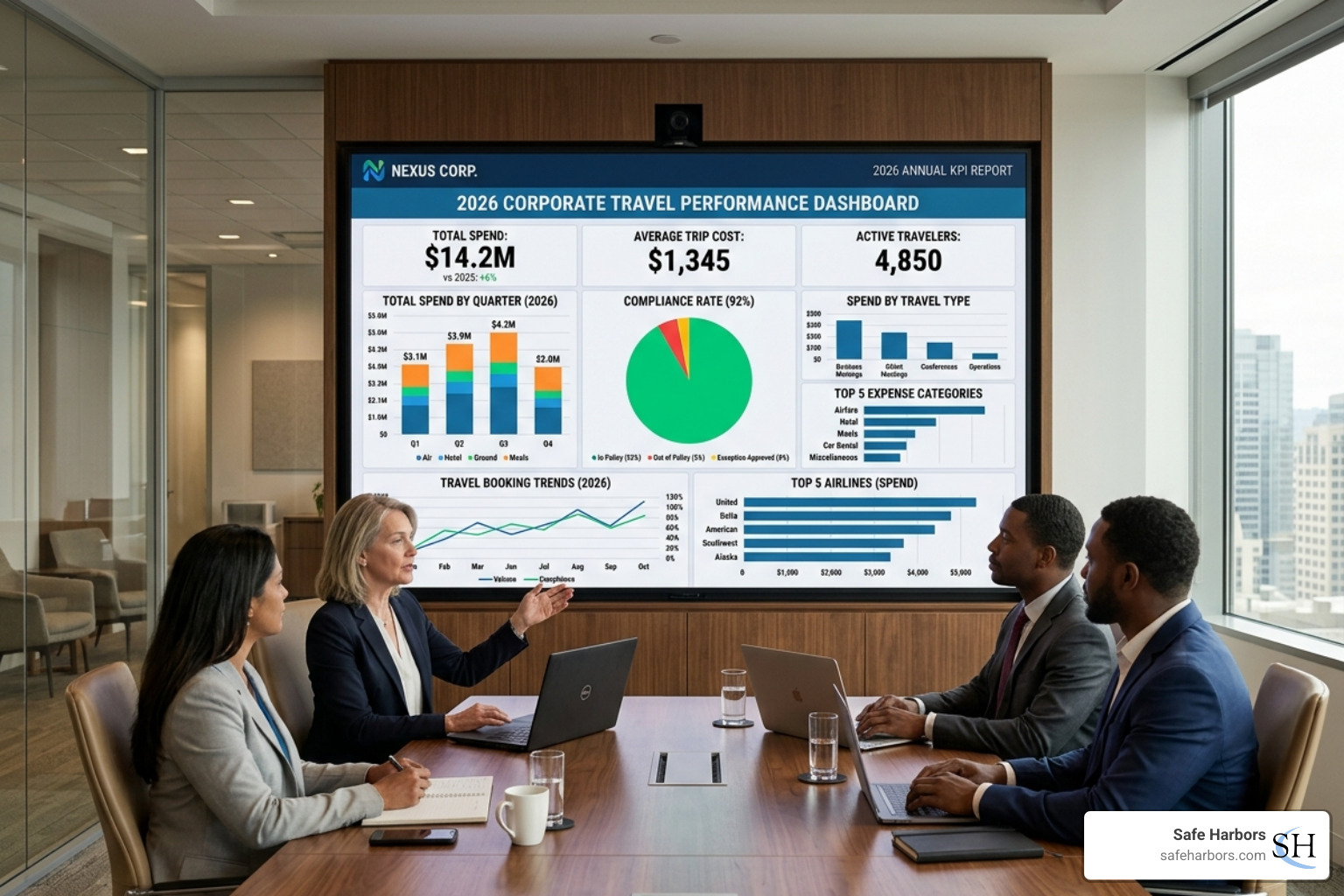
Measuring Success with Corporate Travel Data Analytics
The most critical metric is the Policy Compliance Rate. Industry data shows that AI-powered enforcement can improve compliance from a measly 62% to a staggering 89%. This 27-percentage-point improvement is often the largest driver of ROI.
When you use an Automated Spend Analysis, you also gain visibility into the Average Payback Period for your tech investment. On average, companies see a full return on their analytics platform investment in just 8.5 months. Other key metrics include:
- Cost per Mile/Trip: Tracking year-over-year variance.
- Booking Lead Time: Measuring how far in advance employees book (the #1 way to save on airfare).
- Expense Processing Time: Reducing the "receipt-to-reimbursement" cycle from 18 minutes to just 5 minutes per report.
For a deeper dive, check out our Corporate Travel Spend Guide.
Tracking Sustainability and Wellness Metrics
Modern travel programs have a moral purpose. We are seeing a massive rise in Sustainability Tracking. Analytics can now calculate the average carbon footprint of every flight and suggest carriers that use Sustainable Aviation Fuel (SAF).
Furthermore, we track "Traveler Fatigue" through a "TripGPA" system. This grades itineraries based on time zones crossed, red-eye flights, and "nights away from home." If your "Road Warriors" have a low TripGPA, analytics alerts HR to potential burnout risks before they lead to turnover. This is an essential part of any modern Business Travel Expenses Guide.
How to Optimize Costs and Enforce Policy Compliance
One of the most immediate benefits of corporate travel data analytics is the ability to spot "leakage." This occurs when employees book directly with an airline or hotel, bypassing your negotiated rates and duty of care protections.
Identifying Savings Through Behavioral Analysis
By leveraging business travel data for smarter decision-making, we can identify behavioral patterns that cost the company money. Are employees consistently choosing a $500 hotel when a $300 preferred option is available next door?
Analytics tools can track "Missed Savings"—the difference between what was booked and the cheapest compliant option available at the time of search. This data allows you to implement Spend Management Solutions that target specific departments or individuals for additional training or stricter booking limits.
Leveraging Real-Time Data for Immediate Impact
Real-time budgeting tools are used by 44% of companies to manage the challenges of inflation and fluctuating airfares. When a traveler is about to finalize a booking that exceeds the daily limit, a mobile alert can trigger an immediate warning. This "active" compliance is far more effective than "passive" reporting. With business travel spending forecast to hit record highs, these real-time nudges are the only way to keep a program on budget.
Future Trends: AI and Continuous Sourcing
The era of the annual RFP (Request for Proposal) is coming to an end. Why negotiate a contract once a year when airline prices change every second?
The Rise of the Virtual Travel Analyst
In 2026, we are seeing the rise of Agentic AI. These are autonomous "virtual analysts" that don't just show you a chart; they answer complex questions. You can ask, "How much would we save if we moved all Chicago-to-London flights to our preferred carrier?" and receive a data-backed negotiation strategy in seconds. This conversational intelligence turns raw data into a competitive advantage during supplier discussions.
Integrating Wellness into the Bottom Line
We are also seeing "bleisure" integration become a standard part of analytics. By separating personal and business expenses through smart data tagging, companies can encourage employee wellness (letting them stay an extra weekend) without muddying the corporate tax or spend data. This improves retention and ensures that "Duty of Care" extends to every leg of the journey.
Frequently Asked Questions about Travel Analytics
What is the quantified ROI of AI-powered travel analytics?
Based on research from 50 enterprise programs, companies achieve a median 23% reduction in total travel costs. The average payback period for the technology is 8.5 months, and the 3-year cumulative ROI is often as high as 340%.
How does data analytics improve traveler duty of care?
Analytics provides real-time awareness. During a travel disruption (like a weather event or political unrest), an AI-powered platform can identify all affected travelers in under 60 seconds, compared to the 45 minutes it takes with manual reporting. It also tracks wellness metrics to prevent employee burnout.
What are the most important metrics for a 2026 travel program?
Beyond total spend, you should track Policy Compliance Rate (aim for 85%+), Online Adoption Rate, Carbon Footprint per Trip, and Traveler Satisfaction Scores. These provide a 360-degree view of your program's health.
Conclusion: Building a Data-Driven Travel Program
Stop guessing where your travel budget is going. The transition to a data-driven program doesn't have to be a daunting task. At Safe Harbors, we specialize in taking the complexity out of corporate travel data analytics.
We combine elite tech partnerships with our signature white-glove service to ensure you have the fastest response speeds and the most comprehensive insights in the industry. Whether you need to tighten your policy compliance, negotiate better rates, or simply protect your travelers more effectively, our global business solutions are designed to scale with you.
Ready to see what your data is trying to tell you? More info about global travel management services is just a click away. Let's build a smarter, safer, and more cost-effective travel program together.