

Why Travel Expense Management Breaks Down — and What to Do About It

Travel expense management is the process businesses use to track, control, and reimburse costs employees incur during business travel — covering everything from flights and hotels to meals, mileage, and client entertainment.
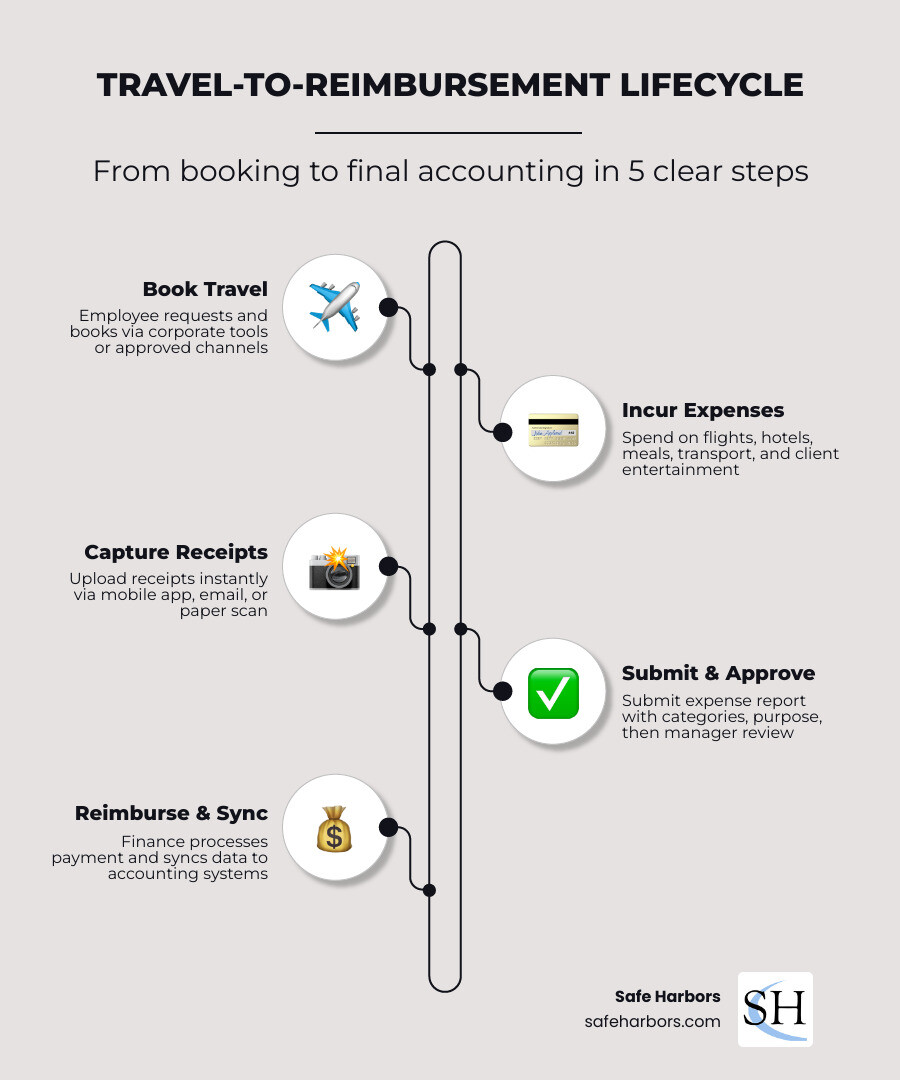
Here's how it works at a high level:
- Employee books travel — through a corporate tool or out of pocket
- Expenses are incurred — meals, transport, accommodation, and more
- Receipts are captured — via mobile app, email, or paper
- Expense report is submitted — with receipts, categories, and business purpose
- Manager reviews and approves — or flags policy violations
- Finance processes reimbursement — via payroll, ACH, or corporate card reconciliation
- Data syncs to accounting systems — for reporting and audit trails
When this process runs smoothly, it protects your budget, keeps travelers happy, and gives finance teams real-time visibility into spend. When it doesn't — and without the right systems, it often doesn't — the consequences are real: lost receipts, late submissions, duplicate claims, policy violations, and hours of manual reconciliation work every month.
For corporate travel managers juggling global teams, multiple booking channels, and tight duty-of-care obligations, a broken T&E process isn't just an inconvenience. It's a risk.
I'm Jay Ellenby, President of Safe Harbors Travel Group, and I've spent decades helping organizations build smarter, more resilient travel programs — including the travel expense management systems that keep finance teams in control and travelers moving without friction. In this guide, I'll walk you through everything you need to choose, implement, and get results from the right T&E solution for your organization.
What Is Travel Expense Management and Why It Breaks Down Without Automation?
At its core, travel expense management covers the full chain from trip booking to final reimbursement and accounting. That includes travel requests, booked cost, actual expensed cost, corporate card transactions, employee out-of-pocket spending, approvals, and reconciliation.
The trouble starts when this workflow lives across email, spreadsheets, paper receipts, and disconnected systems. A traveler books in one tool, pays in another way, submits receipts late, and finance has to play detective. That may work for a tiny team. It does not scale well.
How travel expense management software works from booking to reimbursement
Modern T&E software connects the whole process:
- Travel is booked through an approved channel.
- Card feeds and booking data flow into the expense platform.
- Employees capture receipts in a mobile app, by email, or via upload.
- OCR and AI extract merchant, amount, date, tax, and currency.
- The system categorizes the expense and checks it against policy.
- Approval workflows route reports to managers or finance.
- Approved expenses are reimbursed or matched to corporate card transactions.
- Final data syncs into ERP or accounting systems for reporting and audit.
Good platforms also track mileage, preserve audit trails, log every approval, and compare booked cost with final submitted cost. That difference matters. A hotel might be booked at one rate but expensed at another after incidentals, taxes, or changes.
The hidden costs of manual travel and expense processes
Manual workflows look cheap until you count the real cost.
Research consistently shows that manual expense reporting can take around 45 minutes per report. That time is spent chasing receipts, fixing categories, checking policy rules, emailing approvers, and reconciling transactions line by line. Industry definitions from the Global Business Travel Association also reinforce how closely travel policy, booking behavior, and expense reporting are tied together in managed travel programs.
Common manual pain points include:
- Spreadsheet mistakes and duplicate entry
- Lost or unreadable receipts
- Late submissions
- Duplicate claims
- Missing business purpose details
- Approval bottlenecks
- Slow card reconciliation
- Greater fraud and policy breach risk
- Document storage and audit prep headaches

And then there is the finance-team tax no one asked for: endless follow-up messages that all sound like "Just circling back on that hotel receipt."
Where manual processes hurt traveler experience and finance visibility
Bad T&E processes frustrate everyone.
Travelers wait too long for reimbursement, which creates personal cash-flow strain. Managers approve reports without enough context. Finance sees spend too late to control it. Leadership gets incomplete dashboards and wonders why travel costs spiked after the month already closed.
This is where many organizations realize the real issue is not just expense reporting. It is visibility, compliance, and traveler experience all at once.
If your current process still depends on manual review and after-the-fact cleanup, it may also be worth reviewing ways to reduce business travel expenses and build tighter controls upstream.
How Modern Travel Expense Management Solutions Use Automation and AI
Modern platforms reduce friction by automating the boring parts and flagging the risky parts. That means less typing, fewer errors, faster approvals, and clearer spend data.
In practice, automation helps with:
- Receipt capture
- Coding and categorization
- Policy checks
- Duplicate detection
- Approval routing
- Card reconciliation
- Reimbursement workflows
- Reporting and dashboards
AI pushes this further by spotting anomalies, predicting coding, flagging fraud signals, and surfacing exceptions before reports are submitted.
AI for receipt capture, coding, and compliance before submission
The best T&E tools now use OCR and AI together. A traveler snaps a photo of a receipt, and the system extracts the merchant, date, total, currency, and tax details. Some tools can also suggest category, cost center, and general ledger code based on prior behavior and policy rules.
This matters because prevention is better than rejection.
Instead of waiting until finance reviews a bad report, AI can flag issues before submission, such as:
- Missing receipts
- Possible duplicates
- Out-of-policy hotel rates
- Incorrect exchange rates
- Unsupported categories
- Missing business purpose
- Unusual merchant patterns
That reduces rework and speeds up reimbursement. In real-world examples from solution providers, organizations have reported savings like 48+ hours per month from automated receipt scanning and around 45 accounting hours saved monthly through automated expense workflows.
Real-time travel expense management controls that reduce overspend
The strongest platforms do more than process reports after a trip. They help control spend while the trip is happening.
Look for real-time controls such as:
- Budget alerts by trip, team, department, or project
- Per diem rules
- Category caps for meals, hotels, or ground transport
- Merchant restrictions on cards
- Automated approval routing
- Live card feeds with receipt matching
- Dashboards that show spend as it happens
These controls can materially reduce leakage. Some organizations using automated travel and expense solutions have reported travel spend reductions of up to 30%, especially when booking, card, and expense data are connected.
For a closer look at how finance teams use spend visibility to spot problems earlier, see our guide to automated spend analysis.
What agentic AI and autonomous workflows mean for finance teams in 2026
In 2026, the big trend is agentic AI: assistants that do more than suggest. They can act within guardrails.
In T&E, that can mean:
- Recommending compliant booking options
- Auto-building expense reports from receipts and card data
- Routing routine approvals automatically
- Sending reminders for missing documents
- Escalating only true exceptions to humans
- Forecasting likely overspend before month end
- Summarizing policy drift across teams

The key phrase is human-in-the-loop. We do not want finance teams replaced by robots in neckties. We want them freed from repetitive work so they can focus on exceptions, strategy, and control.
Features to Look for in a Scalable Travel Expense Management Platform
Not every company needs the same level of depth, but a modern platform should support growth, global operations, and a good traveler experience.
Core capabilities every business should expect
At minimum, we recommend looking for:
- Receipt autoscan with OCR
- Mobile expense capture
- Mobile approvals
- Custom expense categories
- Mileage tracking
- Policy engine and rule-based approvals
- Audit logs
- Reimbursement status tracking
- Corporate card reconciliation
- Duplicate detection
- Dashboard reporting
These are no longer "nice to have" features. They are table stakes for teams that want efficient, compliant operations.
Integration, security, and compliance requirements for international operations
Global organizations need more than expense capture. They need systems that play nicely with the rest of the finance stack.
Key evaluation points include:
- ERP and accounting integration
- HRIS and payroll sync
- CRM or project-code mapping where needed
- API access for custom workflows
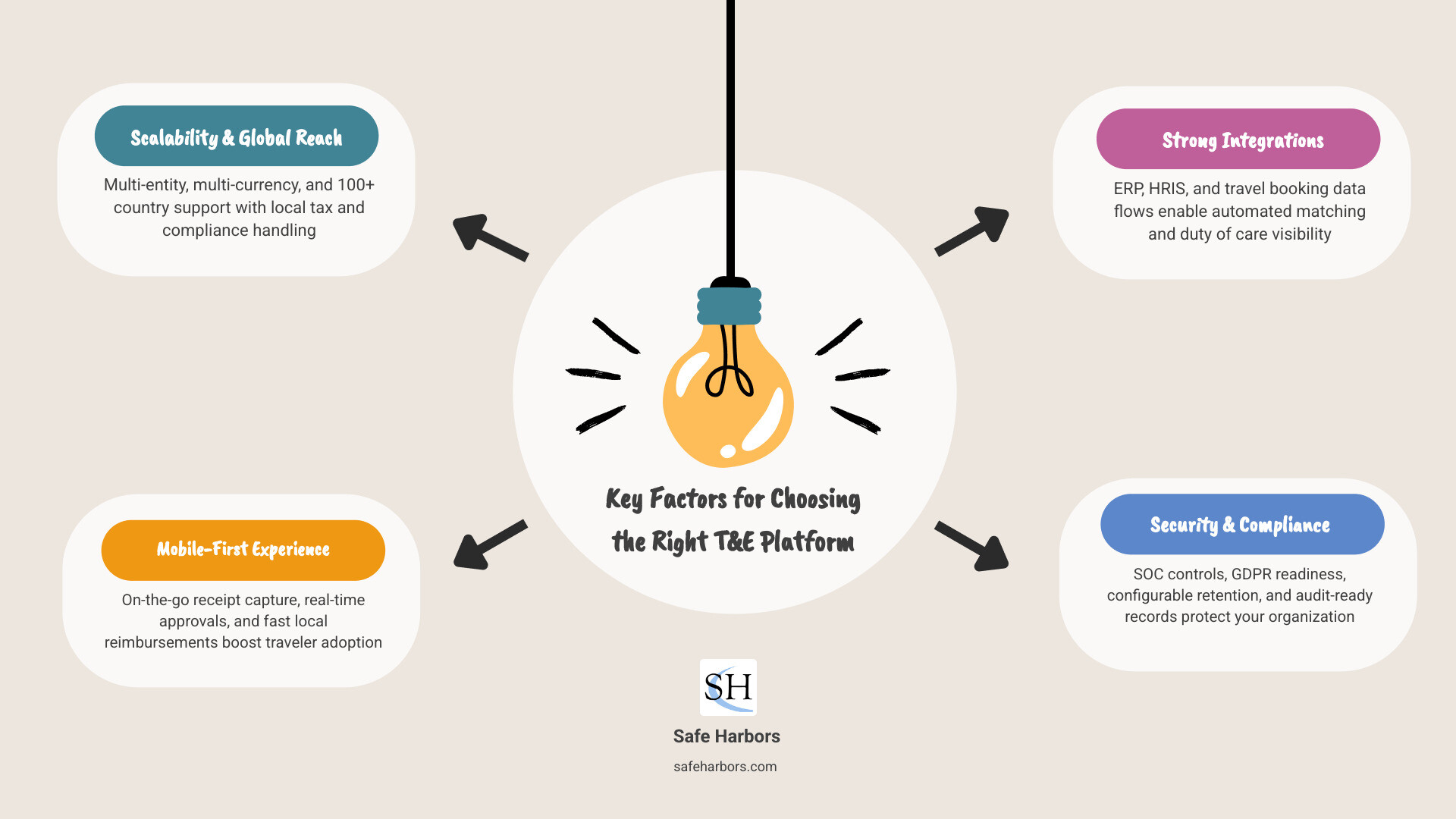
- Multi-entity support
- Multi-currency and local currency reimbursement
- VAT and tax handling
- Country-specific compliance support
- Configurable data retention
- Security controls and privacy standards such as GDPR readiness
Some platforms offer broad localization, including support across 100+ countries and multiple language options. That matters when your teams travel across regions and policies vary by entity or country.
If your finance team is evaluating broader process design, our overview of spend management solutions is a useful next read.
Why mobile apps, global payment support, and travel integrations matter most
Adoption often succeeds or fails on convenience.
If travelers can capture a receipt in seconds on a phone, they will. If they have to wait until Friday, find a laptop, and remember what that taxi was for, they probably will not.
That is why mobile-first design matters so much. The same goes for global payout support. Fast reimbursement in local currency improves traveler satisfaction and reduces friction for international teams and contractors.
Travel integration is equally important. When booking data flows into the expense process, you can compare booked vs. actual spend, automate matching, and improve policy compliance. A good travel management setup also supports duty of care, because itinerary and spend data are not living in separate silos.
At Safe Harbors, we see this every day: better travel integration means better compliance, better visibility, and fewer unpleasant surprises after the trip.
How to Compare Travel Expense Management Solutions for Your Business
The right solution depends on your size, complexity, travel volume, and internal resources. There is no universal winner. There is only best fit.
Best-fit criteria for SMBs, mid-market firms, and global enterprises
For SMBs, priorities usually include:
- Fast setup
- Low admin overhead
- Mobile receipt capture
- Basic policy controls
- Accounting integration
- Affordable pricing
Mid-market firms often need:
- More flexible approval workflows
- Corporate card management
- Better dashboards
- Department or entity-level policies
- Stronger integration options
Global enterprises usually require:
- Multi-subsidiary management
- Complex approval chains
- Advanced audit and fraud controls
- Broad localization
- ERP depth
- High-volume scalability
- Service and implementation support
If you manage a globally mobile workforce, it also helps to align T&E with a broader travel spend management complete guide.
Pricing models, implementation timelines, and adoption considerations
Pricing varies widely. Common models include:
- Per user per month
- Per active member
- Per report
- Usage-based or quote-based pricing
- Free tiers for individuals or very small teams
Research shows that some modern solutions can deploy 50% faster than older, more complex systems, but implementation speed depends heavily on integration needs, policy setup, stakeholder alignment, and training.
When comparing options, look beyond sticker price. Consider total cost of ownership:
- Admin time
- Integration work
- Training effort
- Support responsiveness
- Cost of exceptions and rework
- Delay in reimbursement
- Reporting limitations
Change management matters too. Even the best tool fails if travelers and approvers ignore it.
Questions to ask before selecting a solution
Before you sign anything, ask:
- Does it support our travel policy complexity?
- How deep are the ERP and accounting integrations?
- Can it handle global reimbursements and local currencies?
- What card programs does it support?
- How strong are the dashboards and analytics?
- How does the AI explain its decisions?
- Can it enforce policy before submission?
- What security and privacy standards does it meet?
- How well does it support mobile use?
- What implementation and support model is included?
- How fast is vendor response when something breaks?
And if fast response matters to your travelers and finance team, it should, because expense issues always seem to happen five minutes before someone's flight.
Measuring ROI After Implementation
T&E software should not just feel better. It should perform better in measurable ways.
The KPIs that show whether your T&E rollout is working
Track metrics such as:
- Time to submit an expense
- Average approval cycle time
- Reimbursement speed
- Exception and rejection rate
- Duplicate claim rate
- Policy violation rate
- Card reconciliation time
- Days between transaction date and finance visibility
These metrics reveal whether the workflow is becoming simpler, faster, and more compliant.
How to quantify cost savings and efficiency improvements
Good ROI stories often show up quickly.
Research cited in this space points to outcomes such as:
- Up to 90% less time spent on T&E administration
- 60% lower expense processing costs
- About $7 saved per expense report
- 48+ hours saved per month with receipt automation
- Around 45 accounting hours saved per month
- Up to 30% lower travel spend
- 90% reduction in corporate card reconciliation time
- Up to 80% less accounts payable processing time when expense and payables automation work together
Not every organization will hit every number, of course. But even modest improvements add up fast when multiplied across hundreds or thousands of reports.
For teams that want deeper measurement frameworks, our article on corporate travel data analytics can help.
Adoption strategies that improve long-term success
Rollout success depends on behavior, not just software.
Best practices include:
- Clear policy training for travelers and approvers
- Mobile-first onboarding
- Automated reminders for late submissions
- Simple receipt rules
- Manager accountability for approvals
- Phased deployment by region or department
- Feedback loops after launch
It also helps to clean up the policy itself. If your travel rules are confusing, the software will only enforce confusion faster.
Frequently Asked Questions About Travel Expense Management
What happens if a travel expense is submitted without a receipt?
Most organizations set a minimum threshold above which receipts are required. If a receipt is missing, employees may need to provide a written explanation, alternate documentation, or a supporting card statement. The key is to document the exception clearly and apply the rule consistently.
Why do travel expense reports get rejected?
The most common reasons are:
- Missing receipts
- Wrong expense category
- Duplicate submission
- Missing business purpose
- Exceeding policy limits
- Unclear or illegible receipt images
- Unsupported personal expense mixed into business spend
Clear policies and pre-submission validation can reduce these issues dramatically.
How long should companies retain travel expense records?
Retention depends on your tax, audit, and regulatory requirements, but a common baseline is at least three years after filing for supporting documentation. Many organizations keep records longer based on internal audit needs or local regulations. Whatever period you use, make sure it is documented in policy and supported by your system's retention settings.
Conclusion: Choosing the Right Travel Expense Management Partner
The best travel expense management solution is the one that fits your policy, your people, and your finance stack without creating more work than it removes.
As you evaluate options, use this checklist:
- End-to-end workflow support from booking to reimbursement
- Strong mobile experience
- AI-powered capture and policy checks
- Real-time spend visibility
- Global payments and multi-currency support
- Reliable integrations
- Security and compliance controls
- Scalable workflows for growth
- Fast, dependable support
At Safe Harbors, we believe the strongest T&E strategy combines smart automation with human support. Technology should make travel easier, not colder. That is why we focus on responsive service, flexible travel tools, global support, and duty of care that extends beyond the booking itself.
If you are ready to connect travel, spend visibility, and traveler experience into one smarter program, explore our resources for CFOs and finance executives.
And if you want to strengthen cost control even further, you may also find these helpful:
- Corporate Travel Spend Guide
- Optimize Business Travel Spend
- Reduce Business Travel Costs
- Top 15 Reasons Why Your Travel Expenses Could Be Higher Than You Expect
- 7 Fundamental Ways Corporate Travel Management Saves Money
The right platform will save time. The right partner will save time, money, and a lot of avoidable stress.