Beyond Compliance: A Deep Dive into Corporate Duty of Care

Corporate duty of care

Corporate duty of care is an organization's legal and moral obligation to protect employees from foreseeable harm. It requires taking reasonable steps to ensure their health, safety, and well-being—whether they're working in an office, remotely, or traveling for business.

Quick Answer: What You Need to Know About Corporate Duty of Care

  • Definition: A legal and ethical obligation to take reasonable care to prevent foreseeable harm to employees.
  • Responsibility: Employers must promote employee health, safety, and well-being wherever they work.
  • Scope: Applies to workplace safety, business travel, health, and mental well-being.
  • Accountability: Responsibility is shared across leadership, HR, and travel management teams.
  • Modern Approach: Extends beyond compliance to include proactive risk management and crisis response.

The world is increasingly unpredictable, and in over 50 countries, duty of care laws now cover business travelers. The COVID-19 pandemic revealed that many businesses were unprepared, leaving employees at risk during crises. As global business travel resumes, the question is no longer if you have a duty of care, but how effectively you're fulfilling it.

I'm Jay Ellenby, President of Safe Harbors Travel Group. For decades, I've helped organizations steer the complexities of global travel and corporate duty of care. By using strategic risk management and innovative technology, I've guided companies in building frameworks that protect their traveling employees and strengthen business resilience.
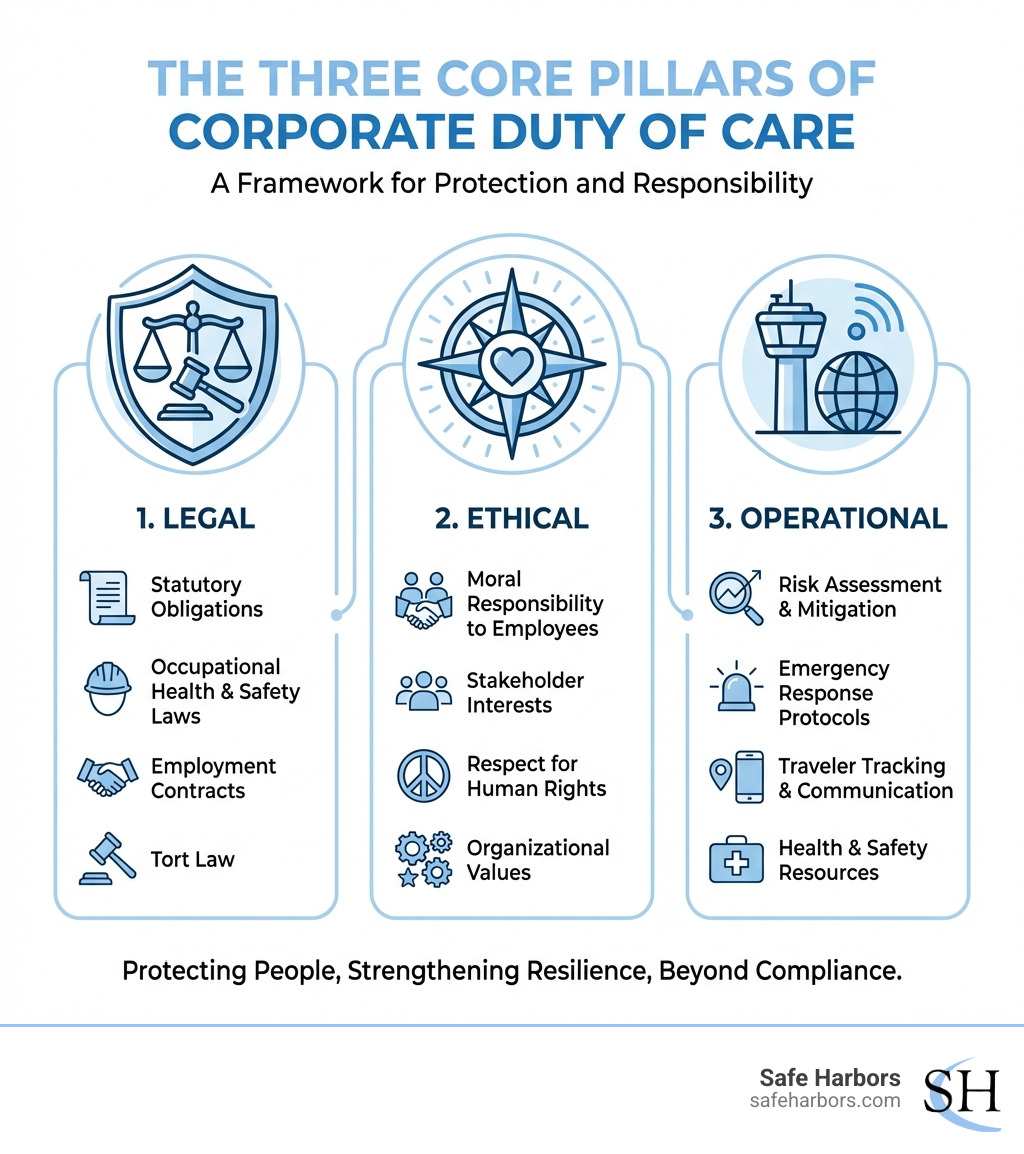
Infographic showing the three core pillars of corporate duty of care: Legal (statutory obligations, occupational health and safety laws, employment contracts, tort law), Ethical (moral responsibility to employees, stakeholder interests, respect for human rights, organizational values), and Operational (risk assessment and mitigation, emergency response protocols, traveler tracking and communication, health and safety resources) - Corporate duty of care infographic

At its core, corporate duty of care is a fundamental principle rooted in both legal doctrine and ethical imperatives. It dictates that companies must act responsibly to prevent foreseeable harm. This responsibility extends through every level of an organization, from daily operations to strategic board decisions.

A gavel and a law book on a desk - Corporate duty of care

Legally, a duty of care requires a standard of reasonable care to avoid acts that could foreseeably harm others. This concept is central to tort law, where a failure to uphold this duty can lead to a finding of negligence. In the corporate world, this means a company has a legal and moral obligation to protect its employees from undue risks, whether in the office or traveling for business. Breaching this duty can result in lawsuits, fines, and reputational damage. For a deeper dive, you can explore resources like What is the "Duty of Care" in Personal Injury Law?.

Ethically, this duty is about prioritizing the well-being of employees and other stakeholders. It compels businesses to act with integrity and consider the broader impact of their actions, including respecting human rights as outlined in frameworks like the UN Guiding Principles on Business and Human Rights. This commitment builds a trustworthy and reputable organization. To learn more about meeting these standards, read our guide on Duty of Care Compliance.

The Director's Balancing Act: Duty of Care vs. Duty of Loyalty

For corporate directors, two key fiduciary responsibilities are the duty of care and the duty of loyalty. Both require directors to act in the corporation's best interests.

The duty of care requires directors to be diligent and informed when making decisions, acting as a reasonably prudent person would. The duty of loyalty demands they act in good faith, prioritizing the corporation's interests over their own and avoiding conflicts of interest.

Here's a quick comparison:

Feature Duty of Care Duty of Loyalty
Primary Focus Prudent decision-making, diligence, skill, being informed Acting in the corporation's best interest, avoiding conflicts of interest, good faith
Standard Reasonably prudent person in comparable circumstances Honesty, integrity, avoiding self-interest
Examples Conducting due diligence, attending meetings, seeking expert advice Not competing with the corporation, not using corporate assets for personal gain
Breach Often Negligence, lack of oversight, uninformed decisions Self-dealing, usurpation of corporate opportunity, undisclosed conflicts

The Business Judgment Rule generally protects directors from liability for business decisions made in good faith and on an informed basis, even if the outcomes are poor. However, this protection is not absolute. Directors and officers can still face personal liability for breaching their duties. To mitigate these risks, companies often implement a robust Risk Mitigation Strategy and carry Director and Officer (D&O) liability insurance.

Key Laws and Regulations Underpinning Duty of Care

The concept of corporate duty of care is grounded in various laws and international standards. While specifics vary by jurisdiction, the core obligations are widely recognized.

  • Occupational Health and Safety (OHS) laws mandate that employers provide a safe work environment by identifying and mitigating hazards.
  • Common law establishes a broad duty for organizations to exercise reasonable care to avoid harming others in many legal systems.
  • Employment contracts often detail an employer's responsibilities regarding workplace safety and employee well-being.
  • International standards like ISO 31030 provide a framework for managing travel risks, ensuring a consistent approach to employee safety across borders.
  • The United Nations Guiding Principles on Business and Human Rights set a global standard for responsible business conduct, emphasizing the corporate responsibility to respect human rights. The OECD also provides due diligence guidance for responsible business conduct.

The Expanding Scope of Corporate Duty of Care in Business Travel

As businesses become increasingly global, the traditional boundaries of corporate duty of care expand far beyond the office walls. For companies with a mobile workforce, ensuring the safety and well-being of employees on business trips is not just good practice—it's an absolute necessity.

A world map with highlighted travel routes and risk icons - Corporate duty of care

Applying Corporate Duty of Care to a Mobile Workforce

For employees traveling for business, their safety is the paramount concern. This transforms corporate duty of care into a dynamic, proactive process.

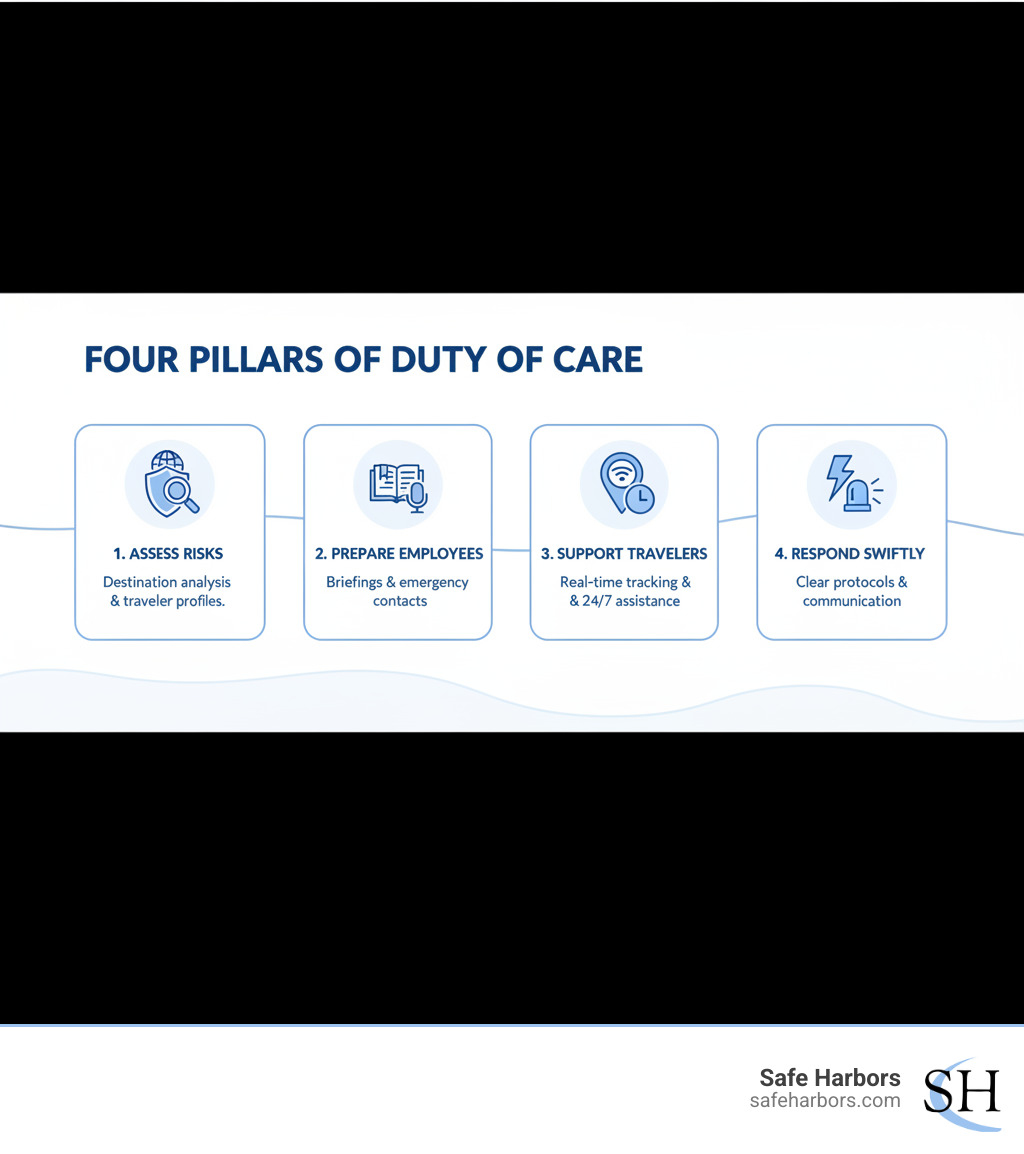
  1. Pre-trip Risk Assessments: Before any journey, we evaluate the destination for potential hazards like geopolitical instability, crime, health risks, and natural disasters. This empowers travelers with essential information and allows for preventative measures.

  2. Real-time Monitoring: While employees are traveling, we use technology to track their locations based on itineraries. This allows us to quickly identify anyone who might be near a developing crisis and confirm their safety.

  3. Emergency Support: A robust duty of care program includes 24/7 emergency response. This means providing immediate assistance for medical issues, security threats, or travel disruptions, connecting employees to expert help when they need it most. This support is integral to our Global Travel Assistance services.

  4. Medical Assistance: We ensure travelers have access to appropriate medical advice, facilities, and, if necessary, emergency evacuation. This includes pre-travel advice on vaccinations and access to telemedicine resources.

  5. Communication Protocols: Clear and timely communication is vital. We establish channels to keep employees informed of evolving situations, provide critical travel advisories, and confirm their safety during incidents.

These integrated efforts are essential for comprehensive Business Travel Duty of Care and Risk Management, ensuring employees are safe and supported, no matter where their work takes them.

Tailoring Your Approach for Diverse Risks and Global Operations

A one-size-fits-all approach to corporate duty of care is ineffective. The program must adapt to the specific risks of each location and traveler. For example, a CEO traveling to a conference in Switzerland faces different challenges than an engineer on assignment in a high-risk region. Our duty of care must be customized to these individual circumstances by considering:

  • Geopolitical Instability: Monitoring political unrest, civil conflicts, and terrorism threats.
  • Natural Disasters: Preparing for risks like earthquakes or typhoons, which are often seasonal.
  • Health Crises: Staying vigilant about regional epidemics and ensuring access to quality medical care.
  • Cultural Nuances: Understanding local customs and laws to help travelers steer unfamiliar environments safely.
  • High-Risk Destinations: Implementing improved security protocols and specialized training for travel to areas with liftd risks, such as those for Humanitarian Travel.

By tailoring the approach, we ensure every employee receives the appropriate level of protection. This is a core tenet of our Global Travel Management Guide 2025.

How Global Events Reshaped the Duty of Care Landscape

Recent global events have underscored that risks are dynamic and interconnected, demanding a more adaptive approach to corporate duty of care.

The COVID-19 pandemic fundamentally reshaped our understanding of this responsibility. It highlighted the need for solutions that address universal health concerns, not just location-based risks. Many businesses struggled to locate employees and steer border closures, revealing gaps in their crisis response platforms. This experience proved that a proactive strategy is no longer optional.

This increased interconnectedness means a crisis in one part of the world can quickly impact personnel globally. Furthermore, employees now have evolving expectations, looking for support that includes mental well-being, not just physical safety.

These shifts underscore why a robust travel risk plan is a continuously evolving necessity. You can read more in our article Why Implementing a Travel Risk Plan for Employees is Crucial. The lesson is clear: corporate duty of care is a dynamic, strategic imperative that must adapt to a constantly changing world.

Building a Robust and Actionable Duty of Care Program

A truly effective corporate duty of care program moves beyond intention; it requires a clear framework, defined responsibilities, and the right tools to translate commitment into action. Building such a program is an investment in your people and business resilience, creating a system that ensures every employee feels safe and supported.

The Key Components of a Comprehensive Framework

A robust corporate duty of care framework relies on several interdependent components:

  • A clear and accessible Travel Policy: This foundational document outlines protocols, expectations, and available resources for all business travel. It must be easily accessible and regularly communicated. Learn more from our insights on Travel Policy.

  • Proactive Risk Assessment and Mitigation: This involves continuously identifying potential hazards, conducting pre-trip risk assessments, and implementing strategies to reduce those risks through threat monitoring and actionable intelligence.

  • Comprehensive Training and Communication: Empowering employees with pre-trip preparation, destination-specific safety briefings, and real-time updates ensures they are informed and prepared before, during, and after their trips.

  • 24/7 Emergency Response and Support: When incidents occur, a dedicated 24/7 operations center and established protocols ensure immediate response to medical, security, or travel emergencies. This is a cornerstone of effective Travel Risk Management.

  • Post-trip Debriefing and Program Review: Learning from experience is vital. Post-trip debriefings and regular program reviews help identify areas for improvement, adapt to new risks, and refine strategies.

By integrating these components, you create a comprehensive duty of care program that proactively protects employees and strengthens organizational resilience.

Who is Responsible? Establishing a Collaborative Structure

Fulfilling corporate duty of care is a collective effort, not the job of a single department. An effective program requires a collaborative structure. Leadership must provide buy-in and resources. Human Resources develops and communicates policies related to employee welfare. Travel Managers oversee logistics and policy implementation. Legal and Compliance teams ensure adherence to regulations, while Security officers manage threat intelligence and risk assessments. Even Finance Executives play a role in budgeting for these crucial programs. This collaborative approach embeds duty of care into the organization's culture.

Leveraging Technology and Data for Proactive Protection

In today's interconnected world, managing corporate duty of care requires smart, technological solutions to move from reactive crisis management to proactive protection.

  1. Traveler Tracking Software: Knowing employee locations based on itineraries is fundamental for safety. This allows for immediate awareness and communication during an emergency. This capability is a key part of The Compelling Security Benefits of Corporate Travel Management.

  2. Real-time Alerts: Systems that integrate with global alert services provide real-time threat intelligence on weather, security, or health events. These alerts are automatically sent to affected travelers and management.

  3. Data Consolidation: To counter fragmented booking data, we consolidate information from multiple sources (booking, expense, credit card) into a unified view. This ensures accurate, up-to-date traveler information for risk assessment and response.

  4. Mobile Apps: Dedicated mobile apps empower travelers with direct access to travel details, emergency contacts, local alerts, and a direct line to a 24/7 operations center, sometimes including "proof of life" safety check-in features.

  5. Expert Partnerships: We partner with specialized health and risk management services, like Crisis24, to improve our capabilities. These experts provide global alerts, threat monitoring, and access to medical and security assistance worldwide, ensuring a best-in-class Immediate Response.

Moving beyond basic compliance, a world-class corporate duty of care program is a strategic investment that yields significant returns. It reflects an organization's values, strengthens its foundation, and positions it for long-term success. However, it also comes with challenges and is constantly evolving to meet new global realities.

The Benefits of a World-Class Duty of Care Program

Investing in a robust corporate duty of care program delivers benefits that ripple throughout the organization:

  1. Improved Employee Well-being and Morale: When employees feel their company genuinely cares for their physical and mental safety, morale and engagement improve significantly.

  2. Increased Productivity: Confident in their safety, employees can focus on their work without worrying about potential risks, which boosts productivity.

  3. Improved Retention and Recruitment: A strong commitment to duty of care builds trust and loyalty, improving retention and attracting top talent who value a responsible and caring culture.

  4. Stronger Corporate Reputation: Companies known for ethical conduct and proactive risk management enjoy an improved reputation among customers, partners, and investors.

  5. Improved Business Continuity: By predicting risks and responding quickly to crises, a duty of care program minimizes operational disruptions, ensuring business resilience.

  6. Mitigated Legal and Financial Risks: A proactive program helps avoid costly lawsuits, fines, and reputational damage that can result from failing to protect employees. This is a key way to Optimize Business Travel Spend by preventing costly incidents.

A world-class program transforms a legal obligation into a strategic advantage, fostering a resilient workforce and a high-performing organization.

The landscape of corporate duty of care is dynamic. Staying effective means navigating challenges and embracing emerging trends.

A key trend is the heightened focus on mental health support, recognizing the responsibility to address the psychological well-being of employees, especially frequent travelers. ESG (Environmental, Social, and Governance) considerations are also becoming integral, integrating human rights and ethical conduct into corporate decision-making.

Digital-age challenges include ensuring data privacy when using traveler tracking tools and managing cybersecurity risks to protect sensitive employee data. Additionally, fragmented booking behaviors, where employees use unapproved platforms, make it difficult to maintain oversight and provide support during emergencies. This highlights the need for clear policies, as detailed in articles like 7 Signs Your Employees Aren't Buying Into Your Travel Policies.

Addressing these challenges requires continuous adaptation, investment in technology, and a holistic commitment to employee well-being.

Conclusion: Making Duty of Care Your Competitive Edge

Corporate duty of care has evolved from a legal obligation into a cornerstone of responsible, resilient, and successful modern businesses. It's an ongoing commitment to your most valuable asset: your people. By embedding a proactive and comprehensive duty of care program, especially within your travel management, you not only protect your employees but also build a stronger, more trusted, and forward-thinking organization. The expert team at Safe Harbors can help you design and implement a framework that ensures your employees are safe, secure, and supported, wherever business takes them.

Ready to elevate your duty of care program? Explore our comprehensive business travel services.

Concierge Travel Services 101

Why Travel Concierges Are Revolutionizing Corporate Travel Management

concierge travel services - concierge travel services

Concierge travel services shift travel from simple booking to comprehensive experience management. Unlike standard travel agents, travel concierges are dedicated personal assistants handling every aspect of your journey, from planning to 24/7 on-trip support.

What concierge travel services include:

  • Bespoke itinerary planning custom to individual preferences and business needs
  • VIP airport services including fast-track security, immigration, and private transfers
  • Exclusive access to sold-out events, premium restaurants, and unique experiences
  • 24/7 crisis management for flight disruptions, emergencies, and last-minute changes
  • Corporate duty of care compliance with real-time traveler tracking and support
  • Luxury transportation including private jets, chauffeur services, and yacht charters

The travel concierge industry has grown significantly, with services now available at hundreds of airports worldwide. Major travel providers deploy large concierge teams globally, while ultra-luxury firms offer exclusive memberships with annual fees starting at $50,000.

For corporate travel managers, this evolution solves critical pain points: slow response times, fragmented booking systems, and inadequate traveler support. As one industry expert notes, "A travel concierge is interested in holding a relationship-building conversation relating to the customer's needs... offering a deeper level of engagement and connectivity."

The shift reflects a trend where busy executives value seamless experiences over simple transactions. By securing last-minute upgrades, arranging private tours, or managing complex itineraries, concierge services transform travel from a logistical burden into a competitive advantage.

What is a Travel Concierge? Beyond the Booking Agent

At Safe Harbors, we see a travel concierge as more than a booking agent—they are your personal global assistant, lifestyle curator, and proactive problem-solver. We move beyond simple transactions to become your trusted advisor, dedicated to crafting and managing every detail of your journey. By deeply understanding your preferences and anticipating your needs, from securing a last-minute client dinner to ensuring your favorite coffee is ready on arrival, we provide flawless execution. Our goal is to transform travel from a chore into an effortless, enjoyable experience, allowing you to focus on what matters most.

More info about Safe Harbors’ concierge travel services

Travel Concierge vs. Traditional Travel Agent

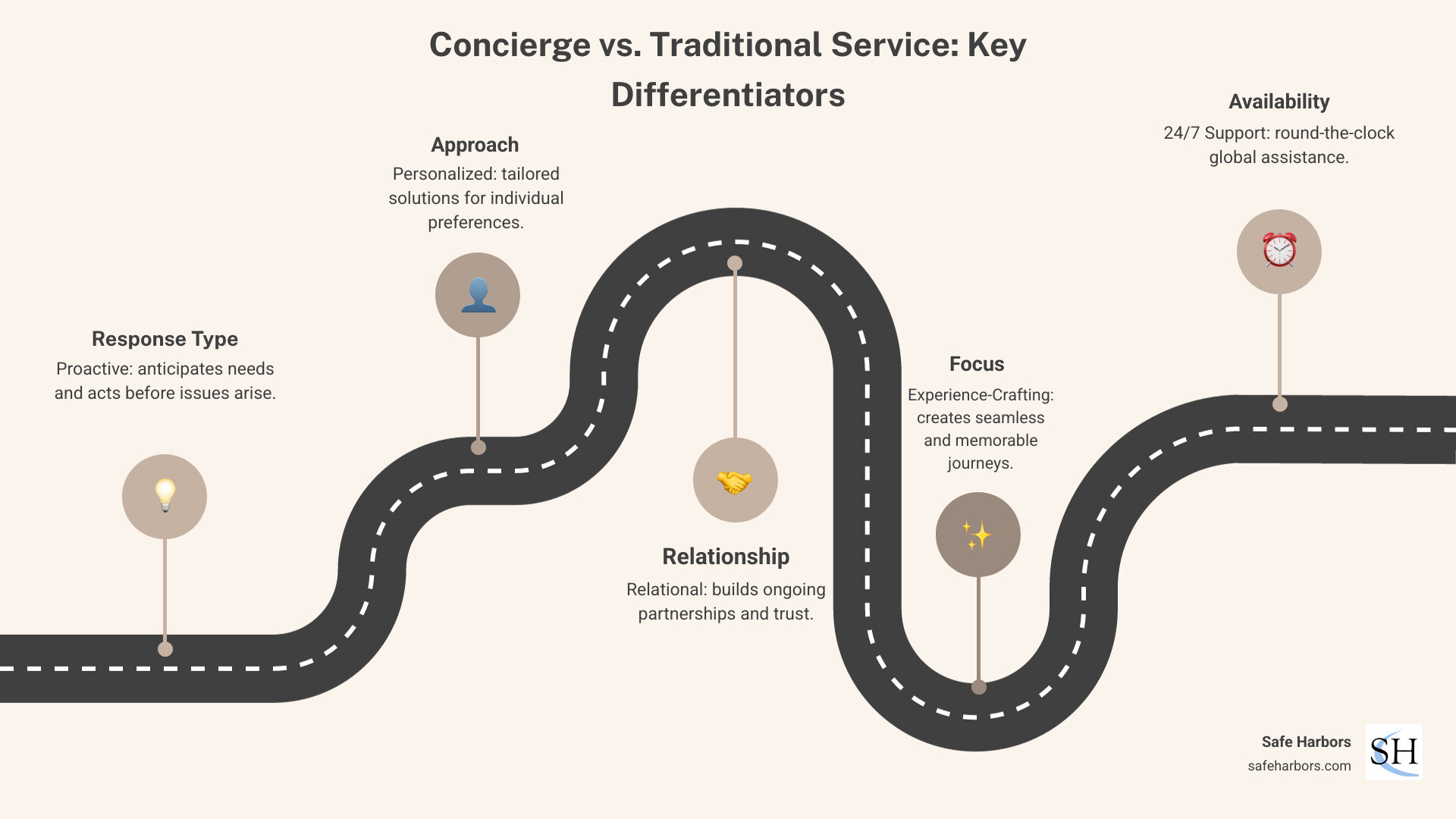
While both help you travel, the approach and scope of a travel concierge are worlds apart. A travel agent helps you find the book; a travel concierge reads it with you to ensure you get the most from it.

Here’s a quick look at how they compare, highlighting the unique value you get with Safe Harbors:

Feature Traditional Travel Agent Travel Concierge Safe Harbors' Unique Value
Scope of Service Primarily booking flights, hotels, car rentals. Holistic management: pre-trip, in-trip, post-trip; itinerary design, logistics, experiences, problem-solving. Comprehensive white-glove service covering every detail, from basic bookings to complex, multi-faceted itineraries, ensuring nothing is overlooked.
Client Relationship Transactional; focus on individual bookings. Relationship-driven; deep understanding of client preferences, ongoing support. We build long-term partnerships, understanding your unique corporate travel policies and individual preferences to consistently deliver custom experiences.
Service Model Commission-based; limited post-booking support. Fee-based (membership, per-trip); extensive personalized service. Our model emphasizes value and efficiency, ensuring dedicated support and leveraging elite tech partnerships for seamless service delivery and cost-effectiveness.
Support Level Standard business hours; often relies on third-party support during travel. 24/7 availability; proactive problem-solving; on-the-ground assistance. Best response speed and 24/7 global support, ensuring immediate assistance for any issue, anywhere, anytime, providing true peace of mind.
Primary Goal Facilitate travel bookings. Curate unforgettable, seamless experiences; save client time and stress. To transform corporate travel into a strategic asset, enhancing productivity, ensuring duty of care, and delivering exceptional, personalized experiences for every traveler.

The Core Role of a Modern Travel Concierge

The core of a modern travel concierge is understanding your operational needs and travel style to design an experience, not just book a trip. At Safe Harbors, we start by getting to know your unique preferences, whether for a complex business trip or a family vacation. We learn your travel style, dietary needs, favorite hotel brands, and even your preferred seat on the plane.

This personalized approach allows us to plan proactively, anticipating challenges and finding opportunities to improve your trip. It’s not just about booking a hotel room; it’s about securing the perfect room with VIP amenities. We use our global expertise and network to give you access to exclusive experiences and services you can't find through regular channels. From the moment you dream of a trip until you're safely home, we manage every detail to ensure your journey is seamless and stress-free.

The Spectrum of Concierge Travel Services

Concierge travel services cover a full range of support designed to transform stressful travel logistics into a smooth, enjoyable journey while opening doors to unique experiences. From the smallest detail to the grandest adventure, we handle everything.

Itinerary Design and Bespoke Planning

This is where the magic starts. We create custom plans that are just for you, designing routes, activities, and accommodations that fit your exact wishes. We specialize in:

  • Custom Itineraries: From a healing retreat with dolphins in Egypt to a sophisticated wine tour through Tuscany, we ensure every detail is perfect.
  • Themed Travel: Imagine culinary adventures like truffle hunting in Piedmont, personalized shopping tours in Milan, or a trek across an Antarctic glacier.
  • Multi-Destination Trips: We seamlessly connect complex journeys, like a three-week trip across Italy, Slovenia, and Croatia, or island hopping on a private jet in the South Pacific.
  • Honeymoons & Family Vacations: We arrange special treatment at hotels and plan activities for all ages, including a trip to Disney Paris.

Learn more about Safe Harbors’ luxury travel planning

Exclusive Access and Unique Experiences

Our strong relationships and industry knowledge allow us to arrange truly unique, once-in-a-lifetime moments that are normally inaccessible. Imagine:

  • An hour alone in the Sistine Chapel.
  • Private Vatican tours offering a deeper look into history and art.
  • A private game drive deep into the Serengeti.
  • After-hours access to world-famous landmarks.
  • Chef’s table dinners at Michelin-starred restaurants on short notice.
  • Premium reservations at exclusive, "sold out" venues.
  • Guaranteed upgrades at luxury hotels and resorts.
  • Front Row Ticketing™ for major sporting events and concerts.
  • Chartering yachts in the Mediterranean or private jets for golf trips to Scotland.

We use our connections to open up these amazing possibilities, ensuring your journey is full of unforgettable moments.

Seamless Logistics and On-the-Ground Support

Excellent concierge service makes complicated logistics seem easy, which is vital for busy executives. We provide:

  • VIP Airport Services: Our concierges meet you curbside to assist with tickets, connections, upgrades, and bags, getting you through the airport in minutes.
  • Fast-Track Security and Immigration: Skip long lines to save time and reduce stress.
  • Private Jet Charters: For ultimate flexibility and luxury, we arrange private jets custom to your schedule.
  • Luxury Ground Transportation: We provide chauffeur-driven cars, armored vehicles, and other private transport for smooth, comfortable travel.
  • 24/7 On-Trip Assistance: Our team is always available via text, call, or our mobile app to handle last-minute changes or urgent needs with the "white-glove service" and "best response speed" Safe Harbors is known for.

Safe Harbors’ airport and travel support

The Value Proposition: Why Choose a Travel Concierge?

relaxed executive on a business trip, working seamlessly from a luxury lounge - concierge travel services

Top executives and discerning professionals choose concierge travel services because they value their time, privacy, and peace of mind. It's an investment in an effortlessly luxurious and carefully managed experience, freeing you to focus on what matters. For our clients—from CEOs to high-net-worth individuals—it's about open uping unparalleled efficiency and discretion.

The Ultimate in Personalization and Exclusivity

Imagine a travel experience crafted just for you. We don't just plan trips; we become experts in your preferences through in-depth client profiling—knowing your favorite coffee, ideal airline seat, or preferred pillow type. Our team personally vets every recommendation to ensure it meets our exacting standards.

We leverage our global network to provide unparalleled access, which often means VIP treatment, complimentary upgrades, and entry to exclusive venues. For our high-profile clients, discretion and privacy are paramount, and our services are designed with the utmost confidentiality to protect your anonymity.

The Business Case for Concierge Travel Services

For corporations, choosing concierge travel services is a smart business decision with tangible advantages.

  • Time Savings for Executives: By outsourcing travel planning, research, and booking, executives reclaim hours for core business activities, directly boosting productivity and efficiency.
  • Improved Productivity: A smooth, stress-free journey means travelers arrive refreshed and ready to perform. Our proactive planning reduces time wasted on logistics, allowing your team to focus on their objectives.
  • Duty of Care Compliance: Ensuring traveler safety is a non-negotiable obligation. Our services integrate robust travel risk management, including real-time traveler tracking and immediate response. We provide the expertise to ensure your organization meets its duty of care obligations, giving you peace of mind.

Safe Harbors’ Business Travel Services Travel Risk Management

By streamlining corporate travel, we help organizations optimize spend, improve traveler satisfaction, and mitigate risks, turning travel management into a strategic advantage.

Peace of Mind: Proactive Planning and Crisis Management

Perhaps the greatest benefit of concierge travel services is the peace of mind it delivers. We proactively vet every detail to minimize potential issues. But when the unexpected happens, our 24/7 support is your lifeline.

We have robust crisis management protocols and a global network of local partners to provide immediate, on-the-ground assistance. Whether it's re-booking flights, securing alternative accommodations, or navigating local regulations, we handle it with speed and efficiency. Our commitment to the "best response speed" means you're never alone. We're here to make any travel headache disappear.

Immediate Response

The Process and Cost of Engaging a Travel Concierge

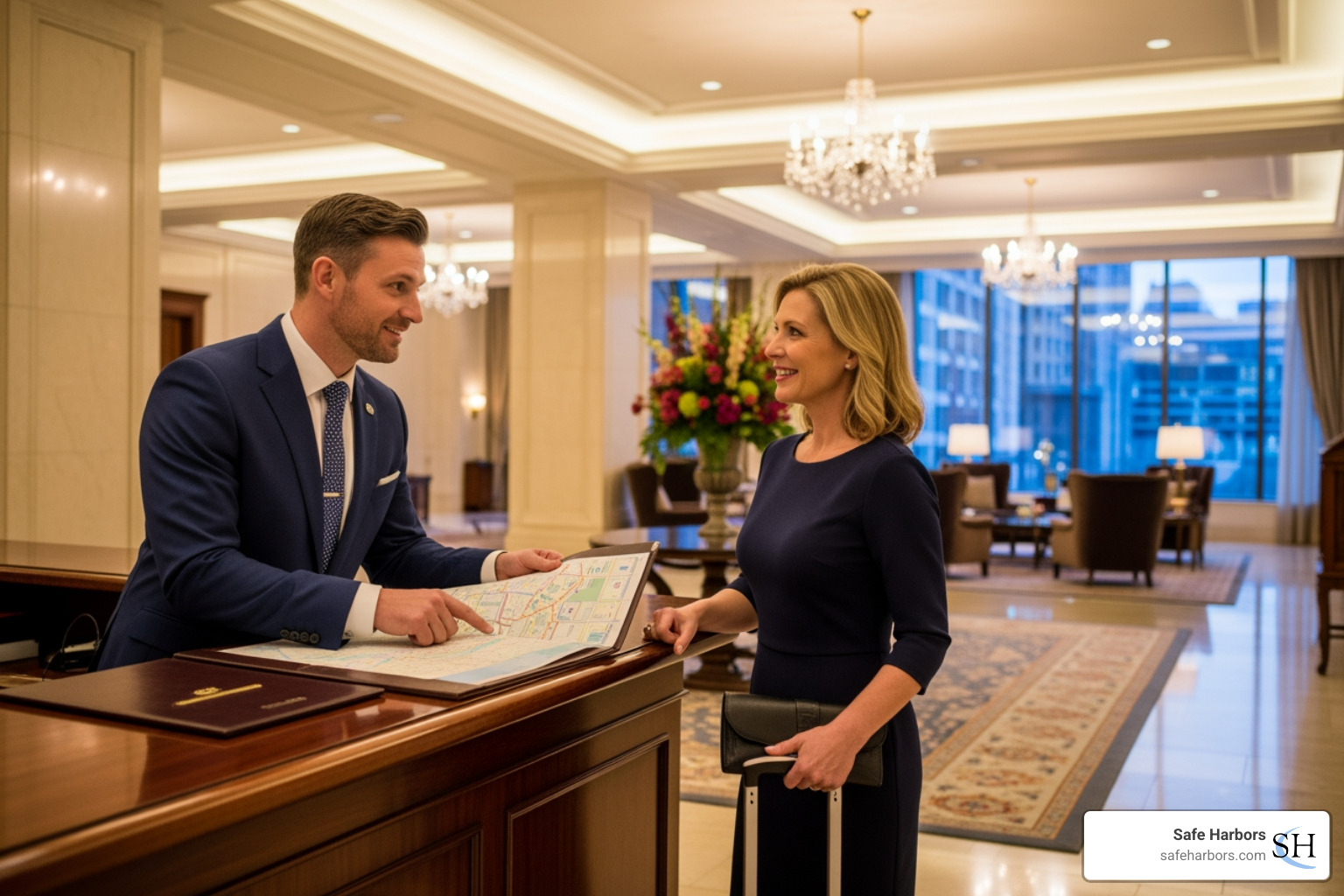
travel advisor consulting with a client over a map - concierge travel services

Engaging concierge travel services is an investment in convenience, luxury, and peace of mind. Our process is designed to be as simple and clear as the journey itself.

The Engagement Journey: From Consultation to Welcome Home

Our partnership is designed to take all planning stress off your shoulders in a few clear steps:

  1. Initial Consultation: We start with a no-pressure call to understand your travel preferences and goals. Your mission becomes our own.
  2. Itinerary Proposal: Based on our chat, we design a bespoke itinerary with suggestions for accommodations, activities, and exclusive experiences. We refine it with you until it's perfect.
  3. Booking and Management: Once you approve the plan, we handle everything: flights, hotels, transfers, guides, reservations, and event tickets, ensuring all vendors know your special requests.
  4. Pre-Departure Briefing: We offer an optional call to review your final itinerary, answer questions, and ensure you feel prepared. Your details are also accessible via a mobile app.
  5. In-Travel Support: Our team is available 24/7 via text or call to handle any unforeseen issues or last-minute requests with our signature "white-glove" service.
  6. Post-Trip Follow-Up: Our service concludes after you've returned home. We love to hear about your adventures and start dreaming up the next one.

Understanding the Cost of Concierge Travel Services

The investment for concierge travel services varies based on the level of exclusivity and support required. It's not just a price tag; it's an investment in expertise, access, and convenience. Common pricing models include:

  • Annual Membership Fees: For year-round support, some ultra-exclusive providers charge annual fees starting at $50,000 or more, often with a limited global membership.
  • Per-Trip Planning Fees: More commonly, services charge a flat planning fee for individual trips, typically starting around $400-$600, depending on the journey's complexity. This covers all research, design, and management. Loyal return clients often enjoy a reduced fee.
  • A La Carte Services: Specific services, like an airport meet-and-greet, may have individual fees, but are often bundled into the main planning fee for transparency.

While these figures may seem higher than booking online, the true value is the time saved, stress eliminated, exclusive access gained, and profound peace of mind knowing every detail is expertly handled. For our corporate clients, this translates into improved productivity and robust duty of care compliance.

Frequently Asked Questions about Concierge Travel

It's natural to have questions when considering a service as personalized as concierge travel services. Here are some of the most common inquiries we receive, with our expert insights.

How do travel concierges handle unexpected issues during a trip?

This is where a travel concierge's value shines. Our approach is proactive and always available:

  • 24/7 Availability: We are always on call to assist with any issue, from missed connections to urgent requests.
  • Proactive Problem-Solving: We monitor flights and local conditions, often resolving potential issues before they affect you.
  • Global Network: Our local contacts and partners provide swift, on-the-ground support.
  • Seamless Re-booking: We handle the entire process of re-booking flights and accommodations, leveraging our industry relationships to secure the best alternatives with minimal disruption to your trip. We make travel headaches disappear.

How has technology impacted the services offered by travel concierges?

Technology has revolutionized our services, allowing for greater efficiency, personalization, and responsiveness. We blend human expertise with cutting-edge tools:

  • Mobile Itinerary Apps: Clients get a single, intuitive app with all travel details—flights, hotels, schedules, and contacts—plus real-time updates.
  • Instant Communication Channels: Direct text messaging and in-app chat provide seamless contact with your dedicated concierge, anywhere in the world.
  • Data-Driven Personalization: Our advanced booking and CRM platforms maintain detailed client profiles, allowing us to anticipate needs and make recommendations precisely custom to you. Our "elite tech partnerships" keep us at the forefront of travel technology.

Safe Harbors’ mobile solutions

How far in advance should I contact a travel concierge?

While we pride ourselves on handling urgent, last-minute requests, contacting us in advance is always beneficial.

  • For complex international or multi-destination trips, we recommend reaching out 3-6 months in advance. This allows for thorough research and securing highly sought-after exclusive access.
  • For short-notice requests, we have rapid planning capabilities and can often achieve what others deem impossible, though options may be limited by availability.
  • The ideal lead time varies by destination and season. Peak travel seasons, major holidays, or exclusive experiences (like a private Sistine Chapel tour) demand longer lead times. The sooner you engage us, the better our chances of securing your preferences.

Conclusion: Your Gateway to Extraordinary Travel

Travel shouldn't be a puzzle. Concierge travel services transform stressful trips into amazing experiences. By handling every detail, from securing private museum tours to ensuring special upgrades, a concierge gives you back your precious time. This allows you to focus on what matters, whether it's closing a deal or making family memories.

Beyond the perks and saved hours, the real gift is peace of mind. Knowing every detail is handled and that expert help is available 24/7 allows you to truly relax and enjoy the journey.

Here at Safe Harbors, we are proud to offer this top-tier, "white-glove" service. We understand our corporate clients need both speed and perfection, which is why we deliver the best response speed, smart tech tools, and a deep commitment to your well-being. With us, every trip is an extraordinary adventure, made just for you.

Begin your personalized travel journey

Your Instant Travel Companion: Understanding Real-Time Alerts

What Are Real-Time Travel Alerts?

A traveler checking their smartphone for an alert in a busy airport - real time travel alerts

When planning or managing travel, especially for business, staying informed is key. Real-time travel alerts are immediate updates about events that can impact a journey as they happen.

Here’s a quick overview:

  • What they are: Instant notifications about events that affect travel, like weather, security issues, or transit delays.
  • How they differ: Unlike traditional travel advisories (which give general, periodic warnings), real-time alerts offer specific, dynamic information right now.
  • Why they matter: They allow travelers and managers to react quickly, improve safety, and reduce travel disruptions.

For corporate travel managers, these alerts are a game-changer. Did you know that 29% of travel managers don’t know how long it would take to locate all their travelers in a crisis? And 57% of business travelers now agree that any destination could be "high-risk."

In today's fast-moving world, unexpected events can quickly turn a routine trip into a challenge. Real-time travel alerts provide the crucial information needed to make smart decisions. They help businesses protect their employees and ensure peace of mind. They turn reactive situations into opportunities for proactive safety.

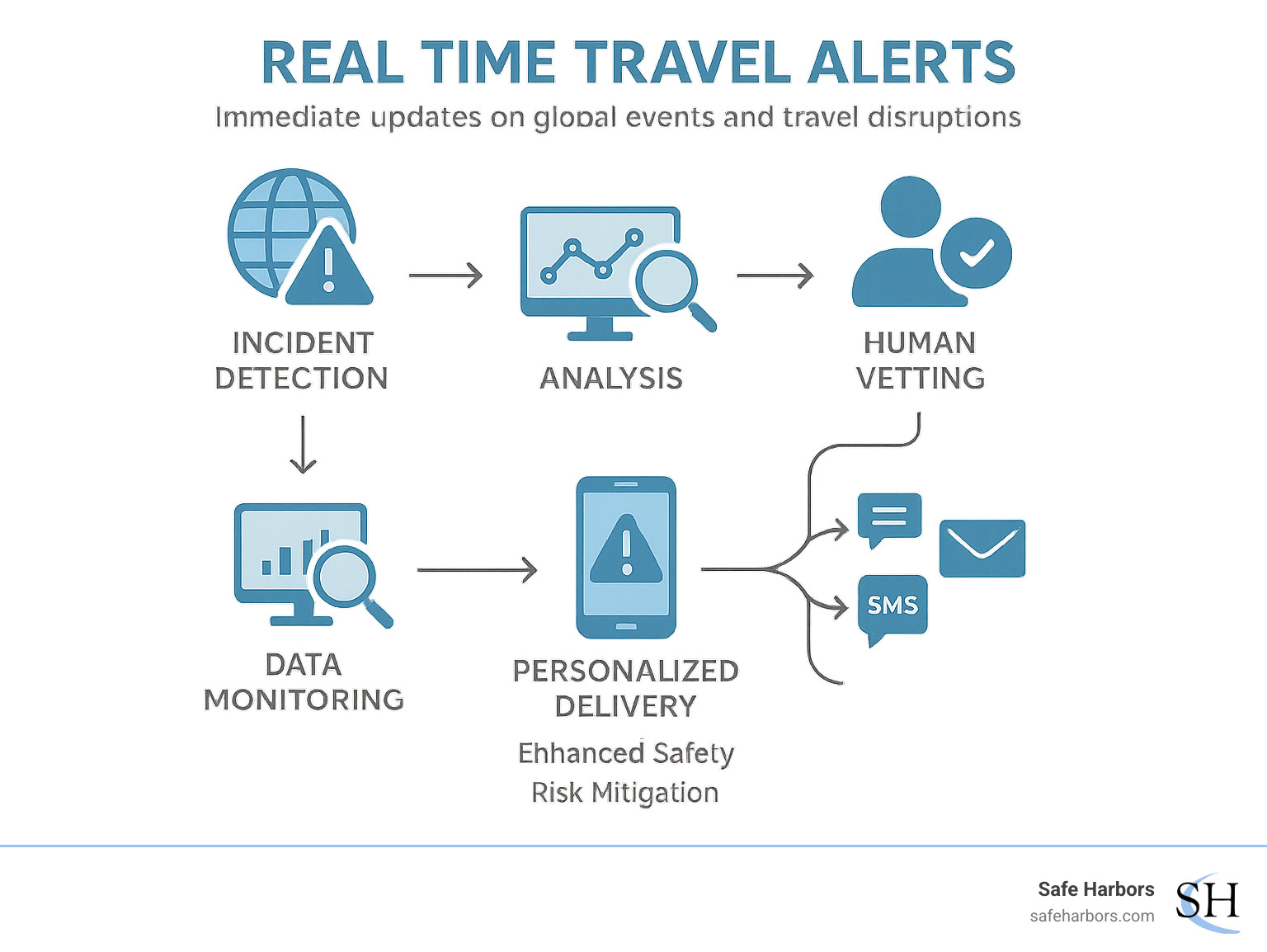
Infographic explaining how real-time travel alerts provide immediate updates on global events and travel disruptions, showing the flow from incident detection and data monitoring to analysis, human vetting, and personalized delivery to travelers via mobile apps, SMS, or email for improved safety and risk mitigation. - real time travel alerts infographic

From Static Advisories to Dynamic Alerts: The Evolution of Travel Safety

Remember the good old days when planning a trip meant just glancing at a government warning issued months ago? While those traditional travel advisories are still super important for getting the big picture, real-time travel alerts have truly changed the game when it comes to keeping travelers safe.

Think of traditional advisories, often shared by government bodies like the U.S. Department of State or Canada's Travel Advice and Advisories, as your essential guide. They give you a broad overview of what to expect in a country or region – general tips on health, safety, and security. They're usually updated periodically, maybe every 6 to 12 months, or when something major changes. These are fantastic for understanding the overall risk before you even pack your suitcase! We always recommend checking these resources before any international journey. You can learn about U.S. Travel Advisories and explore the International Travel Advisory map for comprehensive insights.

But here’s the thing: those general advisories can’t tell you about the sudden, unexpected events that pop up during your trip. That's where real-time travel alerts step in. They’re like having a personal safety radar, giving you super specific, dynamic information about incidents as they happen. This means travelers and their organizations get actionable details right when they need them most.

To really see the difference, let’s compare:

Feature Traditional Travel Advisories Real-Time Travel Alerts
Speed Periodic updates (monthly, quarterly, or as needed) Immediate, as-it-happens notifications
Specificity General country/region-level risks (e.g., crime, health status) Specific incident details (e.g., specific road closure, flight delay, security incident in a particular neighborhood)
Delivery Government websites, official publications Mobile apps, SMS, email, web platforms, dedicated dashboards
Actionability Pre-trip planning, general preparedness Immediate decision-making, rerouting, seeking shelter, communication

This shift from static information to dynamic communication makes us all much more proactive. Instead of just knowing a country has a "high crime rate," imagine getting an alert about a specific protest route to avoid, or a sudden airport closure that means you need to re-book your flight right away. This incredible precision and speed are what make real-time travel alerts an absolutely essential tool for today's travelers and the companies dedicated to their care.

What Triggers an Alert? Events That Impact Your Journey

So, what exactly prompts one of these timely real-time travel alerts? The short answer is: anything that can disrupt your travel plans or compromise your safety. We monitor a vast array of potential incidents, from the mundane to the catastrophic, to ensure our travelers are always informed.

Here are the primary types of events that trigger real-time travel alerts:

  • Weather Events: This is perhaps the most common trigger. From severe thunderstorms causing flight delays, to blizzards shutting down highways, or dense fog impacting airport operations, weather can quickly turn a smooth journey into a chaotic one. Alerts can warn of impending conditions, provide updates on closures, or advise on alternative routes.
  • Natural Disasters: Earthquakes, tsunamis, volcanic eruptions, floods, and wildfires can have devastating and immediate impacts on travel infrastructure and safety. Our alerts provide critical information on affected areas, evacuation routes, and potential long-term disruptions. We’ve even put together six tips for prepping for a natural disaster while away on business to help our travelers stay safe.
  • Security Threats: This category covers a wide range, from general civil unrest and political demonstrations to more specific threats like terrorism alerts, active shooter situations, or increased crime in particular areas. These alerts often include advice on areas to avoid, security precautions to take, or instructions to shelter in place.
  • Transit Disruptions: These are the everyday headaches that real-time travel alerts excel at mitigating. Think unexpected road closures due to accidents or construction, train delays, subway service changes, or airport operational issues. For instance, local transportation hubs like Port Authority Alerts and 511 systems (like 511NY or 511 SF Bay) are constantly updating on these matters. You can check for Transit Alerts in the Bay Area, for example, to see how granular these updates can be.
  • Health Warnings: While less frequent, significant health events can trigger alerts. This includes outbreaks of infectious diseases (remember the Coronavirus pandemic?), major public health advisories, or even localized environmental health concerns. These alerts provide guidance on necessary precautions, medical resources, or travel restrictions.
  • Planned Events: Sometimes, disruptions are entirely predictable but still require alerts. Large public gatherings, major sporting events, concerts, or even planned maintenance on infrastructure (like the I-87 Champlain Port of Entry overheight vehicle restriction we saw due to ongoing construction) can lead to significant traffic or transit changes. Alerts for these help travelers plan around anticipated congestion or closures.

The goal is always to provide timely, relevant, and actionable information, no matter the source of the disruption. By understanding what triggers these alerts, travelers can better appreciate their value in navigating an unpredictable world.

The Ecosystem of Real-Time Travel Alerts: Providers, Technology, and Trust

Have you ever wondered how those incredibly timely real-time travel alerts actually reach your phone or inbox? It's not magic, but it is a pretty impressive system! Delivering these vital updates is a complex, round-the-clock operation. It brings together incredible human expertise, smart technology, and careful data handling. Think of it as a vast, interconnected network, all working to keep you informed and safe, 24/7.

A global operations center with analysts monitoring screens, displaying various data feeds and maps - real time travel alerts

At the heart of this system is a constant flow of information. Expert analysts are always on duty, monitoring a huge number of sources—over 100,000, in some cases! This includes everything from breaking news and social media to official government warnings, local emergency service updates, and weather reports. Even some crowdsourced information gets a look. All this data pours in, gets filtered, carefully analyzed, and then, most importantly, is checked by real people. We know that some providers send out more than 34,000 real-time travel risk alerts every year. That's a lot of things that can happen while you're traveling! This careful process makes sure the alerts you get are correct, useful, and something you can act on, not just confusing noise.

How Real-Time Alerts Are Delivered

Many different groups help deliver these crucial alerts. Each plays a special part in keeping you in the loop.

First, government agencies often provide alerts for their own areas or for their citizens traveling abroad. While the U.S. Department of State's Travel Advisories might not be "real-time" in the instant sense, they're part of the bigger picture of travel safety information. Closer to home, local groups like the Port Authority of New York and New Jersey offer specific alerts for bridges, tunnels, airports (like JFK, Newark, and LGA), and transit lines. They often use social media like Twitter and Facebook to get quick updates out to everyone.

Then there are the local transit authorities. These folks are truly experts at providing real-time travel alerts for daily commutes. Think about apps that show live vehicle locations, like SEPTA's system maps, or services that send personalized email and text alerts for freeway issues, like Houston TranStar. Even smaller systems, like Santa Cruz METRO, offer estimated bus times and text tracking. They know that things like detours, traffic, and even weather can cause delays, and they work hard to keep you informed about those changes.

And finally, for businesses, there are corporate travel management teams, like ours at Safe Harbors! We take all these different streams of data and bring them together into a complete real-time travel alert system. Our solutions are designed specifically for corporate travelers. This means employees and their managers get important updates that are actually relevant to their exact trip and location, no matter where they are in the world.

The Technology Delivering Your Safety Updates

Behind every quick alert is some seriously smart technology. This tech makes sure those real-time travel alerts get to you fast and are custom just for you.

Mobile apps are often the first place these alerts show up. They give you instant push notifications, interactive maps, and all the details about what's going on. Many apps also include flight status updates and even let you send messages back and forth in a crisis. But what if you're somewhere with bad internet? That's where SMS/text messages shine. They're super effective for urgent alerts, even with limited connectivity. Services like Houston TranStar and 511 often let you sign up for text alerts.

Email notifications might be a tiny bit slower than texts or app notifications, but they're perfect for sending more detailed advice, summaries of ongoing situations, and links to helpful resources. And don't forget web platforms! These dedicated websites give you a full dashboard where you can see alerts, check specific routes, and find extra information. Many even let you choose exactly which types of alerts you want to get or track specific "My Routes."

For corporate solutions like those at Safe Harbors, API integration is key. This fancy term just means our systems can smoothly pull data from all sorts of alert providers. This gives us a complete picture of global events right within our own platforms. And with geolocation tracking, alerts can be super local. You only get notified if an event is happening right near you. This is also vital for companies, helping them know where their people are during an emergency. Finally, Artificial Intelligence (AI) is increasingly used to sift through huge amounts of data. It helps find patterns and can even predict problems before they happen, making alerts even faster and more relevant.

All this amazing technology, combined with the watchful eyes of human experts, is how Safe Harbors delivers the safety updates our travelers depend on. You can see how Safe Harbors delivers Realtime Alerts as part of our comprehensive business travel solutions.

Ensuring Accuracy for Effective Real-Time Travel Alerts

An alert is only useful if you can trust it, right? The real power of real-time travel alerts comes from how accurate and reliable they are. What's the point of an alert if it's wrong, old, or doesn't apply to you? Making sure you can trust the information is super important.

Professional alert providers don't just grab data from anywhere. They use trusted sources, like official government channels, respected news organizations, verified social media accounts, and established weather services. Any piece of information that seems important goes through a very strict checking process. Even with all the tech, human analysts are incredibly important. They sort through huge amounts of data, compare information from different places, and decide if an incident is truly credible and relevant. Some providers even say their analysts "personally verify data before it is pushed live." This human touch stops bad information from spreading and makes sure you only get the most reliable intelligence.

Sometimes, crowdsourced data (information from the public) is used, but always with great care. For example, some systems might work with apps like Waze. This can give real-time, on-the-ground insights. But this kind of data is always double-checked against official reports to make sure it's accurate. Leading alert systems also use reliability metrics. They track how fast and accurate their alerts are, always working to make their process better. The main goal is to give you information that's not just fast, but also completely trustworthy. This mix of automatic detection and human checking is what makes real-time travel alerts truly effective, helping you make smart choices with confidence.

Beyond Information: Integrating Alerts into Your Travel Risk Management Strategy

If you're managing business travel, you know it's about more than just booking flights. It's about keeping your team safe, no matter where their journeys take them. That's where real-time travel alerts truly shine. They're not just a handy notification; they're a critical part of a strong Travel Risk Management strategy and a fundamental way for businesses to show their corporate responsibility and duty of care.

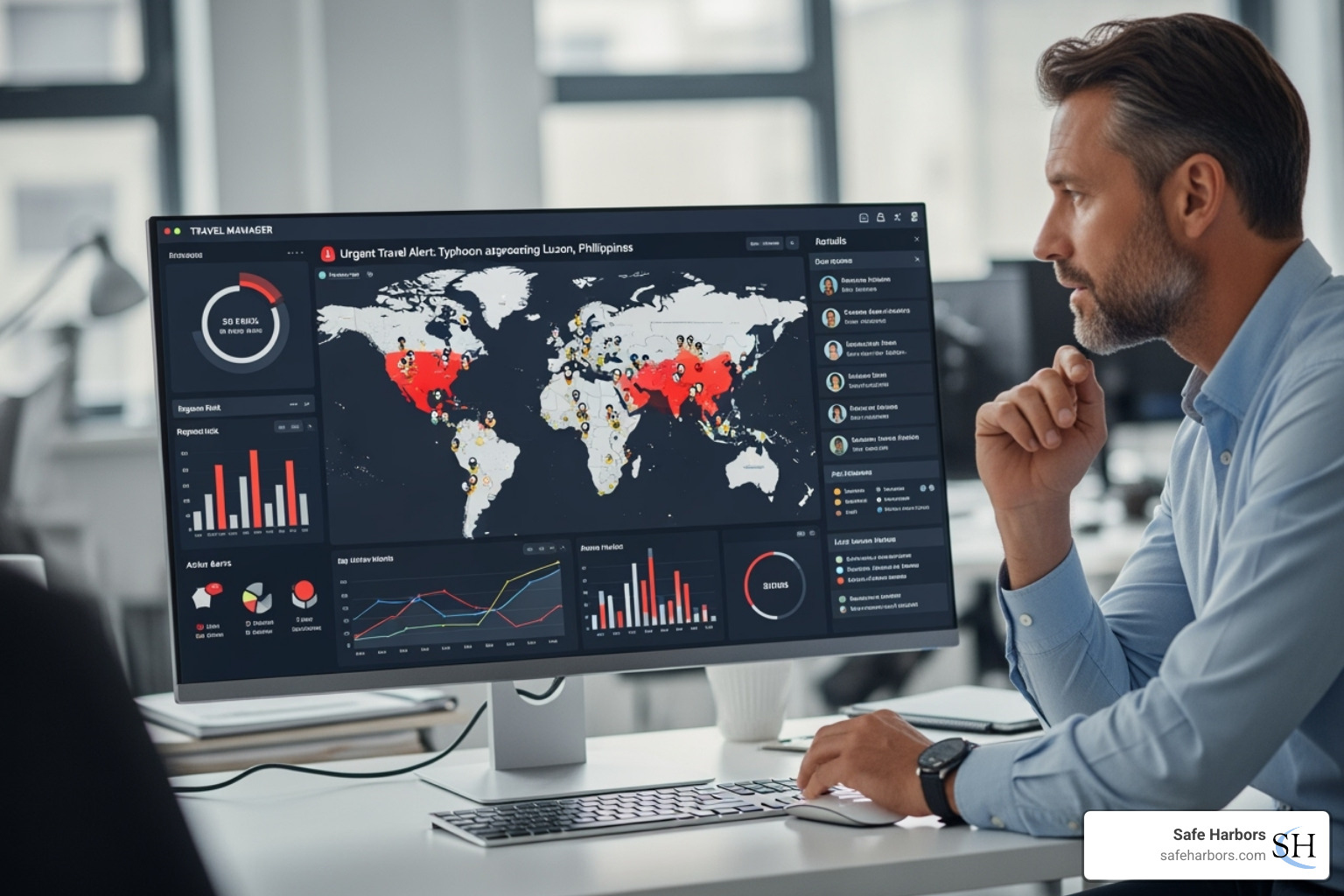
A travel manager viewing a dashboard of employee locations on a large screen, with various risk indicators and alerts - real time travel alerts

Think of it this way: when an unexpected event hits, like a sudden storm or a local disruption, you need to know exactly where your people are and how they're doing. It's part of your commitment as a business owner or travel manager – your corporate responsibility to them. Unfortunately, we know that nearly a third (29%) of travel managers aren't sure how long it would take to find all their travelers if a crisis popped up. Scary thought, right?

But with a solid Travel Risk Management strategy that includes real-time travel alerts, you can turn that worry into confidence. These alerts are your proactive shield, helping you ensure business continuity and protect your most valuable asset: your amazing team.

How Travelers Can Improve Their Safety

For the travelers themselves, these alerts are like having a super-smart travel companion. They empower you to be in the know and make smart choices on the go.

Imagine getting an alert about a sudden road closure ahead. You can then make informed decisions – maybe grab a coffee and wait it out, or quickly find an alternative route. This means you can avoid high-risk areas before you even get close, steering clear of anything from a busy protest to a flooded street.

If your original path isn't safe, these alerts help you reroute travel swiftly. It's all about minimizing hassle and wasted time, and that's a big part of our Immediate Response philosophy at Safe Harbors. Knowing that you'll be instantly updated about anything that might affect your journey brings immense peace of mind. It keeps you aware of your surroundings, boosting your situational awareness so you can react calmly and effectively to any changing conditions.

The Business Case for Proactive Real-Time Travel Alerts

Now, let's talk about why this isn't just nice to have, but a smart business move. Investing in proactive real-time travel alerts isn't just about employee well-being (though that's huge!); it directly impacts your company's success and reputation.

First off, it's a clear way to show you're taking your Duty of Care Business Travel seriously. When 57% of business travelers feel any destination could be "high-risk," showing you're prepared is vital. It helps you avoid potential legal issues and builds immense trust with your team.

When a crisis hits, being able to locate employees in a crisis quickly is paramount. Our systems, powered by these alerts, often include traveler tracking. This means you can pinpoint who might be in harm's way, get their last known location, and access their itinerary details in a flash. 29% stat? We help you flip that number.

And it's not just one-way communication. Top-notch alert systems also allow for two-way communication. Your travelers can check in as safe, ask for help, or even share on-the-ground updates. This vital chat channel is a lifeline during emergencies.

Finally, think about the bottom line. Travel disruptions, big or small, can cost a fortune—think missed deals, canceled projects, stranded employees, and pricey last-minute changes. By giving your team the heads-up they need to adjust quickly and avoid trouble, real-time travel alerts help you mitigate financial loss. That's why implementing a travel risk plan for employees is crucial. It's a proactive step that saves time, money, and headaches. We've even seen that more managers are using technology to keep track of traveler data, even for bookings made outside official policies, which just shows how much companies value having that clear oversight and proactive risk management in place.

So, when you invest in real-time travel alerts, you're really investing in your people, your business's resilience, and that priceless feeling of confidence and calm. It's a win-win!

The Future of Travel Safety: What's Next for Alert Systems?

The world of real-time travel alerts is always on the move, just like you! It’s constantly getting better, thanks to amazing leaps in how we handle data, use artificial intelligence, and stay connected. Looking ahead, we’re super excited about systems that will be even smarter, more personal, and better at predicting what might happen. All of this means your travels will be even safer and smoother.

A futuristic travel app interface on a transparent screen, displaying real-time travel data and alerts - real time travel alerts

Imagine a world where your alert system doesn't just tell you about an event after it happens, but actually predicts it. That’s where predictive analytics and AI-driven risk forecasting come in! Right now, systems react to events. But soon, they’ll anticipate them. AI will look at tons of information—like weather patterns, global news, past incidents, and even what people are saying on social media. This will help it guess potential problems before they even start. Wouldn't it be great to get a heads-up about likely flight delays days in advance because of an unusual storm brewing? Or know about a potential protest before it’s even public knowledge? That's the power of looking ahead.

These alerts will also become incredibly personal. Think hyper-personalization! Beyond just knowing your location, future systems will consider your exact travel plans, any health needs you might have, your preferences, and even how you usually travel. This way, you only get the information that’s truly important and helpful to you. It means less noise and more clear, actionable guidance.

And guess what? Your smartwatch might become your new best travel buddy! Wearable technology integration means smartwatches and other devices could buzz with critical updates or show you essential info right on your wrist. This hands-free delivery could be a real lifesaver when you’re busy or in a fast-moving situation.

One of the most exciting developments is automated itinerary adjustments. Picture this: a major disruption happens, and instead of you scrambling, your real-time travel alert system automatically rebooks your flight, finds you a new hotel, or reroutes your ground transport. It all happens seamlessly, with very little input needed from you. While today's systems can suggest alternatives, the next big step is truly effortless, automated re-planning.

We might even see improved biometric integration. While we always need to be mindful of privacy, using things like facial recognition at airports could make travel smoother. In an emergency, this could also link directly to those personalized alerts, helping streamline processes even further.

Our big goal at Safe Harbors is to create a safety net that’s super smooth, intuitive, and always responsive around every single traveler. We want to make your journeys not just safer, but also more efficient than ever before. We're thrilled to be a part of this amazing future, constantly adding the newest innovations to our services to keep our clients protected, no matter where their business takes them.

Conclusion: Travel with Confidence in an Unpredictable World

In today's world, things can change in an instant. From unexpected weather to global events, the unexpected is often just around the corner. But here's the good news: traveling with confidence is more achievable than ever before. How? Thanks to the amazing power of real-time travel alerts.

We've seen how these clever updates have completely changed the game. Gone are the days of just relying on old, general advisories. Now, you get immediate, super-specific insights into anything that might shake up your plans. Whether it's a sudden storm, a transit hiccup, or something more serious, these alerts keep you ahead of the curve. It’s all thanks to a fantastic network of experts and smart technology working tirelessly to get you the right information, right when you need it.

For you, the traveler, real-time travel alerts are like having a super-smart guardian angel in your pocket. They help you make smart choices, steer clear of tricky spots, and steer any bumps in the road with a calm, clear head. That means less stress and more peace of mind, no matter where your journey takes you.

And for businesses, these alerts are an absolute must-have. They're key to fulfilling your duty of care, protecting your amazing team, and keeping your operations running smoothly. Think of it as a proactive shield that helps you prepare, respond quickly, and even save money by avoiding costly disruptions. It's all about proactive planning and ensuring business continuity, even when the world throws a curveball.

At Safe Harbors, we understand that your team's safety and your company's strength are incredibly important. That's why we're dedicated to providing lightning-fast support and a personalized, white-glove service, all backed by top-notch technology. We truly believe that with the right information at your fingertips, every single journey can be safer and more successful.

Ready to give your travel safety strategy a real boost? Learn how our business travel services can protect your team and help them travel with the confidence they truly deserve.

5 of the Best Websites for Corporate Travel Concierge

Elevating Business Travel: The Role of a Corporate Travel Concierge

corporate travel concierge - corporate travel concierge

The world of business travel is constantly expanding. Corporate travel spending is set to reach an estimated $1.4 trillion by 2024, showing just how vital it is for companies. Navigating this complex landscape, however, can be a major headache for travel managers and employees alike.

This is where a corporate travel concierge steps in. Think of them as your business's dedicated travel expert, handling every detail to make trips seamless and productive.

A corporate travel concierge is a specialized service that acts as a dedicated partner for businesses, managing all aspects of their corporate travel needs.

They provide:

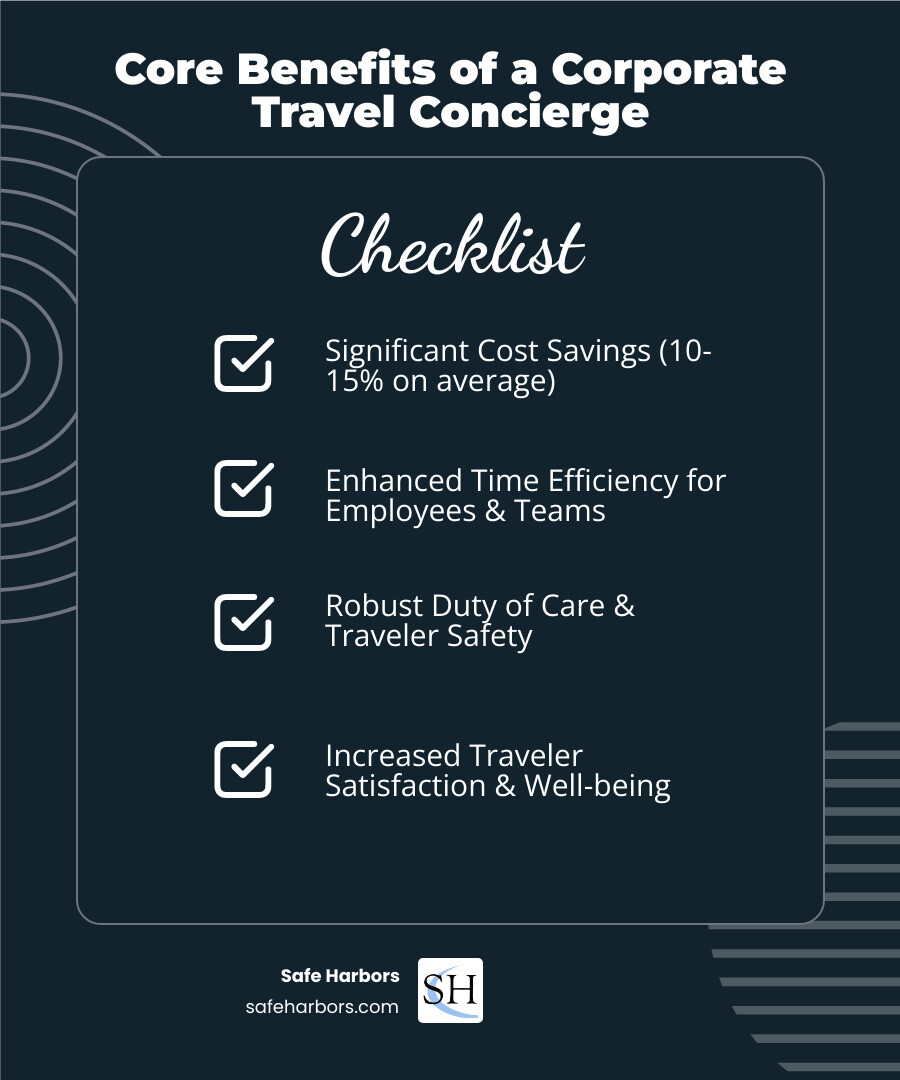
  • Comprehensive Planning: From flights and hotels to ground transport and detailed itineraries.
  • Cost Management: Negotiating rates, securing perks, and ensuring budget compliance. Travel concierges can help businesses save an average of 10-15% on travel costs.
  • 24/7 Support: Handling last-minute changes, disruptions, and emergencies.
  • Traveler Well-being: Ensuring safety, comfort, and personalized experiences for employees.
  • Time Savings: Freeing up internal teams from complex travel logistics.

They are designed to take the stress out of business trips, allowing your team to focus on their core work. This means better experiences for your travelers and clearer savings for your budget.

Infographic showing core benefits of a corporate travel concierge, including cost savings, time savings, duty of care, and traveler satisfaction. - corporate travel concierge infographic checklist-dark-blue

1. The All-in-One Technology Platform

In today's world, technology isn't just a convenience; it's the backbone of efficient corporate travel concierge services. We believe that business travel should be so advanced, it's simple. Our vision for "The Perfect Trip" starts with this fundamental belief, ensuring that every journey is streamlined and effortless.

A modern corporate travel concierge leverages sophisticated all-in-one technology platforms to transform the travel experience. These platforms integrate various functionalities, offering a unified, intuitive interface for both travelers and administrators. This seamless integration is crucial because, as statistics show, a significant 85% of business travelers report that travel management technology significantly improves their overall travel experience.

At the heart of these platforms are integrated booking tools. These aren't just simple flight and hotel aggregators; they are powerful engines that provide access to extensive inventories and allow for flexible booking options. Travelers can often use self-service options for straightforward bookings, empowering them with control while ensuring compliance with company policies. This balance of flexibility and control is vital for maintaining an efficient travel program.

Beyond booking, these platforms excel in expense management. They can automate the tracking and reporting of travel expenses, reducing the administrative burden on employees and finance departments. Real-time data analytics is another game-changer. This capability allows businesses to monitor travel spend, identify trends, and make data-driven decisions to optimize their travel programs. For instance, companies that effectively use travel management solutions can see average savings of 20-30% on their overall travel spend, a significant portion of which is driven by smart technology.

Crucially, these platforms are designed to enforce your Corporate Travel Policy automatically. This ensures that all bookings align with company guidelines, preventing out-of-policy spending and enhancing compliance. Mobile app functionality is also standard, providing travelers with on-the-go access to itineraries, booking modifications, and support. Imagine a business traveler needing to change a flight due to an unforeseen meeting extension—they can do it directly from their phone, greatly reducing stress and improving productivity.

We understand that technology should simplify, not complicate. Our elite tech partnerships are designed to deliver best response speed and comprehensive solutions that make business travel easier, allowing your team to focus on their core objectives. From an intuitive booking experience to best control for managers, our platforms ensure that every aspect of business travel is managed efficiently. For more details on how technology streamlines your journeys, explore our Business Travel Services.

2. The High-Touch VIP & Executive Specialist

While cutting-edge technology provides the strong framework for modern travel, it's the human touch—the high-touch VIP and executive specialist—that truly lifts corporate travel concierge services into an art form. This is where truly personalized service shines its brightest, changing ordinary business trips into wonderfully seamless, and even enjoyable, experiences. For your VIPs and busy executives, whose time is incredibly valuable and whose schedules are always demanding, this level of dedicated attention isn't just a luxury; it's absolutely essential.

VIP airport meet and greet service - corporate travel concierge

Our corporate travel concierge team offers comprehensive white-glove service, ensuring every single detail is handled with precision and care. This means you'll have dedicated agents who truly understand the unique preferences and specific requirements of your top-tier travelers. They don't just book flights; they thoughtfully craft bespoke itineraries, anticipating every need and proactively addressing any potential issues before they even arise. This can include arranging luxury travel accommodations, from securing highly sought-after hotel suites to coordinating private jet charters for those urgent or sensitive trips. We can always arrange private jet or charter flights when commercial options simply aren't suitable, guaranteeing discretion and efficiency.

But it goes beyond the basics. Our specialists provide exclusive access to amenities and experiences that are often difficult, if not impossible, to obtain otherwise. Imagine securing last-minute dinner reservations at a Michelin-starred restaurant for a crucial client meeting, obtaining tickets to a sold-out theater show for entertainment, or arranging VIP recognition upon hotel check-in. Our concierges leverage their extensive industry relationships and insider knowledge to provide these fantastic perks, offering a competitive edge that standard booking services just can't match. For instance, a corporate travel concierge with great contacts might be able to negotiate special hotel upgrades or secure the very best restaurant reservations for you.

Proactive support is a true hallmark of this high-touch service. This includes conducting pre-booking interviews to carefully document your traveler's preferences, ensuring highly customized experiences every single time. We'll remember your CEO's preferred seat on flights or the specific amenities they love in their hotel room. This incredible attention to detail alleviates the stress of daily responsibilities and allows your travelers to achieve truly improved productivity. And when changes are needed on the road, our dedicated team is there to provide immediate assistance, ensuring ultimate flexibility and complete peace of mind. Our Concierge Travel Service is built on this strong foundation of personalized care and proactive problem-solving.

Key benefits of a VIP corporate travel concierge

The advantages of utilizing a VIP corporate travel concierge for your executives are truly manifold, leading to significant improvements in efficiency, comfort, and overall satisfaction for your most important travelers:

  • Personalization: Imagine every detail of your trip, from your preferred airline seat to your favorite hotel amenities, perfectly custom just for you. This unparalleled level of customization makes travelers feel truly valued, boosting their satisfaction and overall quality of life while on the road.
  • Improved Productivity: When all travel logistics are expertly handled, executives are free to focus entirely on their core work. This means improved productivity, as our team manages everything from booking meeting rooms to arranging secure transportation and even translation services, ensuring no precious time is wasted on administrative tasks.
  • Stress-Free Travel: Our concierge team handles all potential pain points, from unexpected flight delays to navigating complex international itineraries. This significantly reduces traveler stress, ensuring they arrive at their destination feeling refreshed, focused, and completely ready for business.
  • Best Convenience: With 24/7 support and a dedicated single point of contact, assistance is always just a quick call or message away. This unparalleled convenience is absolutely crucial for busy executives who often face last-minute changes or unexpected challenges.
  • Access to Perks: Through our strong, established relationships, our concierges can secure valuable upgrades, exclusive lounge access, and other fantastic perks that significantly improve the travel experience without any additional cost to your company. Airport lounge access during a long layover can be a genuine game-changer for a weary traveler!
  • Handling Unique Requests: Whether it's arranging a private city tour, securing tickets to a sold-out event, or even coordinating personal errands, a VIP corporate travel concierge can manage a wide array of unique requests that fall far outside the scope of traditional travel management. This includes arranging specialized security services like secured cars and armed drivers in certain locales, or even securing gate-to-gate escort through customs.

3. The Global Risk Management Expert

In an increasingly interconnected world, managing global business travel extends far beyond booking flights and hotels. It encompasses the critical responsibility of ensuring the safety and well-being of your travelers, a concept known as Duty of Care. A truly comprehensive corporate travel concierge service acts as your global risk management expert, providing the tools and support necessary to protect your employees wherever their business takes them.

world map with travel alert notifications - corporate travel concierge

Our approach to global risk management is proactive and comprehensive. This begins with robust traveler tracking capabilities, allowing us to know where your employees are at all times. In the event of an unforeseen incident, such as a natural disaster, civil unrest, or a global pandemic, this real-time visibility is invaluable for rapid response and communication.

Central to our offering is 24/7 emergency support. Business travelers operate across different time zones, and emergencies don't adhere to business hours. Our dedicated team is always available to assist with crises, from medical emergencies to lost passports or last-minute itinerary changes. This unparalleled availability ensures that your travelers are never alone, no matter the time or location.

We also provide crucial geopolitical intelligence. Our systems monitor global events and local conditions, issuing health and safety alerts to travelers and management. This proactive communication means that before a trip even begins, potential risks are identified, and appropriate precautions can be taken. For instance, we can alert you to changes in government travel advice for specific destinations, helping you make informed decisions. An essential element of a travel manager's role is duty of care, and our services are designed to support this fully.

Furthermore, being an IATA-accredited flight agency and offering financial safeguards like ATOL protection (for UK package holidays) underscores our commitment to traveler security and peace of mind. These accreditations and protections mean we adhere to the highest industry standards and provide financial security for your travel investments. For a deeper dive into how we manage and mitigate travel-related risks, explore our Travel Risk Management solutions.

Our global reach is supported by our experience in international travel services. We offer services globally, with wide experience in diverse international settings. This global capability ensures that even the most complex international itineraries are handled with local knowledge and expertise, blending practical solutions with seamless execution. This is part of our commitment to Global Travel Management, ensuring your business operates smoothly across borders.

How to Choose the Right Corporate Travel Concierge for Your Business

Selecting the right corporate travel concierge is a pivotal decision that can significantly impact your company's efficiency, budget, and traveler satisfaction. It's not a one-size-fits-all solution; the ideal partner will align with your specific business needs and culture. We recommend a thoughtful assessment process to ensure you find a service that truly lifts your business travel program.

team meeting discussing travel strategy - corporate travel concierge

First, begin by assessing your company's unique needs. Think about your typical travel volume: Do you have a few executives traveling frequently, or a large team with occasional trips? Analyze your budget: What are your spending patterns, and what are your cost-saving goals? Understand your traveler profiles: Do you have VIPs who need white-glove service, or standard travelers who prioritize efficiency and self-service? These factors will help define the scope of service you require.

Engaging with a dedicated Travel Management Company is often the best starting point. They possess the expertise and infrastructure to provide comprehensive solutions custom to corporate environments. It's crucial to look for partners who emphasize transparency, flexibility, and a commitment to understanding your business.

Evaluating Service Models and Pricing Structures

Now, let's talk about the money side of things. Understanding how a corporate travel concierge charges is super important for making an informed decision.

You'll typically see a few ways they price their services. Some offer subscription models, like an annual membership fee for unlimited or tiered access. This can be cost-effective for busy companies because your costs are predictable. Others charge a per-trip fee, where a fee is charged for each booking or itinerary managed. This model might be suitable for businesses with lower, less predictable travel volumes. And then there are hybrid pricing plans, mixing a bit of both for a balance of predictability and flexibility. Less common now, but historically, some worked on commission-based models, earning directly from suppliers.

But it's not just about the price tag! Dive into their Service Level Agreements (SLAs). These tell you how fast they'll respond when you need help, which is crucial for handling last-minute changes and emergencies. A quick response time is a lifesaver! And make sure they can show you a clear cost-saving potential. With smart strategies, negotiated rates, and exclusive perks, companies using travel management services can see average savings of a fantastic 20-30% on their travel spend.

Defining your ideal corporate travel concierge program

Once you've evaluated potential partners, it's time to dream up what a truly successful corporate travel concierge program looks like for your organization.

First, think about your technology requirements. How much digital help do you need? Do you want super-smart booking tools, clear dashboards to track spending, or a mobile app that works like a charm on the go? Elite tech partnerships mean flexible booking tools that meet your demands. Staying updated with the latest industry research on travel technology can also guide your decisions here.

Next, consider your support needs. What level of human assistance is essential? Do your travelers need 24/7 emergency support, or is standard business-hours help sufficient? And for your VIPs, is a dedicated point of contact important? Then there's the level of personalization you desire. How customized do you need the service to be? From remembering seat preferences to organizing unique local experiences, the depth of personalization can vary.

Don't forget reporting and analytics! How important are detailed reports on travel spend, policy compliance, and traveler behavior? Robust analytics can help you continuously optimize your program. And finally, think about how they will handle disruptions. This includes proactive rebooking, real-time communication, and leveraging industry connections to mitigate issues when things go awry.

Choosing the right corporate travel concierge isn't just a choice; it's finding a true partner. One who can provide a personalized approach to business travel management, separating your company from the competition by delivering convenience, cost-effectiveness, and peace of mind. For more insights into optimizing your business travel strategies, check out our articles on Business Travel.

Frequently Asked Questions about Corporate Travel Concierge Services

It's completely natural to have questions when you're considering a new service, especially one as impactful as a corporate travel concierge. We often hear similar queries from businesses looking to make their travel programs more efficient and enjoyable. Here, we aim to provide clear, friendly answers to some of the most common questions, drawing on our expertise and the latest insights in business travel.

What services does a corporate travel concierge offer?

A corporate travel concierge is your dedicated partner in making business trips seamless and stress-free. They offer a truly comprehensive suite of services, designed to manage every single detail, so your team can focus on their core mission.

At the heart of what we do is booking flights and hotels. But we go far beyond simple reservations. We work to secure preferred rates and special perks, like hotel upgrades, and ensure every booking perfectly aligns with your company's travel policies and your traveler's personal preferences. Imagine getting those little extras that make a big difference! We also handle all your ground transportation needs, from reliable airport transfers and comfortable limousine services to convenient car rentals. For a touch of luxury or specific needs, we can even arrange private chauffeurs and English-speaking drivers.

Beyond just getting from A to B, our team excels at itinerary planning. We craft detailed, personalized schedules that cover everything: meeting times, dining reservations, and even any necessary leisure activities. We truly handle the details, leaving your travelers free to focus on their business objectives. For your top-tier executives and VIPs, we provide truly exceptional VIP services. This means white-glove treatment from start to finish, including airport meet & greet services, private jet charters for urgent or sensitive trips, and securing exclusive access to events or venues. If you can dream it, our team is committed to making it happen, worldwide.

Crucially, you'll benefit from 24/7 support. No matter when a flight gets delayed, a booking needs changing, or an emergency arises—like lost luggage or a medical issue—our team is available around the clock. Our best response speed means help is always just a call or message away. We also simplify expense reporting, assisting with the tracking and reporting of travel expenses and often integrating seamlessly with your existing financial systems. Plus, we're your expert in travel risk management, constantly monitoring global events, providing essential health and safety alerts, and offering secure travel solutions to fulfill your company's duty of care. This includes providing valuable destination-specific information and insights into local business practices. And for those truly unique requests, like arranging translation services, securing those hard-to-get theatre tickets, or even handling personal errands, we're here to alleviate stress and ensure a smooth journey.

How does a concierge service save businesses money?

Thinking of a corporate travel concierge as just an added cost is a common misconception. In reality, it's a smart strategic investment that delivers real, tangible cost savings for your business. Let's look at how:

One of the biggest ways we save you money is through negotiated rates. Thanks to our strong industry relationships and significant purchasing power, we can secure exclusive discounts on flights, hotels, car rentals, and other travel services. These are rates that individual companies simply can't access on their own. In fact, travel concierges can help businesses save an average of 10-15% on travel costs just through these special rates and perks. Beyond direct savings, we often secure exclusive perks that add value without adding to your budget. Think complimentary upgrades, lounge access, and flexible cancellation policies. These benefits reduce incidental costs and significantly improve traveler comfort.

Our technology platforms and dedicated agents ensure rigorous policy compliance. Every single booking adheres to your company's travel policy, which effectively prevents out-of-policy spending. Some companies even report achieving up to 90% compliance with their travel policies thanks to our services. We also deliver significant time savings for employees. By taking the entire burden of travel planning and problem-solving off their shoulders, we free up your employees and administrative staff to focus on their core responsibilities. This translates directly into increased productivity and reduced labor costs associated with managing travel internally.

Our meticulous planning and keen attention to detail lead to significant error reduction. We minimize costly mishaps that can arise from DIY travel arrangements, like booking errors or missed connections. Plus, we use optimized booking strategies, leveraging real-time data and expert insights to pinpoint the most cost-effective routes and booking times, always avoiding peak prices and maximizing value. This also includes smart strategies to maximize loyalty points and rewards, which can then be redeemed for substantial savings on future trips.

How do they handle last-minute changes and travel disruptions?

This is where a corporate travel concierge truly shines and provides immense value. Their ability to gracefully handle last-minute changes and unexpected travel disruptions is a game-changer, changing what could be a nightmare into a mere minor inconvenience. For business travelers, who often face unpredictable schedules and unforeseen challenges on the road, this capability is absolutely crucial.

First and foremost, our 24/7 availability means we're always there. No matter when a disruption occurs or a change is needed, immediate assistance is just a call or message away. This constant support is paramount, as being able to make changes from the road is vital for today's busy professionals. We don't just wait for you to call; we offer proactive rebooking. When flights are delayed or canceled, or plans suddenly shift, our concierges are actively monitoring itineraries and disruptions, often rebooking travelers before they even realize there's an issue.

We believe in real-time communication. We keep travelers and their companies fully informed with immediate updates on changes, alternative arrangements, and any necessary instructions. This clear, consistent communication reduces anxiety and empowers travelers to make informed decisions. Our strong industry connections are invaluable here. We leverage established relationships with airlines, hotels, and ground transportation providers to secure options that are simply unavailable to the general public, even during peak disruption times. This "insider knowledge" is a true superpower.

Our experienced concierges are masters of problem-solving expertise. They're adept at finding creative solutions and navigating complex logistics to keep your travelers moving forward. They truly pride themselves on going the extra mile for your organization and catering to specific business needs. The ultimate benefit? Significant stress reduction for travelers. Knowing that a dedicated expert is managing the chaos allows your team to remain calm and focused on their business objectives, rather than being consumed by travel logistics. This value proposition in terms of saved time and reduced stress is truly immeasurable.

Conclusion: Elevating Your Business Travel Program

The world of corporate travel is always moving forward, and with it, the need for businesses to ensure their employees travel efficiently, safely, and without breaking the bank. As we've journeyed through this guide, it's clear that a dedicated corporate travel concierge isn't just a nice-to-have anymore; it's a vital partner for any company looking to truly shine in its travel program.

We've unpacked the incredible value a corporate travel concierge brings, from the smart, all-in-one technology platforms that make booking and expense tracking a breeze, to the truly special high-touch VIP and executive specialists who craft bespoke journeys with white-glove service. And let's not forget the crucial role of the global risk management expert, ensuring your travelers are safe and sound, backed by 24/7 support and the latest global insights.

Picking the perfect partner from these diverse service models is a big step. It's all about truly understanding your company's unique needs, what your budget looks like, and the different types of travelers you have. Then, you can dive deep into evaluating the service models, pricing, and how much support they truly offer. When you get it right, the rewards are immense: you'll see significant cost savings thanks to savvy negotiations, incredible time savings for both your travelers and your administrative team, and a huge drop in travel-related stress.

Partnering with a top-tier corporate travel concierge service genuinely boosts your travelers' well-being, making them more productive and happier on the road. And that, in turn, translates into a much better return on investment for all your business travel spend. Here at Safe Harbors, our expertise in Travel Management means we're committed to providing solutions that are both advanced and wonderfully simple, making every single trip feel perfect.

We genuinely invite you to find the remarkable difference a dedicated corporate travel concierge can make for your organization. Let's redefine your business travel experience together: Partner with us for a superior concierge travel service.

5 Secrets to Unparalleled Service: Elevate Your Customer Experience

Why "Good Enough" Service Is a Failing Strategy

unparalleled service quality - unparalleled service quality

To achieve unparalleled service quality, focus on these five key areas:

  • Build a strong customer-centric culture.
  • Empower your team to deliver exceptional experiences.
  • Combine technology with the human touch effectively.
  • Practice proactive service and gather constant feedback.
  • Measure performance and commit to continuous improvement.

Unparalleled service quality isn't just a goal; it's a critical differentiator. In fact, 90 percent of people base their loyalty on customer service, and nearly 70 percent would switch providers after a single poor experience. With 84% of customers saying the experience is as important as the product, the stakes are high.

Yet, a huge disconnect exists: 80% of companies believe they offer a "superior experience," while only 8% of customers agree. This perception gap is a major opportunity. Good service gets noticed—72% of customers share positive experiences with six or more people, and this word-of-mouth influences 74% of purchase decisions.

This guide reveals five secrets to bridge that gap and deliver outstanding service. 'Good enough' is a failing strategy.

Infographic explaining the difference between poor, good, and outstanding customer service - unparalleled service quality infographic pillar-3-steps

Secret #1: Weave a Customer-Centric Culture into Your Company's DNA

At Safe Harbors, we believe unparalleled service quality starts at our core. It's a customer-first mindset embedded in everything we do, guided by leadership commitment, a shared vision, and core service standards.

A customer-centric culture blossoms when our team is happy and supported. The "service-profit chain" proves that satisfied employees lead to satisfied customers. When our team feels engaged and valued, they bring positive energy to every interaction. This foundation allows us to build lasting relationships, turning every interaction into an opportunity to show we care. To see how a strong culture can boost your business, it's worth exploring how to get the service-profit chain to work for you.

team collaborating on a customer-focused project - unparalleled service quality

The Core Principles of Unparalleled Service Quality

We follow several key principles to achieve unparalleled service quality:

  • Empathy: We strive to truly understand your needs and concerns, responding with genuine care.
  • Proactivity: Instead of waiting for problems, we anticipate them and act before they affect you.
  • Consistency: You can expect the same high standard of service every single time you interact with us.
  • Reliability: Our customers trust us to keep our promises. We are dependable, accurate, and committed to following through.
  • Responsiveness: We work hard to offer the best response speed, ensuring you get timely help when you need it most.
  • Consideration: It’s the thoughtful details and personal touches that show you're more than just a number to us.

Service excellence means "the ability of service providers to consistently meet and occasionally even exceed customers’ expectations." For a deeper dive, explore more insights on what is service excellence?.

From Vision to Reality: Making Customer-Centricity Everyone's Job

Turning this vision into reality is a company-wide effort. It's not just the customer service team's job; it's everyone's. We achieve this through:

  • Cross-departmental alignment: Every team works together to deliver a smooth, unified customer experience.
  • Hiring for attitude: We look for people who are naturally empathetic and proactive. Skills can be taught, but a desire to serve is priceless.
  • Rewarding excellence: We recognize and celebrate employees who go above and beyond for our customers, reinforcing our values.
  • Authentic brand delivery: Our brand promise is a commitment we live by. We empower employees to be themselves, letting their genuine care shine through.

At Safe Harbors, our dedicated Account Management teams embody this culture, ensuring our promise of unparalleled service quality is a real, positive experience for every client.

Secret #2: Empower Your Team to Deliver "Wow" Moments

True unparalleled service quality isn't about rigid scripts. It's about empowering our frontline team to be problem-solvers, innovators, and creators of memorable experiences. When employees have the autonomy to make decisions, they stop just "doing their job" and start delivering "wow" moments that delight customers.

Consider Zappos, which reallocated marketing budgets to customer experience, knowing happy customers are the best marketers. Similarly, the Ritz-Carlton empowers employees with a "$2,000 rule" to resolve guest issues without managerial approval. This trust signals that customer satisfaction is paramount. This approach leads to faster, more personalized service and boosts employee morale. We foster an environment where our team can connect with customers and tailor solutions on the spot.

empowered employee helping a customer with a smile - unparalleled service quality

Investing in Your Frontline: Training for Excellence

Empowerment requires equipping our team with the knowledge and skills to make smart, customer-focused decisions. Our continuous, multifaceted training includes:

  • Product Knowledge: Our team members are experts in our services, from complex international travel to our flexible booking tools.
  • Soft Skills: We emphasize empathy, active listening, and clear communication to build rapport and de-escalate stressful situations.
  • Empathy Training: We train our team to respond to emotional cues with sensitivity, which is vital in situations like Humanitarian Travel Consultation.
  • Problem-Solving: We teach our team to think critically and creatively to resolve issues on the first contact, empowering them to make decisions without supervisor approval.

High-performing businesses invest in their agents. By providing training, businesses empower agents to build trust with customers.

The Ripple Effect of Employee Empowerment

The benefits of empowering our employees are widespread:

  • Increased Agent Satisfaction: Autonomy and positive impact lead to higher job satisfaction, lower turnover, and a more experienced team.
  • Faster Resolutions: Empowered agents often resolve issues on the first contact, reducing customer wait times.
  • Memorable Experiences: Encouraging a personal touch creates "wow" moments that customers share, fueling word-of-mouth marketing.
  • Reduced Customer Effort: Enabling agents to act decisively creates a smoother, more pleasant experience for our customers.

An empowered team is a powerful engine for delivering unparalleled service quality.

Secret #3: Harmonize Technology and the Human Touch for Unparalleled Service Quality

In our quest for unparalleled service quality, we see technology as a strategic partner. At Safe Harbors, the magic happens when technology improves human service, not replaces it. It's about finding the perfect balance.

Today's customers expect smooth digital experiences—75% of first-time digital users stick with them. Our flexible booking tools, powered by elite tech partners, provide this efficiency. We use smart CRM systems to maintain a complete history of your preferences, and while AI chatbots handle basic questions, they free up our human agents for complex issues. In fact, 77% of agents say automation lets them focus on more important work.

customer using a self-service travel booking tool on a tablet - unparalleled service quality

Leveraging Data for Hyper-Personalized Experiences

Data is gold for customer service. Used smartly, it allows us to move beyond generic interactions to create truly personal experiences.

We create a 360-degree customer view by consolidating your interaction history, travel patterns, and preferences. This gives our agents the context they need for informed, efficient service. As 79% of service agents agree, it's impossible to give great service without this full view. By journey mapping your experience, we can spot potential issues and proactively offer solutions, like suggesting optimized routes for your business travel. This proactive thinking is a core part of our Business Travel Services.

Of course, we are vigilant about data privacy concerns. We balance helpful personalization with strict privacy rules to ensure your information is always safe and used responsibly.

Finding the Sweet Spot: Where Technology Improves, Not Replaces

Our goal is a seamless experience where technology empowers our human agents, letting them focus on building relationships and solving complex problems.

We ensure a seamless omnichannel experience, so your interactions are consistent whether by phone, email, or our online portal—a feature 76% of customers now expect. Our flexible booking tools also offer great self-service options for routine tasks. By automating common queries, we're freeing up our agents for more complex issues. This allows our expert team to provide the comprehensive white-glove service you expect from Safe Harbors.

The pandemic accelerated the shift to digital, and as McKinsey notes, 75% of first-time digital users will stick with these channels. We are ready, using technology to boost the human connection that defines unparalleled service quality. You can read more in The COVID-19 recovery will be digital.

Secret #4: Master the Art of Proactive Service and Feedback

At Safe Harbors, we believe unparalleled service quality means being one step ahead. We don't wait for problems; we are proactive, anticipating needs and tackling potential issues before they arise. If something goes wrong, we see it as an opportunity to deliver a "wow" moment through exceptional service recovery. Proactive communication builds trust and shows a level of care that goes beyond the usual.

How to Proactively Address Customer Needs

Anticipating client needs is a smart blend of careful observation and insightful data.

  • Journey Analysis: We map the typical client path to identify common questions or pain points, allowing us to proactively provide solutions.
  • Predictive Analytics: By analyzing past interactions and trends, we can anticipate future needs. For example, our Travel Risk Management services can share relevant advisories before you even think to ask.
  • Pre-emptive Support: We reach out with the right information or assistance before you realize you need it, from flight delay notifications to alternative travel plans.

Creating a Powerful Feedback Loop

Even with proactive efforts, a strong feedback loop is vital. We don't just ask for your thoughts; we actively encourage them, listen carefully, and act swiftly.

different feedback channels (email, survey, social media) - unparalleled service quality

We make making feedback easy through multiple channels, like direct chats with account managers or quick surveys. Acknowledging all feedback is a must. Every comment is valuable, and we ensure you know your voice is heard. This matters, as 90 percent of people base their loyalty on service, and nearly 70 percent would switch providers if it falls short.

Most importantly, we believe in closing the loop by letting you know how your feedback led to improvements. We are always acting on insights from your feedback to refine our processes and training. This cycle of listening, learning, and improving is essential to our commitment to unparalleled service quality.

Secret #5: Measure, Analyze, and Continuously Improve Your Service

To achieve and maintain unparalleled service quality, we must objectively measure performance, analyze data, and commit to a cycle of continuous improvement. We can't manage what we don't measure; relying on anecdotal evidence isn't enough. Monitoring key metrics provides priceless information about customer satisfaction and loyalty, helping us focus our improvement efforts.

Key Metrics for Measuring Unparalleled Service Quality

We track several key metrics to gauge our service effectiveness:

  • Customer Satisfaction (CSAT): Measures satisfaction with a specific interaction via quick surveys. A low score can indicate unmet expectations.
  • Net Promoter Score (NPS): Measures customer loyalty by asking how likely they are to recommend our services, classifying customers as Promoters, Passives, or Detractors.
  • Customer Effort Score (CES): Measures how much effort a customer had to exert to resolve an issue. A low score indicates a smooth experience and is a strong predictor of loyalty.
  • First Contact Resolution (FCR): Tracks the percentage of inquiries resolved during the first interaction. A high FCR rate signifies efficiency and boosts satisfaction.
  • Customer Churn Rate (CCR): Measures the percentage of customers who stop using our services. A high customer churn rate can signal underlying service issues.
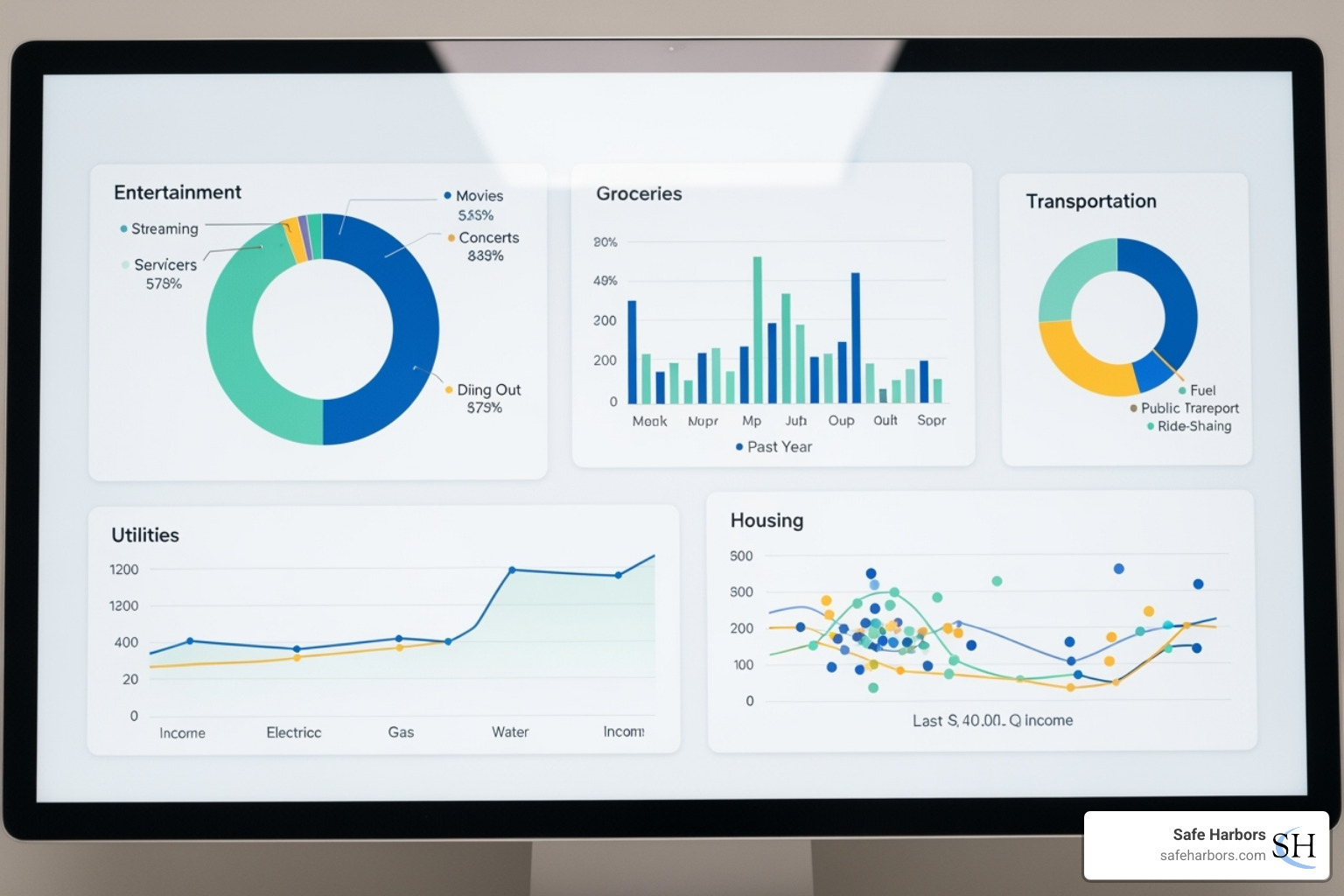
Table comparing key service metrics: Customer Satisfaction (CSAT), Net Promoter Score (NPS), and Customer Effort Score (CES) - unparalleled service quality

Using Metrics to Drive Meaningful Change

Collecting data is just the first step. We analyze these metrics to drive actionable improvements:

  • Identifying Trends: We continuously monitor metrics to spot patterns. Are certain channels underperforming? Do specific issues lead to low satisfaction?
  • Root Cause Analysis: When metrics dip, we conduct a thorough analysis to find the source, whether it's a training gap or a process flaw.
  • Setting Improvement Goals: Based on our analysis, we set clear, measurable goals, such as increasing NPS or reducing CES.
  • Benchmarking Performance: We regularly benchmark against industry leaders and our own historical data to understand where we stand and how to deliver consistent unparalleled service quality.

This data-driven approach ensures our improvement efforts are targeted and effective.

Frequently Asked Questions about Achieving Service Excellence

What sets good service apart from unparalleled service quality? When "good enough" is the standard, we aim higher. Here are answers to common questions about achieving service excellence.

How do you define unparalleled service quality?

For us, unparalleled service quality means consistently exceeding expectations, not just meeting them. It's about creating genuine, positive emotional connections in every interaction. When you feel heard, understood, and cared for, we build deep loyalty through memorable experiences. It’s about making every interaction feel easy, personal, and impactful.

What is the single most important factor in great customer service?

While many factors are important, we believe the most critical is a strong, customer-centric culture that empowers employees. When our team feels trusted and supported, they have the freedom to listen actively, empathize deeply, and solve problems creatively. This internal culture of empowerment directly translates into the exceptional, responsive service you experience.

How can a small business provide outstanding service on a budget?

You don't need a massive budget to deliver unparalleled service quality. Small businesses can excel by focusing on high-impact, low-cost principles:

  • Focus on culture: A genuine, customer-first mindset costs little but yields huge returns.
  • Empower your staff: Train your team well, then give them the authority to resolve issues on the spot. This reduces customer friction and builds trust.
  • Use free feedback: Actively solicit and act on customer feedback. Showing you're listening builds incredible loyalty.
  • Personalize interactions: Using names, remembering preferences, and engaging in genuine conversation creates memorable experiences without significant cost.

Conclusion: Your Journey to Unparalleled Service Starts Today

We've covered the five secrets to achieving unparalleled service quality: building a customer-centric culture, empowering your team, harmonizing tech with a human touch, being proactive with service and feedback, and committing to data-driven continuous improvement.

Service is your most potent competitive advantage. It sparks loyalty, turns clients into advocates, and fuels sustainable growth. The gap between the 80% of companies that believe they deliver a "superior experience" and the 8% of customers who agree is your biggest opportunity to stand out.

At Safe Harbors, our dedication to unparalleled service quality is how we operate daily. We are proud of our best response speed, flexible booking tools, and comprehensive white-glove concierge management with duty of care. Our promise is to make every client feel valued, understood, and seamlessly supported, no matter where their business takes them.

Your journey to outstanding service can start today. By focusing on these core secrets, you can transform customer interactions and build lasting relationships.

Ready to experience the difference that unparalleled service quality can make for your corporate travel needs? We're here to help. Begin your journey with our Concierge Travel Service today.

Experience the Difference: A Deep Dive into Personalized Travel Concierge

Why Concierge-Style Service Matters for Modern Travel Management

concierge service - Concierge style service

Concierge-style service is a personalized, proactive approach to customer care that anticipates needs and delivers white-glove support beyond standard expectations. Rooted in five-star hotels, this model now transforms corporate travel by offering 24/7 access, seamless experiences, and a dedicated point of contact to remove friction from every journey.

Key elements of concierge-style service:

  • Proactive care - Anticipating needs before they become problems
  • Personalization - Tailoring every interaction to individual preferences
  • Relational approach - Building ongoing partnerships, not transactional exchanges
  • White-glove support - Handling complex tasks so clients can focus on what matters
  • 24/7 availability - Round-the-clock assistance across all time zones

For corporate travel managers facing slow responses, disjointed systems, and duty of care responsibilities, this approach is a lifeline. Instead of using multiple vendors, you get a dedicated team that knows your travelers, anticipates disruptions, and acts proactively.

Research shows this service isn't just a luxury. With an estimated 12,000 physicians now practicing concierge medicine, the model is expanding rapidly. Businesses recognize that exceptional service creates loyalty, which in corporate travel means safer employees, fewer disruptions, and cost savings.

The difference isn't just about speed; it's about the emotional intelligence, observation, and proactivity that make experiences memorable. As Simon Cooper told Bloomberg Businessweek, the goal is strong emotional engagement—ensuring clients won't consider going anywhere else.

This guide breaks down what concierge-style service means, how it differs from standard support, and why forward-thinking companies are making it their new baseline for travel management.

Infographic comparing traditional customer service versus concierge-style service across five dimensions: response type (reactive vs proactive), approach (standardized vs personalized), relationship (transactional vs relational), focus (problem-solving vs experience-crafting), and availability (business hours vs 24/7 support) - Concierge style service infographic roadmap-5-steps

Deconstructing Concierge-Style Service: Beyond the Buzzword

The term "concierge" often evokes images of grand hotel lobbies, which is where the concierge-style service model began. From its hospitality origins, this approach has evolved into a powerful philosophy for customer care, characterized by proactive, personalized solutions and a relational, rather than transactional, engagement.

The term's origins trace back to medieval French servants, evolving from castle porters to the trusted assistants we know today. The consistent theme is a dedicated individual anticipating and fulfilling needs.

Today, concierge-style service means "white-glove" support that fosters customer loyalty. It involves understanding unarticulated needs and providing custom solutions for memorable experiences. It's about building relationships and trust, shifting from task management to crafting seamless experiences for business travelers.

The Core Principles of Proactive Care

At the heart of concierge-style service is a commitment to proactive care: anticipating needs and addressing potential issues before they impact the client.

Consider these core principles:

  • Anticipating needs: A true concierge observes and listens to foresee client needs. For instance, The Westin brand's Gear Lending program provides running kits to guests, anticipating their desire to exercise without packing bulky gear.
  • Removing customer pain points: This involves streamlining processes to handle complex tasks for clients. Examples include online pharmacies with 24/7 doctor chats or insurance companies managing the entire auto repair process, proactively eliminating customer stress.
  • Providing unexpected perks: Small, thoughtful gestures can create unforgettable memories. A hotel might give a lost stuffed animal VIP treatment, creating a heartwarming story. In a famous example, when a family's special allergy-friendly food for their son spoiled at a Ritz-Carlton, the chef's mother-in-law flew in replacements from Singapore.
  • Creating emotional engagement: The ultimate goal is a strong emotional connection that builds loyalty. As Simon Cooper, former COO at Ritz-Carlton, told Bloomberg Businessweek, "The goal is to develop such a strong emotional engagement between the hotel’s staff and their guests that a guest will not consider staying anywhere else, even if they have an option."
  • Going above and beyond: This encapsulates the concierge spirit. For example, when a hurricane threatened a couple's honeymoon, a concierge rerouted them to Mexico, saving the trip and turning a service into a partnership.

How Concierge-Style Service Differs from Traditional Support

To appreciate the value of concierge-style service, it's helpful to compare it with traditional models.

Feature Traditional Customer Service Concierge-Style Service
Response Type Reactive (responds to issues after they occur) Proactive (anticipates and addresses needs before they arise)
Approach Standardized (follows scripts, uniform processes) Personalized (custom to individual preferences and context)
Relationship Transactional (focuses on resolving single interactions) Relational (builds long-term partnerships and trust)
Focus Problem-Solving (fixes what's broken) Experience-Crafting (improves the overall journey)
Availability Often limited to business hours, specific channels 24/7 access, multi-channel, dedicated contact

Traditional customer service often prioritizes efficiency, leading to impersonal experiences like automated phone trees. While fine for basic queries, it fails with complex or time-sensitive requests.

Concierge-style service, in contrast, prioritizes the customer's experience and long-term satisfaction. It's about being a trusted advisor, which is crucial in corporate travel where every minute matters.

The Human Element: Key Characteristics of a Five-Star Representative

While technology is important, the soul of concierge-style service is human. The representatives are skilled professionals with a unique blend of traits.

The key characteristics of a successful concierge representative include:

  • Emotional intelligence: The ability to understand and empathize with a client's unspoken needs, frustrations, and desires.
  • Resourcefulness: The ingenuity to find solutions for even the most unusual or challenging requests.
  • Proactivity: Anticipating needs and offering solutions before being asked.
  • Discretion: Handling sensitive information and unique preferences with the utmost professionalism.
  • Exceptional communication: Clear, concise, and empathetic communication, including active listening and timely updates.
  • Extensive network: A strong professional network to open doors to exclusive access and seamless experiences.

At Safe Harbors, our expert Travel Managers embody these irreplaceable qualities, ensuring every interaction is efficient, personal, and supportive. They are the trusted partners who make the difference. More info about our expert Travel Managers.

The Business Case: Why Top Companies Adopt a Concierge Approach

In a competitive market, adopting a concierge-style service model is a strategic decision with significant returns. It's a measurable way to improve customer retention and brand differentiation. Cared-for clients become loyal brand advocates.

Graph showing the impact of high-touch service on customer loyalty and retention - Concierge style service

Tangible Benefits for Your Business

Implementing a concierge-style service offers concrete advantages:

  • Improved customer loyalty: Personalized care reduces churn and fosters long-term relationships.
  • Higher satisfaction scores: Proactive problem-solving leads to greater customer satisfaction.
  • Competitive advantage: Superior service becomes a powerful differentiator.
  • Increased lifetime value: Loyal customers tend to spend more over time.
  • Improved employee productivity for corporate clients: Business travelers spend less time on logistics and more time on core responsibilities.
  • Stronger brand reputation: Positive word-of-mouth from satisfied clients attracts new business.

At Safe Harbors, our Account Management team is built on these principles, delivering dedicated attention and bespoke solutions that create long-term value. More info about our Account Management.

Best Advantages for the Customer

While businesses benefit, customers are the true beneficiaries. Concierge-style service transforms stressful tasks into seamless, enjoyable experiences.

The primary advantages for customers include:

  • Time savings: A concierge handles the legwork, freeing up valuable time for clients.
  • Reduced stress: A dedicated expert managing every detail provides immense peace of mind.
  • Seamless experiences: Every step of a journey is smooth and effortless.
  • Access to exclusive perks: Concierges can secure reservations, tickets, and unique experiences.
  • A single point of contact: One dedicated contact simplifies communication and builds trust.

For our Business Travelers, this means more productive, hassle-free trips with constant support—an essential level of care in today's business world. More info for Business Travelers.

Measuring the Success of Your Concierge-Style Service

A concierge-style service is an investment whose success must be measured. Beyond qualitative benefits, tracking quantifiable metrics is crucial to demonstrate its impact.

Key Performance Indicators (KPIs) to track include:

  • Customer Satisfaction (CSAT): Directly measures client happiness with the service.
  • Net Promoter Score (NPS): Gauges customer loyalty and willingness to recommend your service.
  • Customer retention rates: A direct measure of success; shows clients are staying longer.
  • Customer lifetime value (CLTV): Reflects the total revenue expected from a customer.
  • Qualitative feedback: Testimonials and case studies provide invaluable insights for refinement.

By monitoring these metrics, we ensure our concierge-style service exceeds expectations and consistently delivers value.

Bringing Concierge Service to Life: Implementation and Examples

The principles of concierge-style service can be adapted by any business. It's a customer-first mindset that empowers staff to create a culture of exceptional service by proactively simplifying clients' lives.

At Safe Harbors, we empower our staff to anticipate needs and create seamless experiences. We foster a culture of going the extra mile, using client feedback to continuously refine our services for maximum impact.

How Any Business Can Adopt Concierge Principles

Offering concierge-style service doesn't require an unlimited budget. Businesses of all sizes can adopt elements of this high-touch approach:

  • Personalize every interaction: Listen to and remember client preferences, from scheduling times to communication methods.
  • Offer unexpected amenities/perks: Think creatively about what might delight your customers. Even a small, thoughtful gesture can make a big impact.
  • Simplify complex processes: Identify and alleviate common pain points in your customer journey.
  • Proactively communicate: Keep clients informed every step of the way to build trust and reduce anxiety.
  • Empower your team: Give employees the autonomy and tools to go above and beyond for customers.

These principles are the foundation of our Business Travel Services, where we apply a concierge-style approach to ensure smooth and productive corporate journeys. More info about our Business Travel Services.
Real-World Examples of Going Above and Beyond

The true spirit of concierge-style service is best illustrated through real-world examples:

  • The Ritz-Carlton's Culinary Rescue: A family at the Ritz-Carlton in Bali finded their son's special allergy-friendly food had spoiled. When staff couldn't find a local replacement, the executive chef asked his mother-in-law to fly from Singapore with the ingredients. This extraordinary effort saved the family's vacation.
  • The Bunny's VIP Stay: When a girl left her stuffed animal at an Irish hotel, staff didn't just return it. They gave the bunny a five-star "VIP stay," complete with a photo album, turning a child's sadness into a cherished memory.
  • Westin's Gear Lending Program: The Westin brand anticipates that guests may want to work out but not pack bulky gear. Its Gear Lending program provides running kits and shoes directly to their room, offering a convenient solution.

These examples show that concierge-style service is about genuine care and innovative problem-solving, not just grand gestures.

The Role of Personalization in a Concierge Experience

Personalization is the cornerstone of concierge-style service, changing generic assistance into resonant, custom support. In the nuanced world of corporate travel, we know one size does not fit all.

Here's how personalization comes to life:

  • Using client data (responsibly): Understanding past preferences, destinations, and dietary restrictions allows us to anticipate needs.
  • Remembering preferences: A good concierge remembers small details like preferred airline seats or the need for a quiet hotel room.
  • Customizing itineraries: A concierge crafts bespoke itineraries that align with a traveler's objectives, schedule, and comfort.
  • Tailoring communication: A personalized service adapts its communication style and frequency to suit the individual.

This deep personalization is central to our Concierge Travel Service, where we make every journey feel unique and effortless. More info about our Concierge Travel Service.

The landscape of concierge-style service is dynamic, shaped by technology and evolving expectations. While the core principles are constant, delivery methods are changing. The model is growing, especially in healthcare. Concierge medicine is set to soar in 2024, with an estimated 12,000 physicians practicing it. This shows a clear market for premium, personalized services.

How Technology Lifts the Concierge Experience

Technology improves, not replaces, the human element of concierge-style service, making it more efficient and predictive. We use cutting-edge tools to augment our expertise for seamless support:

  • CRM tools: CRM systems help us track client preferences and past interactions to deliver highly personalized service.
  • AI-powered assistants: Digital assistants like Google Assistant and Alexa can efficiently manage routine tasks, freeing up human concierges for complex, high-value interactions.
  • Mobile apps for 24/7 access: Dedicated apps give clients instant access to their concierge team, itineraries, and real-time updates.
  • Data analytics for predictive service: Analyzing data patterns allows us to proactively offer solutions, like rerouting travelers before they know about a flight delay.

This blend of human insight and tech efficiency is critical in emergencies. Our Emergency Travel Service uses both to ensure rapid response and resolution. More info about our Emergency Travel Service.

Potential Challenges and How to Overcome Them

Implementing concierge-style service has challenges, but they can be overcome with careful planning.

  • Implementation costs: A high-touch model requires upfront investment. Overcoming this: Start small in high-impact areas and scale gradually. Demonstrate ROI through improved client retention.
  • Scalability: Maintaining a personalized experience while growing is a challenge. Overcoming this: Use technology for routine tasks, freeing up humans for complex interactions. Ensure consistency with robust training.
  • Maintaining the human touch: Technology should improve, not diminish, personal connection. Overcoming this: Prioritize human interaction for critical moments and use tech to enable meaningful engagement, not replace it.
  • Data privacy and security: Collecting client data requires stringent protection. Overcoming this: Adhere to top data security standards and be transparent with clients to build trust.

Addressing these challenges is part of our commitment to excellence. Our Travel Risk Management strategies use both human expertise and technology to protect clients. More info about Travel Risk Management.

Conclusion: The New Standard in Corporate Travel

Our exploration of concierge-style service shows that in today's world, personalized, proactive care is a necessity, not a luxury. We've covered its history, core principles, and key differences from traditional support. The benefits are clear for both businesses (loyalty, competitive edge) and customers (time savings, less stress).

Real-world examples from Ritz-Carlton to Westin show the power of going above and beyond. Technology improves this service, but challenges in maintaining the human touch and scalability remain.

At Safe Harbors, we believe concierge-level care is the cornerstone of effective travel management. It's about providing an best response speed and comprehensive white-glove service that ensures every business trip is seamless, productive, and stress-free. It's about being more than just a provider; it's about being a true partner, anticipating your needs and delivering solutions before you even know you need them.

In an era where experiences are valued above all else, concierge-style service is rapidly becoming the new standard in corporate travel. It's an investment in your people, your productivity, and your peace of mind. Find comprehensive Global Travel Management with a partner who puts your needs first. Learn more here: Discover comprehensive Global Travel Management.

Attendee Management Made Easy: Tips for a Smooth Event

Why Event Attendee Management is the Foundation of Successful Corporate Events

event attendee management

Event attendee management is the process of organizing, tracking, and engaging participants throughout the entire lifecycle of your corporate event—from initial registration through post-event follow-up. For corporate travel managers, effective management ensures seamless experiences, reduces operational chaos, and protects your organization's duty of care.

Quick Answer: What Event Attendee Management Includes:

  • Registration & Ticketing - Automated sign-ups, payment processing, and custom forms
  • Communication - Targeted emails, reminders, and real-time updates to attendees
  • Logistics Coordination - Travel bookings, accommodation, on-site check-in, and badge printing
  • Engagement Tools - Mobile apps, live polls, networking features, and personalized agendas
  • Data & Analytics - Attendance tracking, feedback collection, and ROI reporting
  • Security & Compliance - Secure data storage, privacy protection, and traveler tracking

The attendee journey covers every touchpoint from invitation to post-event follow-up. Done well, it feels effortless; done poorly, it leads to frustration, safety risks, and wasted resources.

As events scale—especially with hybrid and international audiences—manual methods like spreadsheets and email chains collapse under complexity. Data scatters, response times slow, and human error increases.

Modern attendee management software centralizes everything in one platform. Organizations using dedicated tools often save more than 200 hours on logistics and make attendees 10 times happier than with manual methods. Real-time visibility into registrations, check-ins, and support needs is critical when managing duty of care for traveling employees.

Poor attendee management can jeopardize safety, harm reputation, and waste budget. Done right, streamlined attendee management becomes a strategic asset that boosts engagement and delivers measurable ROI.

The Shift to Automated Attendee Management

Manual methods like updating spreadsheets and sifting through endless email chains are becoming a thing of the past for effective event attendee management.

A split screen showing a chaotic spreadsheet with many errors versus a clean event management dashboard with organized data - Event attendee management

Manual processes like spreadsheets and email chains are notorious for scalability issues. What works for a small team meeting quickly collapses under the weight of hundreds or thousands of attendees. The risk of human error skyrockets, leading to duplicate entries, missed communications, and logistical nightmares. Imagine trying to coordinate travel, dietary restrictions, and session preferences for 500 attendees manually – it's a recipe for stress and potential disaster.

Automated solutions, however, revolutionize this approach. By centralizing all attendee data in one platform, we gain real-time updates and a single source of truth. This means no more conflicting versions of attendee lists or frantically searching for that one email. This centralization boosts efficiency. Studies show that dedicated event management platforms can save over 200 hours on event logistics, time that can be redirected to enhancing the event experience.

Benefits of Dedicated Software vs. Manual Methods

The advantages of moving from manual methods to dedicated event attendee management software are clear and compelling, especially for corporate events where precision and professionalism are paramount.

  1. Time Savings: Automated registration, communication, and check-in processes dramatically reduce the hours spent on administrative tasks. No more endless data entry or chasing RSVPs. This allows our team to focus on strategic planning and attendee experience.
  2. Cost Reduction: Streamlined processes minimize the need for extensive manual labor, reduce errors that lead to costly corrections, and optimize resource allocation. Integrated systems can also help us track budgets more effectively.
  3. Improved Data Accuracy: Software-driven systems reduce human error, ensuring that attendee information, payment details, and preferences are captured accurately and consistently. This accuracy is vital for personalized experiences and reliable reporting.
  4. Improved Attendee Experience: With efficient processes, attendees enjoy a smoother journey from registration to post-event. Personalized communications, easy access to information, and seamless check-ins contribute to making attendees 10 times happier. When attendees feel valued and well-informed, their overall satisfaction and engagement soar.
  5. Better Security: Dedicated platforms offer robust data security measures, protecting sensitive attendee information, including payment details and personal data. This is crucial for maintaining trust and complying with privacy regulations.
  6. Professionalism: A well-managed event reflects positively on your organization. Automated systems ensure consistent branding, professional communications, and a polished image throughout the attendee journey.

For organizations like ours, the benefits extend even further. Integrating event attendee management with our corporate travel services means we can offer comprehensive support, ensuring a seamless experience from event registration to flight and accommodation bookings. To learn more about how integrated management benefits your organization, explore More on Safe Harbors' travel management benefits.

Streamlining Your Event Planning and Execution

Modern event attendee management software doesn't just manage attendees; it streamlines the entire event planning and execution process, allowing us to orchestrate complex corporate gatherings with ease.

At its core, this streamlining comes from automated workflows. Tasks that once required manual triggers—like sending confirmation emails or updating attendee lists—are now handled automatically by the system. This frees up our event managers to focus on high-value activities, ensuring every detail is perfect.

Centralized communication is another cornerstone. Instead of disparate email threads and messaging apps, all attendee communications—from initial invitations to last-minute updates—are managed within a single platform. This ensures consistency, reduces confusion, and allows for targeted messaging based on attendee segments (e.g., speakers, VIPs, general attendees).

Simplified registration is where the magic often begins for attendees. Intuitive online forms, flexible ticketing options, and secure payment processing make signing up a breeze. For us, it means less administrative burden and more accurate data from the outset.

Integrated logistics connect various aspects of the event. For example, attendee management can link directly with travel bookings and accommodation arrangements, a specialty for us. This ensures that travel itineraries align perfectly with event schedules, dietary requirements are communicated to catering, and special accessibility needs are noted for venue staff.

Finally, real-time reporting provides immediate insights into registration numbers, attendance rates, and engagement levels. This allows us to make informed decisions on the fly, adjusting strategies as needed to ensure the event's success. If you're curious about how technology can transform your events, you can Watch a 2-min video on event tech.

Core Components of Modern Event Attendee Management

This section covers the attendee management lifecycle. Every interaction is an opportunity to improve the attendee experience and achieve event objectives.

Pre-Event: Setting the Stage for Success

The journey of an attendee begins long before they set foot in the venue or log into a virtual platform. Effective pre-event event attendee management is about creating a compelling invitation, simplifying the registration process, and providing all the necessary information to build anticipation and ensure smooth logistics.

A person using a laptop to customize an online event registration page - Event attendee management

  1. Online Registration Forms: As the gateway to your event, modern software allows for mobile-responsive, customizable forms that capture all necessary attendee data—from contact information to dietary needs and session preferences—and centralize it immediately.
  2. Ticketing & Payment Processing: Integrated systems handle everything from free registrations to multi-tiered paid tickets, including early bird discounts and group rates. Secure payment gateways ensure a smooth transaction process for attendees and accurate financial tracking for us.
  3. Targeted Email Campaigns: Instead of one-size-fits-all emails, attendee management software lets you segment your audience to send personalized invitations, reminders, and updates. This ensures each attendee receives relevant information, enhancing engagement.
  4. Agenda Management: Providing a clear, detailed agenda allows attendees to plan their experience. Software often includes tools for building multi-track agendas, enabling attendees to select sessions, and even creating personalized itineraries based on their choices.
  5. Personalized Itineraries: For corporate events, especially those involving travel, personalized itineraries are a game-changer. These can include flight details, hotel bookings, ground transportation, and a customized event schedule. This level of detail reduces stress for attendees and ensures they are well-prepared. For seamless coordination of travel aspects, we often leverage our expertise in Event Travel Management to integrate these elements directly into the attendee's event journey.

During the Event: Creating a Flawless Experience

Once the event is underway, event attendee management shifts its focus to on-the-ground execution and real-time engagement. The goal is to make every attendee feel supported, informed, and connected.

  1. On-site Check-in, QR Codes & Badge Printing: The first impression often happens at check-in. Automated systems allow for rapid, touchless check-in using QR codes (which can be sent to attendees' mobile devices in advance). This eliminates long queues and allows for instant badge printing, creating a professional and efficient start.
  2. Mobile Event Apps: A dedicated event app acts as a digital concierge. It provides attendees with their personalized agenda, venue maps, speaker bios, networking tools, and real-time updates. It's a central hub for all event information, keeping attendees informed and engaged.
  3. Live Polls & Q&A: These interactive features within mobile apps or integrated platforms foster engagement during sessions. Attendees can submit questions, vote on poll options, and provide immediate feedback, making them feel more involved in the content.
  4. Attendee Networking: Event apps often include features for attendees to connect with each other, exchange digital business cards, and schedule meetings. This is particularly valuable for corporate events focused on business development and collaboration.
  5. Real-time Announcements: Whether it's a schedule change, a special guest appearance, or an emergency notification, the ability to send instant, targeted announcements to all or specific groups of attendees is invaluable for smooth operations and duty of care. The efficiency of these systems contributes to making attendees 10 times happier, as they feel well-informed and cared for. Our commitment to a high-touch experience is further exemplified by our Concierge Level Service: Complete Guide, which ensures every attendee receives personalized attention.

Post-Event: Maximizing Your Event's ROI

The event doesn't truly end when the last attendee leaves. Post-event event attendee management is crucial for gathering insights, measuring success, and nurturing relationships for future engagement.

  1. Feedback Surveys: Automated surveys sent via email or the event app are essential for collecting attendee feedback on content, logistics, and overall experience. This data is invaluable for continuous improvement.
  2. Engagement Analytics: Software provides detailed reports on session attendance, app usage, networking interactions, and poll responses. This data helps us understand what resonated with attendees and where improvements can be made.
  3. Attendance Reporting: Comprehensive reports on who attended, which sessions they joined, and how long they stayed provide critical insights for stakeholders and future planning. This information also helps track lead generation for sponsors and exhibitors.
  4. Lead Capture Follow-up: For events with exhibitors or sponsors, attendee management systems can integrate with CRM tools to facilitate seamless lead transfer and follow-up, ensuring that business opportunities are maximized.
  5. Issuing Certificates: For professional development events, automated certificate generation and distribution (e.g., with CPD credits) streamline a typically manual process, providing a valuable takeaway for attendees.
  6. Data for Future Events: All the collected data becomes a rich resource for planning future events. Understanding attendee preferences, popular topics, and logistical challenges allows us to refine our strategies and achieve even greater success. Analyzing this data also helps in optimizing future expenditures, a topic we dig into in More on optimizing travel spend.

Choosing the Right Attendee Management Platform

Selecting the right technology is crucial. Look for flexible, secure solutions that align with your event's needs. Knowing what to prioritize ensures you invest in a platform that lifts your event attendee management.

Key Features to Look for in an Event Attendee Management Solution

When evaluating platforms for event attendee management, we look for a robust suite of features that simplify tasks and improve the attendee experience.

  • Customization: The ability to tailor registration forms, email templates, and event apps to match your brand and specific event requirements is non-negotiable. This includes custom fields for attendee information, allowing us to gather unique data relevant to our events.
  • Scalability: The platform must be able to handle events of any size, from intimate executive gatherings to large-scale conferences with thousands of attendees. It should perform reliably whether you're managing 50 guests or 50,000.
  • User-friendly Interface: Both for event organizers and attendees, the software should be intuitive and easy to steer. A complex system will only lead to frustration and reduced adoption.
  • Robust Reporting & Analytics: Beyond basic attendance numbers, we need detailed insights into attendee engagement, session popularity, and demographics. This data is vital for post-event analysis and demonstrating ROI.
  • Mobile App Functionality: A dedicated mobile app improves the attendee experience with personalized agendas, networking features, live polling, and real-time announcements.
  • CRM Integration: Seamless integration with Customer Relationship Management (CRM) systems is crucial for lead capture follow-up and maintaining a unified database of contacts. This allows us to upload attendee data to our CRM or share it with sponsors, ensuring continuity in our business development efforts.

Here's a list of essential software features to seek out:

  • Centralized attendee data management
  • Customizable registration forms and ticketing
  • Automated email communications (invitations, confirmations, reminders)
  • Agenda building and personalized itinerary creation
  • On-site check-in and badge printing (including QR code capabilities)
  • Mobile event app with networking, Q&A, and live polling
  • Comprehensive reporting and analytics
  • Secure payment processing
  • Integration with CRM and other event tools
  • Guest list management with duplicate checking and team collaboration
  • Support for multiple languages and currencies
  • Data security and privacy compliance features

Adapting to Event Type: In-Person, Virtual, and Hybrid

The nature of your event dictates specific event attendee management needs. A one-size-fits-all approach simply won't cut it in today's diverse event landscape. Whether it's an in-person, virtual, or hybrid gathering, each requires custom solutions to ensure a smooth attendee journey. For example, when planning events that involve extensive travel, our expertise in Destination Event Planning becomes invaluable, ensuring seamless integration of travel logistics with attendee management.

  • In-person Needs: For physical events, the focus is on efficient on-site logistics. This includes rapid check-in processes, often leveraging QR codes and automated badge printing to minimize queues. Real-time alerts for venue changes or session updates are crucial, as is the ability to manage physical access control. Networking features within a mobile app can facilitate face-to-face connections.
  • Virtual Platforms: Virtual events rely heavily on the platform's ability to host live streams, provide interactive chat functions, and manage virtual breakout rooms. Engagement tools like live polls, Q&A, and virtual networking lounges are paramount to keeping remote attendees connected and involved. Technical support for attendees and speakers also becomes a key concern.
  • Hybrid Synchronization: Hybrid events are the most complex, requiring seamless synchronization between both physical and virtual experiences. This means ensuring that virtual attendees can interact with in-person presenters and participants, and vice versa. Features like shared Q&A, integrated polling, and a unified event app for all attendees are critical. The platform must manage registration and communication for both groups, ensuring a consistent brand experience regardless of attendance mode.

Here's a quick comparison of management needs across event types:

Feature/Need In-Person Events Virtual Events Hybrid Events
Registration Online forms, payment, badge info Online forms, payment, platform access credentials Unified registration, track attendance mode
Check-in On-site (QR, badge printing) Virtual (login, platform access) On-site for physical, virtual login for remote
Communication App alerts, localized info, emails Platform notifications, emails, chat Segmented by attendance mode, unified app for all
Engagement Physical networking, Q&A, polls Virtual chat, Q&A, polls, breakout rooms Integrated Q&A/polls, virtual-to-physical interaction
Logistics Venue, catering, travel, accommodation Platform uptime, technical support Venue, catering, travel, accommodation + platform support
Networking Physical interactions, app-based connections Virtual lounges, 1:1 video meetings Facilitate connections between both audiences
Data & Analytics Physical attendance, session popularity Virtual engagement metrics, platform usage Combined data from both physical and virtual participation

Data Security and Privacy: A Non-Negotiable Priority

Data security and privacy are not just good practices; they are foundational requirements for any event attendee management system. We understand the immense trust placed in us when handling sensitive attendee information, and we take that responsibility very seriously.

Any platform we use must adhere to strict data protection regulations worldwide, such as GDPR and CCPA. This includes ensuring secure data storage, robust access controls, and clear policies regarding attendee privacy. Attendees need to know their personal information, payment details, and preferences are protected from unauthorized access or misuse.

Furthermore, our duty of care extends to the security of attendee data. This means implementing encryption, regular security audits, and having clear protocols for data breaches. We align our event attendee management with our broader approach to safety and security, as detailed in our guidelines on Business Travel Duty of Care and Risk Management. Understanding the purposes for which data is collected and processed is also crucial, and you can Learn about data privacy purposes to further grasp the complexities involved.

The Future is Now: AI and Technology in Attendee Management

The landscape of event attendee management is rapidly evolving, with artificial intelligence (AI) and advanced technology playing an increasingly pivotal role. These innovations aren't just futuristic concepts; they are actively shaping how we plan, execute, and analyze events, making them more personalized, efficient, and engaging.

  1. AI Personalization: Imagine an event app that learns an attendee's interests based on their registration data, past event behavior, and LinkedIn profile, then recommends sessions, networking connections, and exhibitors specifically custom to them. AI-driven personalization ensures that every attendee gets the most relevant experience, making events more impactful.
  2. Chatbots for Support: No longer just for customer service websites, AI-powered chatbots can provide instant support to attendees before, during, and after an event. They can answer FAQs about the agenda, venue, travel, or even technical issues, reducing the burden on event staff and improving response times.
  3. Predictive Analytics: AI can analyze vast amounts of data to predict attendance trends, popular sessions, and even potential logistical bottlenecks. This allows us to make proactive adjustments, optimize resource allocation, and minimize risks, ensuring a smoother event for everyone.
  4. AI-powered Badge Scanning: Beyond simple QR code scanning, AI can improve check-in processes with facial recognition for seamless entry (with appropriate privacy consents, of course) or advanced lead capture tools that automatically enrich contact data from scanned badges.
  5. Gamification: AI can power sophisticated gamification strategies within event apps, creating interactive challenges, leaderboards, and reward systems that encourage attendees to engage with content, network with peers, and visit exhibitor booths. This boosts participation and makes the event more memorable.

These technological advancements are changing event attendee management from a logistical challenge into a strategic advantage, allowing us to create truly immersive and impactful experiences. Our commitment to staying at the forefront of innovation extends to our travel services, as highlighted in Corporate Global Travel Technology.

Frequently Asked Questions about Event Attendee Management

We often hear similar questions from corporate travel and event managers looking to optimize their event attendee management. Here are some common inquiries and our expert answers.

How does attendee management integrate with travel and accommodation booking?

Seamless integration between event attendee management systems and travel booking platforms is a game-changer for corporate events, especially when dealing with a global workforce. This integration allows us to create a unified experience for attendees, where their event registration automatically triggers or informs their travel and accommodation arrangements.

For instance, an attendee's registration for a conference can populate their profile in our corporate booking tool. This means we can then streamline flight, hotel, and ground transportation bookings, often pre-filling details and adhering to company travel policies. The system can then generate a single, comprehensive itinerary that includes both event details and all travel logistics, simplifying Corporate Trip Management for both the attendee and our travel managers. This integrated approach ensures consistency, reduces manual data entry, and improves our duty of care by providing a clear overview of each traveler's whereabouts and schedule. Our own Safe Harbors' Corporate Booking Tool is designed with such integrations in mind, ensuring efficiency and compliance.

What is the best way to manage communication with attendees?

The best way to manage communication with attendees is through a centralized platform that supports targeted and personalized messaging. This moves beyond generic mass emails to a more strategic approach.

Start by segmenting your audience. This could be based on their registration type (e.g., speaker, VIP, general attendee), their interests (e.g., specific session tracks), or their geographical location (important for travel updates). Once segmented, you can send highly relevant updates, reminders, and pre-event information via email and mobile app notifications.

For example, speakers might receive specific instructions for presentations, while international attendees get custom travel advisories. During the event, use the mobile app for real-time announcements about schedule changes or networking opportunities. Post-event, send personalized thank-you notes or follow-up resources. This approach ensures attendees receive timely, relevant information without feeling overwhelmed, significantly improving their experience.

How can I measure the ROI of my attendee management efforts?

Measuring the Return on Investment (ROI) of your event attendee management efforts involves tracking a combination of quantitative and qualitative metrics throughout the event lifecycle.

  1. Pre-event: Track registration conversion rates (how many invitations led to sign-ups) and compare these to marketing costs.
  2. During Event: Monitor attendance rates (overall and per session), attendee engagement scores (from live polls, Q&A participation, and mobile app usage), and networking interactions. For hybrid events, track virtual attendance and engagement metrics.
  3. Post-event: Analyze feedback surveys for overall satisfaction, perceived value, and likelihood to attend future events. For sponsored events, track lead capture and conversion rates. Finally, compare all these engagement and outcome metrics against the total event costs, including the cost of the attendee management software itself. This comprehensive analysis helps demonstrate the tangible value generated by your well-managed event.

Conclusion: Putting Attendees at the Heart of Your Event

Effective event attendee management is more than just a logistical exercise; it's the strategic backbone of every successful corporate event. From the initial invitation to the final thank you, every interaction shapes the attendee experience and, by extension, the event's overall impact. We've explored how moving from manual, error-prone methods to sophisticated, automated software can revolutionize this process, saving countless hours, reducing costs, and significantly boosting attendee satisfaction.

By embracing digital tools, we can create seamless attendee journeys, ensuring personalized communications, efficient check-ins, engaging on-site experiences, and valuable post-event insights. The integration of AI and advanced analytics further propels us into a future where events are not just managed, but intelligently optimized for maximum engagement and measurable ROI.

Putting attendees at the heart of your event means leveraging the best technology while never losing sight of the human element. It means ensuring their safety, addressing their needs, and crafting memorable experiences that resonate long after the event concludes. By integrating powerful technology with a people-first approach, you create memorable experiences that drive results, strengthen relationships, and uphold your organization's reputation.

Let us help you lift your next corporate gathering. Learn how we can support your corporate meetings.

Beyond the Ticket: The Complete Guide to Travel Duty of Care

Why Duty of Care in the Travel Industry is Your Most Critical Business Priority

business traveler at airport - duty of care in travel industry

Duty of care in the travel industry is an organization's legal and moral obligation to protect employees from foreseeable harm during work-related travel. It involves taking reasonable steps to ensure their physical safety, mental well-being, and security before, during, and after every trip.

What duty of care covers:

  • Legal responsibility to prevent harm
  • Physical safety with secure transport and lodging
  • Mental health support to manage stress
  • Emergency response protocols for global crises
  • Risk assessment for destinations, health, and security

The COVID-19 pandemic exposed a harsh truth: many companies were unprepared to fulfill their duty of care obligations, leaving travelers stranded. Today, the stakes are higher, with risks ranging from natural disasters to political instability. Yet, a staggering 22% of traveling employees haven't been briefed on who to contact in an emergency.

Effective duty of care is more than avoiding lawsuits; it's about building trust, ensuring business continuity, and creating a supportive culture. Companies with strong programs see higher morale and retention because their teams feel valued and protected. This guide will show you how to build a program that protects your people and strengthens your business.

infographic showing four pillars of duty of care: Assess risks before travel through destination analysis and traveler profiles, Prepare employees with briefings and emergency contacts, Support travelers during trips with real-time tracking and 24/7 assistance, and Respond swiftly to emergencies with clear protocols and communication channels - duty of care in travel industry infographic

What is Duty of Care and How Does it Relate to Travel Risk Management?

magnifying glass over world map - duty of care in travel industry

Duty of care in the travel industry is a legal mandate in over 50 countries and a fundamental moral obligation for all employers. When you send an employee to travel for work, you are responsible for taking reasonable steps to protect them from foreseeable harm. This responsibility covers everything from physical safety and mental health to providing emergency support. For a deeper dive, our guide on Business Travel Duty of Care and Risk Management offers more detail.

Defining Duty of Care in the Travel Industry

Duty of care in the travel industry is a legal and practical framework for protecting traveling employees. The core principle is taking all reasonable steps a prudent person would to avoid harm. This extends beyond safe flights and hotels to include mental health support, manageable schedules, and 24/7 assistance. It's about anticipating what could go wrong—from natural disasters to travel stress—and preparing for it. Our article on What is duty of care and travel risk management? explores these elements in greater depth.

Duty of Care and Travel Risk Management: How They Work Together

People often confuse duty of care in the travel industry with travel risk management. Think of it this way:

  • Duty of Care is the "why": Your overarching moral and legal obligation to protect employees.
  • Travel Risk Management is the "how": The practical processes and procedures you implement to fulfill that obligation.

Travel risk management is your action plan. It involves identifying and mitigating risks, from destination analysis and traveler tracking to emergency response protocols. We align our approach with ISO 31030:2021, the international standard for travel risk management, yet 31% of travel buyers have never heard of it. Our Travel Risk Management solutions are designed to bridge this awareness gap.

Why It's a Critical Component for Modern Organizations

A robust duty of care in the travel industry program is a strategic investment. It boosts employee morale and retention by showing you genuinely care for their well-being. In a crisis, it ensures business continuity by enabling a swift, organized response. A strong program also protects your brand reputation and improves productivity, as employees who feel safe are more focused and effective. Duty of care is a competitive advantage that builds a resilient, responsible corporate culture.

gavel and passport on desk - duty of care in travel industry

Discussions about duty of care in the travel industry go beyond best practices; they involve legal obligations and ethical responsibilities that are critical to your organization's success. Understanding these stakes is the first step in protecting your employees and your business, a core focus of our approach to Duty of Care Compliance.

As an employer, you are legally responsible for your employees' safety during business travel. This is not optional. In the U.S., OSHA guidelines apply, while international standards like ISO 31030 Guidance provide a global framework. Ethically, sending an employee on a trip creates a moral obligation to ensure their safety. Fulfilling this builds deep employee trust and loyalty.

In practice, this means taking reasonable steps to avoid causing harm, such as vetting accommodations, providing safety information, and ensuring access to support. The standard is not perfection, but reasonableness—what a prudent organization would do in similar circumstances.

The Consequences of Failure

Failing to meet duty of care in the travel industry obligations has severe consequences. These include:

  • Financial Penalties: Lawsuits and regulatory fines can be crippling. Proactive investment in a duty of care program is far more cost-effective than managing a crisis.
  • Reputational Damage: In a connected world, news of failing to protect employees spreads fast, harming your brand and ability to attract talent.
  • Lost Productivity and Turnover: Unprotected travelers become hesitant, stalling projects. The best employees may leave for companies that prioritize their safety.

This is Why Implementing a Travel Risk Plan for Employees is Crucial; it's about protecting your entire organization.

Domestic vs. International Travel Considerations

It's a dangerous myth that duty of care in the travel industry only applies to international trips. Domestic travel carries its own risks, including regional variations in road safety, medical care access, and natural disasters like hurricanes or wildfires.

International travel adds further complexity. You must account for varying local laws, health risks requiring vaccinations, and geopolitical instability. The CDC Travel Health Notices are a key resource for pre-travel health planning. Additionally, cultural norms, security threats, and an increase in weather-related disasters require thorough risk assessments. Whether travel is domestic or international, your commitment to assessing risks, preparing travelers, and providing support must be consistent.

Building a Comprehensive Duty of Care Program

Creating a strong duty of care in the travel industry program requires thoughtful planning and a commitment to employee safety. A well-designed Travel Policy is the foundation, empowering employees with clear guidelines and reliable support.

Key Elements of a Robust Travel Policy

Your travel policy is the backbone of your duty of care in the travel industry program. It should be a clear roadmap for every stage of the journey. Essential components include:

  • Pre-travel approval process to vet trips for risk.
  • Centralized booking procedures through approved channels for tracking.
  • Clear emergency contacts and communication protocols.
  • Risk assessment guidelines for specific destinations.
  • A list of approved, safe vendors and accommodations.
  • Health, wellness, and insurance information.
  • Explicit traveler responsibilities for their own safety.
  • Clear expense guidelines to reduce travel-related stress.

For help with common policy questions, see our guide on Corporate Travel Policy: 9 Common Business Travel Policy Questions.

A policy is just the start. Proactive risk management is crucial for your duty of care in the travel industry program. Key actions include:

  • Destination Analysis: Scrutinize the safety profile of every destination before approval.
  • Traveler Tracking: Use technology to maintain real-time visibility of your travelers' locations for emergency response.
  • Pre-Travel Briefings: Arm employees with knowledge about destination-specific risks and emergency procedures.
  • Vetted Partners: Use only approved accommodations and transportation providers with proven safety records.
  • Insurance and Technology: Ensure comprehensive travel insurance is in place and use technology for real-time risk alerts.

Our Risk Mitigation Strategy is built on these evolving principles.

Supporting Employee Mental Well-being on the Road

Duty of care in the travel industry extends to mental and emotional health. The strain of frequent travel is a real threat that employers must address.

Prevent burnout with reasonable expectations and manageable schedules that allow for rest and recovery. Provide access to stress management and wellness resources, such as mental health support services. Fostering open communication where employees feel safe to voice concerns about their travel load is critical. Healthy, well-rested employees are more productive and loyal. For actionable advice, share our 10 Tips for Staying Healthy During Frequent Business Travels with your team.
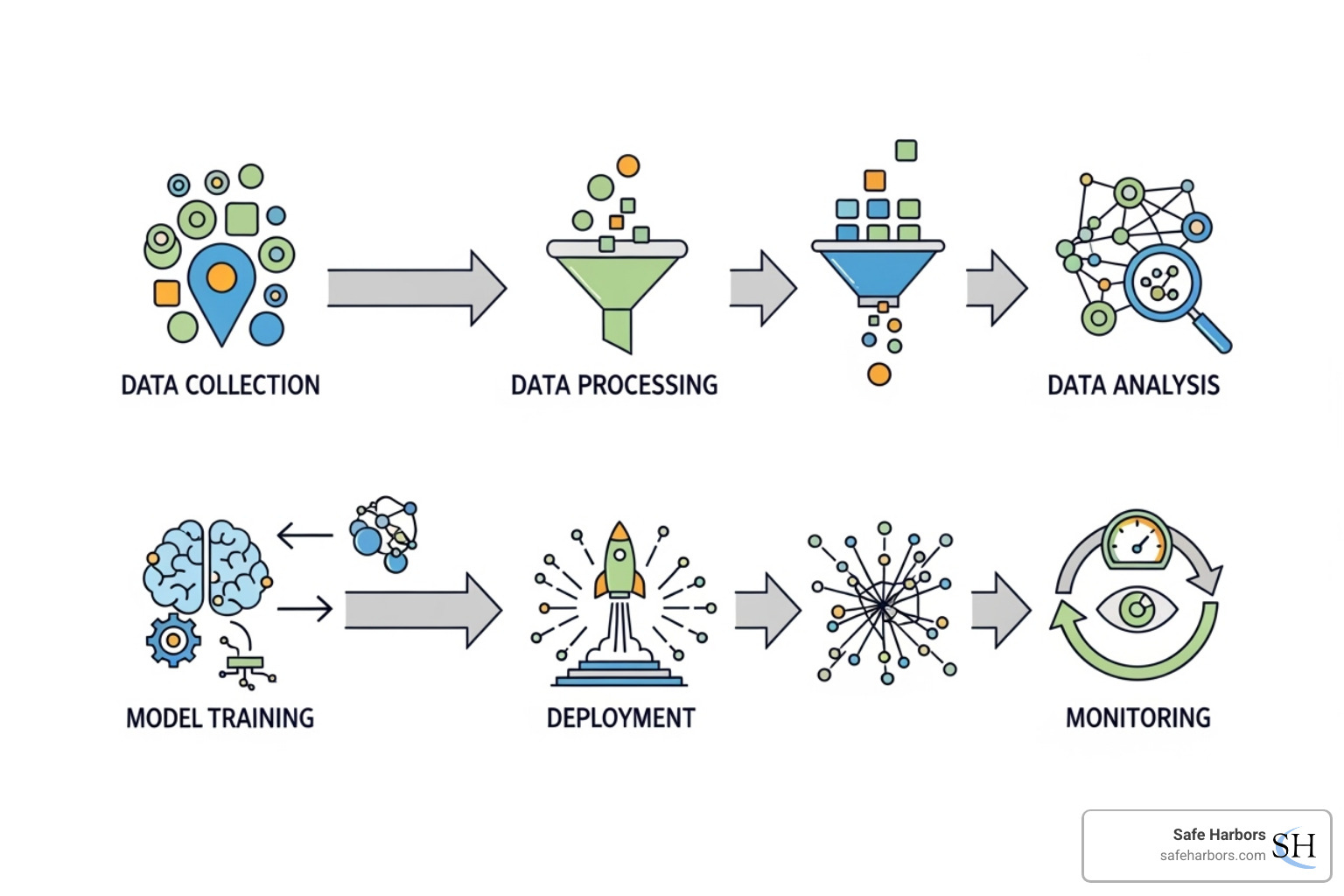
Roles, Responsibilities, and Technology in Fulfilling Duty of Care

Effective duty of care in the travel industry is a team effort, combining human collaboration with powerful technology to create a reliable safety net. Our approach to Global Travel Management integrates all these essential pieces.

Who is Responsible? A Collaborative Effort

Duty of care in the travel industry is a shared responsibility. Leadership sets the tone, but execution requires collaboration across the organization:

  • Travel Managers manage policies and vendor relationships.
  • HR Teams handle communication, training, and employee support. This partnership is vital, as we've seen with our Human Resource Managers clients.
  • Security, Finance, and Legal teams provide risk intelligence, budget oversight, and compliance checks.
  • Employees have a responsibility to follow policies and report concerns.

When everyone understands their role, the system functions seamlessly.

The Role of Technology and Travel Management Solutions

Great policies are ineffective without the right technology. Fulfilling duty of care in the travel industry today requires tools that provide speed and visibility.

Key technologies include real-time alerts for emerging threats and traveler tracking software to locate employees during a crisis. 24/7 support is non-negotiable, as emergencies don't follow business hours. At Safe Harbors, our immediate response capability provides instant assistance, anywhere in the world. We also leverage emergency communication tools and data consolidation to create a complete picture of traveler safety.

Safe Harbors automates these functions through elite tech partnerships, ensuring consistency and reducing costs. Our white-glove service is powered by systems designed for rapid response, reflecting The Best Practices of a Travel Management Company.

Implementing Your Duty of Care in the Travel Industry Program

Implementation is where your program comes to life. Start with effective communication to ensure policies are clear and accessible. It's shocking that 22% of traveling employees lack emergency contact information—a gap that must be closed.

Provide hands-on employee training on safety protocols and the use of support tools. Conduct regular policy reviews and establish feedback loops with travelers to keep your program relevant and effective. Finally, ensure seamless technology integration between your booking, communication, and duty of care platforms. For critical incidents, our Emergency Travel Service combines people, processes, and technology to protect your travelers.

Frequently Asked Questions about Travel Duty of Care

Implementing a duty of care in the travel industry program can seem complex. Here are answers to common questions we hear from organizations.

What are the first steps to creating a duty of care policy?

First, assess your organization's specific travel patterns and risks. Then, assemble a team of stakeholders from HR, legal, and finance to draft a comprehensive policy. It should cover pre-travel approvals, risk assessments, emergency procedures, and communication protocols. To streamline the process, start with a customizable travel policy template and adapt it to your company's needs.

How can we ensure employees follow the duty of care policy?

Compliance hinges on clear communication and training. Make the policy easily accessible and integrate safety checkpoints into your booking process. Use technology for automated compliance checks and real-time alerts. Given that 22% of traveling employees haven't been briefed on emergency contacts, proactive communication is vital. Regular training and reminders reinforce that these policies are for their protection, which encourages adoption.

Does duty of care apply to remote workers or "bleisure" travel?

Yes, your duty of care in the travel industry obligations extend beyond traditional business trips. If an employee travels for work-related purposes, including to a temporary remote work location, your duty of care applies. For "bleisure" (business + leisure) travel, your responsibility typically covers the business portion. It is crucial that your policy clearly defines where your obligation begins and ends to avoid confusion. Documenting these boundaries and communicating them clearly is the best practice.

Conclusion

Protecting your traveling employees is fundamental to building a resilient business built on trust. A comprehensive duty of care in the travel industry program is not a legal checkbox but a statement of your company's values, fostering loyalty and confidence.

Effective duty of care combines clear policies, proactive risk assessment, and powerful technology. However, the right tools require the right partner—one who understands that every second counts in an emergency.

That's where Safe Harbors excels. Our best response speed, white-glove service, and elite tech partnerships provide immediate assistance and real-time protection. With a robust Travel Risk Management strategy, you can face global uncertainties with confidence, knowing your team is protected.

Investing in duty of care in the travel industry pays dividends in retention, productivity, and reputation. Let's empower your team to travel smart and achieve more, wherever their journey takes them.

8 Types of Spend Analysis You Need to Know About

Why Spend Category Analysis is Critical for Financial Control

modern, clean financial analytics dashboard showing various spend categories - Spend category analysis

Spend category analysis is the systematic process of organizing, examining, and evaluating your company's expenditures across different spending categories to identify cost-saving opportunities and improve procurement strategies. It transforms chaotic financial data into clear, actionable insights that drive better business decisions.

Quick Answer - The 8 Types of Spend Analysis:

  1. Direct Spend Analysis - Raw materials and components for products
  2. Indirect Spend Analysis - Operating expenses like office supplies and services
  3. Supplier Spend Analysis - How much you spend with each vendor
  4. Category Spend Analysis - Spending within specific categories (IT, travel, marketing)
  5. Item-Level Spend Analysis - Individual product or service analysis
  6. Payment Term Spend Analysis - Cash flow and payment timing optimization
  7. Maverick Spend Analysis - Unauthorized or off-contract purchases
  8. Tail Spend Analysis - Small, frequent purchases that add up

Companies often allocate 60-80% of their revenue to external spending, yet many struggle with fragmented data and missed savings. Consider that over 80% of procurement leaders feel their indirect spend is mismanaged due to scattered data. Furthermore, nearly 1 in 5 expense reports contain errors, and companies lose roughly 5% of annual revenue to fraud or inappropriate spending.

The solution lies in understanding the different lenses through which you can analyze your spending. Each type of spend analysis reveals unique insights—from identifying rogue purchases that bypass procurement policies to uncovering opportunities to consolidate suppliers and negotiate better terms.

For corporate travel managers, spend analysis is even more critical. Travel expenses are a significant portion of indirect spend, yet they're often the most difficult to control due to urgent booking needs, policy exceptions, and scattered approval processes.

The 8 Key Types of Spend Analysis Explained

Think of your company's spending as a puzzle. Each type of analysis is a piece, and together they create a complete picture to transform cost management. Let's walk through the eight essential types of spend category analysis to uncover hidden savings and gain financial control.

Direct vs. Indirect Spend Analysis

The first thing to understand is that not all spending is created equal. Your company's expenses fall into two distinct buckets, each requiring a different approach.

Direct spend is the money that goes directly into making your products or delivering your services. If you manufacture cars, this includes steel, tires, and engines. This spending directly impacts your Cost of Goods Sold (COGS), so managing it well is crucial for maintaining healthy profit margins.
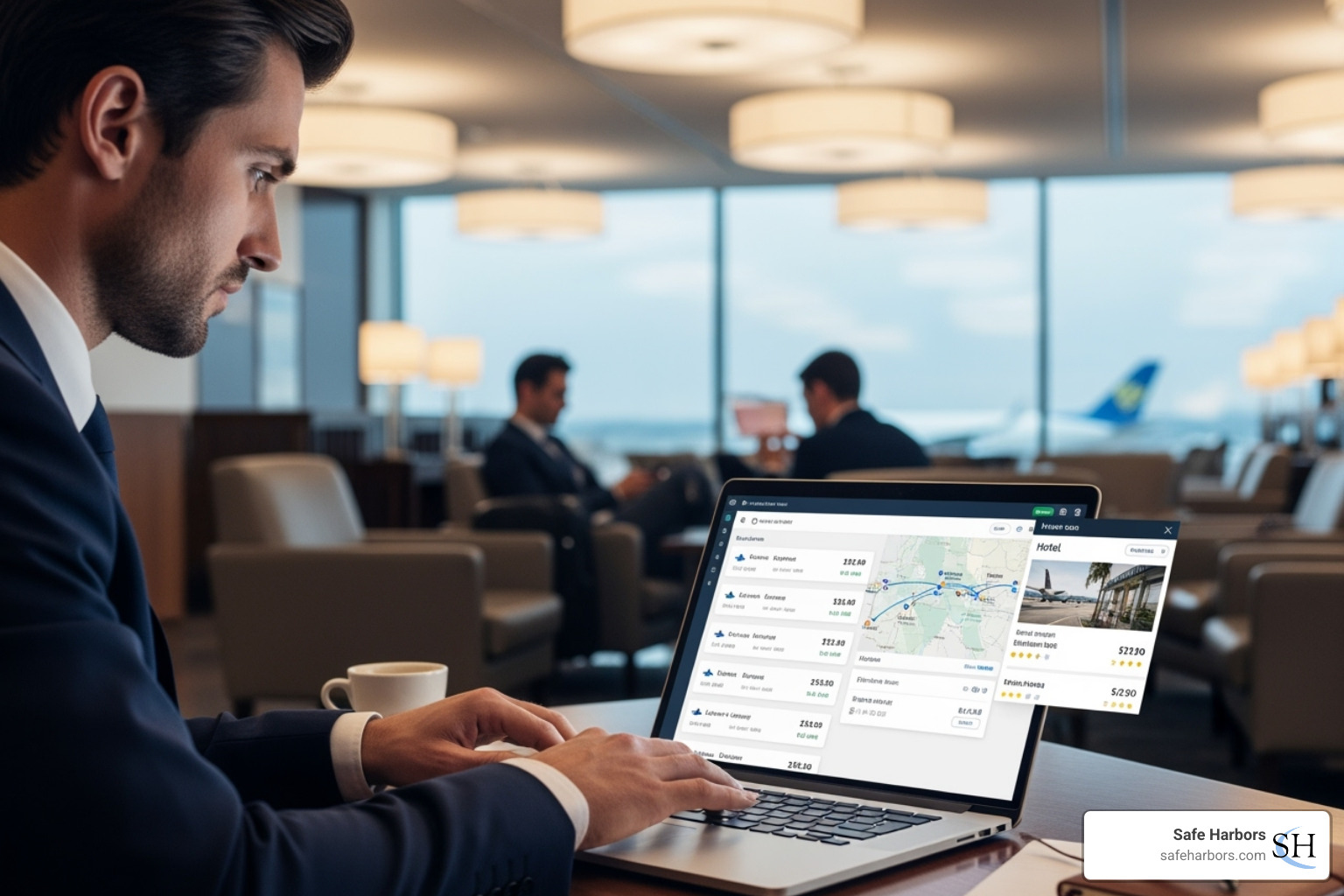
Indirect spend covers everything else needed to run your business: office supplies, marketing campaigns, IT services, utilities, and yes—corporate travel. While these expenses don't show up in your final product, they are essential for day-to-day operations.

The challenge is that indirect spend is notoriously difficult to manage. Over 80% of procurement leaders admit their indirect spend isn't properly controlled, as data is often scattered across different departments and systems.

The good news? Companies that tackle this head-on see real results. Take the Dräxlmaier Group, an automotive supplier that implemented automated spend management for both direct and indirect purchases. By digitizing their procurement processes, they gained the visibility they needed to negotiate better deals and eliminate wasteful spending.

Supplier Spend Analysis

Now let's look at your spending through the lens of who you're buying from. Supplier spend analysis is like getting a report card on all your vendor relationships.

Understanding how much you spend with each supplier creates negotiation leverage. For example, finding you spend $200,000 annually with a seemingly small supplier across various departments justifies a conversation about volume discounts.

Supplier consolidation becomes possible when you see the full picture. You might be buying similar services from five different vendors when two strategic partners could handle everything more efficiently. This isn't just about saving money—it's about risk mitigation. You'll spot when you're too dependent on a single supplier and can diversify before problems arise.

Smart companies segment their suppliers based on strategic importance. Some are strategic partners deserving long-term contracts, while others are transactional vendors providing commodity services. Knowing the difference helps you invest your energy where it matters most.
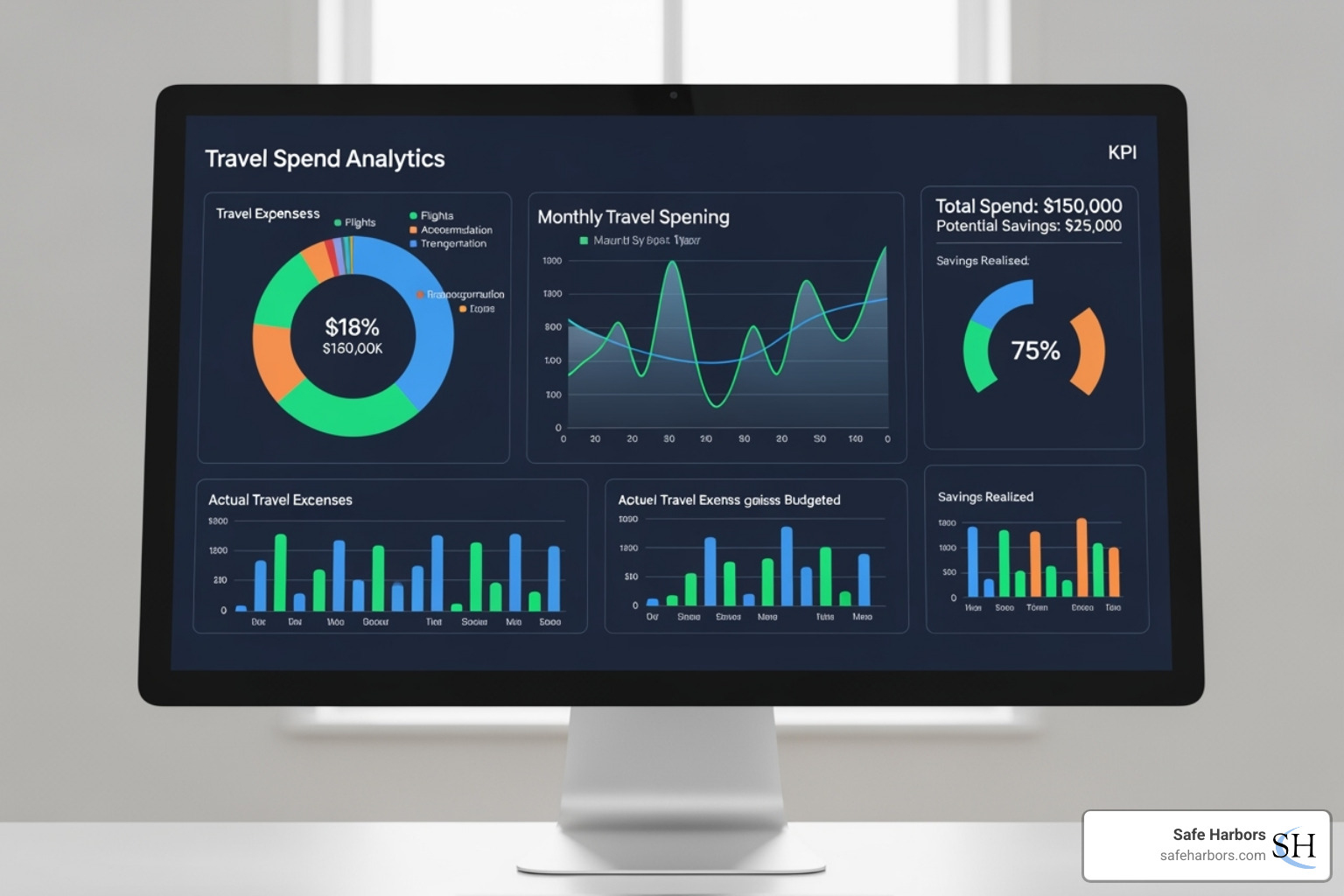
The key is gathering all your purchase orders, invoices, and contracts into one place. This comprehensive view helps you build stronger relationships with key suppliers and ensure your supply chain is reliable and cost-effective.

What is Category Spend Analysis?

Category spend analysis is where things get really interesting. This approach organizes your spending by function or type—IT, marketing, facilities, and the big one we care about: business travel.

pie chart breaking down spend into categories like IT, Marketing, and Business Travel - Spend category analysis

Think of it as giving each department or function its own financial report card. When you break down spending this way, you can see exactly where your budget allocation is working and where it isn't. Maybe your IT spending seems reasonable until you realize half of it is duplicate software licenses across departments.

This analysis is particularly powerful for spotting maverick spend—those purchases that happen outside your approved channels. If your marketing category suddenly shows unusual spikes or purchases from non-approved vendors, you've found a problem that needs fixing.

Business travel costs deserve special attention here. Corporate travel represents a significant chunk of most companies' indirect spending, and it's one of the hardest categories to control. Between last-minute bookings, policy exceptions, and scattered approval processes, travel expenses can quickly spiral out of control.

The solution is getting granular with your travel data. Break it down by airfare, hotels, ground transportation, meals, and incidentals. Look at spending by department, by individual traveler, and by trip purpose. This level of detail reveals patterns you never knew existed and opportunities for savings you never imagined.

When you have this visibility, you can make informed decisions about travel policies, preferred vendors, and booking procedures that actually stick.

Item-Level Spend Analysis

Sometimes you need to zoom in even further and look at individual products or services. Item-level spend analysis takes you down to the SKU-level data, where you can see exactly what you're buying, how much you're paying, and who you're buying it from.

This granular approach reveals some eye-opening insights. You might find you're buying the same office chairs from three different suppliers at three different prices. Or that your facilities team is purchasing cleaning supplies at retail prices while your procurement team has negotiated bulk rates with a different vendor.

Price variance analysis becomes your best friend here. When you can compare prices across suppliers and time periods for identical items, you'll spot opportunities for purchase consolidation that can lead to significant savings. Instead of buying 100 widgets from ten different suppliers, you can negotiate bulk discounts by buying 1,000 widgets from your best vendor.

The key is identifying duplicate purchases across departments and bringing them together under unified procurement strategies. This streamlines your processes and gives you the volume leverage you need for better negotiating bulk discounts.

Payment Term Spend Analysis

Here's a type of analysis that many companies overlook, but it can have a huge impact on your cash flow optimization. Payment term spend analysis isn't about what you buy—it's about how and when you pay for it.

Smart suppliers often offer early payment discounts if you can pay invoices within 10 or 15 days instead of the standard 30. But without analyzing your payment patterns, you might miss these opportunities entirely. On the flip side, poor payment timing can result in late payment fees that add up quickly.

This analysis helps you understand your current payment cycles and identify opportunities to align payment cycles with revenue. Maybe you can negotiate longer payment terms with suppliers during your slow season, or take advantage of early payment discounts when your cash flow is strong.

Supplier negotiations become much more productive when you have data on your payment history. You can show suppliers that you're a reliable payer and use that track record to negotiate better terms. Some companies save thousands annually just by optimizing their payment timing.

Maverick Spend Analysis

Maverick spend is like having a leak in your financial bucket. It's money flowing out through unauthorized purchases that bypass your established procurement policies and approved processes.

flowchart showing an unauthorized vs. an authorized purchase - Spend category analysis

Rogue spending happens when departments make purchases without following your guidelines or using approved vendors. Maybe someone needs office supplies urgently and orders from the first supplier they find online instead of using your preferred vendor. Each individual purchase might seem harmless, but collectively they undermine your procurement process adherence.

The real problem with maverick spend isn't just the higher prices—it's the contract leakage. When purchases happen outside your negotiated contracts, you lose all the pricing and terms you worked hard to secure. Plus, you lose visibility into what's being bought and why.

Controlling maverick spend requires a two-pronged approach. First, make it easier for employees to buy through approved channels than to go rogue. Second, implement regular spending reviews to catch unauthorized purchases quickly. Many successful companies provide easy access to pre-approved supplier lists and check purchase orders against existing contracts to maintain policy compliance.

Tail Spend Analysis

Tail spend might sound insignificant, but it follows the 80/20 rule in a way that can surprise you. These numerous small, low-value purchases often represent about 20% of your total spending but account for roughly 80% of your purchase orders.

Think about all those low-value purchases your company makes: coffee for the break room, small office supplies, minor maintenance items, and miscellaneous services. Individually, none of these transactions seems worth managing. But when you add them up, they create both a significant expense and a high transaction volume that's expensive to process.

Tail spend analysis reveals strategic sourcing opportunities hiding in plain sight. Maybe you're buying coffee from six different vendors when one supplier could handle everything at better rates. Or perhaps small maintenance purchases could be consolidated under a single service contract.

The key is consolidating small suppliers where it makes sense. You're not trying to manage every $50 purchase individually—you're looking for patterns where multiple small purchases could be grouped together for better pricing and simpler administration.

When you tackle tail spend effectively, you free up both money and administrative time that can be better used elsewhere in your business.

The Core Process of an Effective Spend Category Analysis

An effective spend category analysis program is an ongoing journey, not a one-time project. It requires a systematic approach to turn messy financial data into clear, actionable insights. Much like organizing a garage, it involves gathering, sorting, and organizing your financial data to create a sustainable system.

illustration of the 6 steps of spend analysis from data collection to monitoring - Spend category analysis

Key Steps in the Analysis Process

Following a structured, six-step process gives you the best chance of success with your spend category analysis efforts.

Step 1: Identify & Consolidate Data Sources is where most companies realize how scattered their spending information is. You'll need to gather data from ERP systems, accounts payable records, invoices, purchase orders, expense reports, and individual business units.

Step 2: Cleanse & Standardize Data is a critical step. Raw data is often full of duplicates, errors, and inconsistencies. Manual entry creates problems, which is why many organizations use intelligent automation to improve accuracy. AI-powered data cleansing can significantly cut down on manual preparation time.

Step 3: Classify & Categorize Spend involves organizing expenditures into a logical spend taxonomy. While generic systems like the United Nations Standard Products and Services Code (UNSPSC) exist, they often don't fit a business's specific operations. It's better to create a custom taxonomy that reflects your supply market and business needs for more relevant decision-making.

Step 4: Analyze & Identify Opportunities is where the magic happens. With clean, categorized data, you can apply analytics to spot spending patterns, trends, and potential cost-saving opportunities. This is when you find things like paying different prices for the same items or identifying high-value suppliers.

Step 5: Develop & Implement Strategy turns your insights into action. Based on what you've learned, you'll develop concrete strategies like renegotiating contracts, consolidating suppliers, or implementing new policies.

Step 6: Monitor & Track Progress ensures your efforts stick. You'll continuously monitor spending and track the impact of your strategies. This lets you measure success, make adjustments, and ensure sustained improvements through regular reporting.

Key Metrics and KPIs to Track

To measure if your spend category analysis is working, you need to track the right metrics. Cost Savings is the obvious one—the total money saved through your initiatives.

Spend Under Management (SUM) tells you what percentage of your total spend is actively managed by procurement. Contract Compliance Rate reveals what percentage of spending follows negotiated contracts, highlighting policy effectiveness.

Supplier Performance metrics like on-time delivery and order accuracy help you evaluate supplier relationships. Procurement ROI shows the return on investment from your procurement activities, with some organizations achieving up to a 63x return using advanced analytics.

Maverick Spend Percentage tracks spending that happens outside approved channels, which you'll want to minimize.

For corporate travel, there's a delicate balance between finance goals and employee needs. While cost savings matter, traveler satisfaction, safety, and productivity are equally important. Our analysis helps ensure travel policies are cost-effective without making employees miserable, reducing traveler burnout and supporting well-being.

Best Practices for Spend Category Analysis

Getting your spend category analysis program right requires following proven best practices.

  • Automate data collection: Manual entry creates errors and delays. Intelligent automation streamlines data collection from systems like ERPs and expense tools, enhancing accuracy. AI-powered tools can provide on-demand insights for faster, more confident decisions.
  • Establish a clear spend taxonomy: A good taxonomy is the backbone of your analysis. It should reflect your supply market and business needs for granular, consistent categorization.
  • Enrich data with external sources: Combine your internal spend data with external market intelligence, price benchmarks, and industry trends. This provides a more comprehensive analysis and helps validate your performance.
  • Foster cross-departmental collaboration: Spend analysis requires teamwork across finance, operations, and other departments. Addressing data silos is critical, as lack of collaboration is a key reason indirect spend is mismanaged.
  • Link analysis to strategic goals: Ensure your analysis supports broader objectives like cost reduction, risk mitigation, or sustainability. This provides a foundation for forecasting and strategic planning.

When you implement these best practices, you'll gain improved visibility, stronger negotiation power, better policy compliance, and a more streamlined operation. For corporate travel management, these practices can significantly reduce costs while maintaining the quality of service your employees expect.

Frequently Asked Questions about Spend Analysis

We know that diving into spend category analysis can feel overwhelming at first. Over the years, we've helped countless organizations steer this journey, and certain questions come up time and again. Let's tackle the most common ones together.

What is the main difference between spend analysis and cost analysis?

This is probably the question we hear most often, and it's a great one because these terms do sound similar but serve very different purposes.

Spend analysis gives you the big picture view of your organization's purchasing habits. Think of it as your financial bird's-eye view that answers the fundamental questions: What are we buying? Who are we buying from? How much are we spending? When we conduct spend category analysis for our clients, we're looking across their entire travel program to spot patterns, identify savings opportunities, and find ways to consolidate suppliers.

Cost analysis, on the other hand, zooms way in. It's like putting a single expense under a microscope to understand every component that makes up its total cost. If spend analysis tells you that your company is spending $500,000 annually on business travel, cost analysis would break down exactly why a specific trip to London cost $3,200 instead of the budgeted $2,800.

Here's a real-world example: Our spend category analysis might reveal that your organization is spending too much on airline tickets overall. The subsequent cost analysis would then examine specific routes, booking timing, cabin classes, and airline choices to understand the why behind those higher costs.

Why do spend analysis projects often fail?

We've seen this happen more times than we'd like to admit, and it's honestly heartbreaking because the potential benefits are so significant. The good news? Most failures are completely preventable once you know what to watch out for.

The biggest culprit is poor data quality. You've probably heard the phrase "garbage in, garbage out," and it couldn't be more true here. When your expense data comes from multiple systems - maybe your ERP handles some purchases, credit card statements capture others, and individual expense reports fill in the gaps - inconsistencies are almost inevitable. We've worked with companies where the same hotel chain was recorded under five different names across various systems.

Lack of a clear process is another major stumbling block. Without a defined methodology for collecting, cleaning, and analyzing data, projects can quickly become chaotic. We've seen teams spend months gathering information only to realize they can't compare it meaningfully because different departments were tracking things differently.

Inconsistent data collection across departments creates those dreaded data silos. Marketing might track their travel expenses one way, while sales uses a completely different approach. When it comes time to analyze overall spending, these inconsistencies make comprehensive analysis nearly impossible.

Many organizations also fall into the trap of using inadequate tools. While spreadsheets are great for many things, they quickly become overwhelming when you're trying to analyze complex spending patterns across hundreds of suppliers and thousands of transactions. The manual work involved often leads to errors and, frankly, analyst burnout.

What is a spend cube?

A spend cube might sound technical, but it's actually a beautifully simple concept that makes complex spending data much easier to understand and work with.

Imagine your spending data as a three-dimensional cube that you can slice and dice from different angles. Each dimension gives you a different lens through which to view your expenditures:

The "Who are we buying from?" dimension focuses on your suppliers. This helps you identify your key vendors, spot opportunities for consolidation, and understand your supplier relationships. For corporate travel, this might reveal that you're working with twelve different travel agencies when two strategic partners could handle everything more efficiently.

The "What are we buying?" dimension breaks down your purchases into logical categories like IT services, marketing expenses, or business travel. This is where spend category analysis really shines, helping you understand budget allocation and identify categories that might be over or under-funded.

The "Who is doing the buying?" dimension shows which departments or business units are responsible for different types of spending. This often reveals fascinating patterns - like finding that your engineering team is booking significantly more expensive flights than other departments, which might indicate they're booking last-minute due to urgent client needs.

By rotating this cube and examining it from different angles, you can quickly spot trends, anomalies, and opportunities that might be invisible when looking at flat reports or spreadsheets. It's this multi-dimensional view that makes spend cubes such a powerful tool for strategic decision-making.

Conclusion: Turning Insights into Strategic Action

We've walked through the eight different types of spend analysis together, and by now, you can see how each one offers a unique window into your company's financial habits. Spend category analysis isn't just another business buzzword—it's your roadmap to understanding where every dollar goes and why it matters.

The beauty of a systematic approach to spend analysis lies in its compound benefits. When you identify, cleanse, categorize, and analyze your spending data properly, you're not just saving money (though that's certainly nice). You're building cost reduction strategies that stick, gaining improved visibility into spending patterns you never knew existed, and creating risk mitigation plans by diversifying your supplier relationships and ensuring everyone follows the rules.

But here's where it gets really exciting: strategic sourcing becomes possible when you have clean, organized data. Instead of scrambling to find vendors when you need them, you can proactively build relationships with the right suppliers at the right terms.

Technology has completely transformed this process. What used to require armies of analysts with calculators and endless spreadsheets can now be handled by AI-powered tools that spot patterns, flag anomalies, and even predict future spending trends. These systems turn spend analysis from a quarterly headache into a real-time decision-making tool.

Here's something we've learned from years of helping companies optimize their spending: complex categories like corporate travel require specialized expertise. Travel expenses are notoriously difficult to analyze because they involve multiple vendors, last-minute changes, policy exceptions, and varying approval processes. That's where our experience in providing global business travel solutions really shines.

Our approach combines the speed and accuracy of modern spend analysis tools with the human touch that complex travel programs require. We understand that behind every expense report is a person trying to do their job effectively, and behind every policy is a finance team trying to control costs without stifling productivity.

When you partner with experts who understand both the technical side of spend analysis and the practical realities of business travel, you can streamline your analysis process and uncover savings opportunities that might otherwise stay hidden. Our comprehensive white-glove service means you get both the insights and the implementation support to turn those insights into real results.

The bottom line? Spend category analysis transforms businesses from reactive expense-trackers into proactive financial strategists. Instead of wondering where your money went, you'll know exactly where it's going and why that makes sense for your business goals.

Learn how we help CFO and Finance Executives optimize their financial strategies.

Find Your Perfect Match: A Roundup of Leading Corporate Travel Booking Platforms

Why Corporate Booking Tools Are Essential for Modern Business Travel

Corporate booking tool - Corporate booking tool

A Corporate booking tool is a centralized online platform that enables employees to search, book, and manage business travel while giving companies control over spending, policies, and traveler safety. These tools replace the chaos of manual booking processes with streamlined, automated systems that save time and money.

Key benefits of corporate booking tools:

  • Centralized booking for flights, hotels, cars, and rail in one platform
  • Policy enforcement with automatic compliance checking
  • Cost savings through negotiated rates and consolidated spending
  • Duty of care with real-time traveler tracking and risk alerts
  • Streamlined expenses with automated reporting and integration

The pain is real for travel managers dealing with scattered bookings across multiple websites. As one travel manager shared, "Switching to a single platform saved us countless hours. Having everything in one step is a huge benefit."

Manual travel booking creates a perfect storm of problems. Employees waste hours researching options on consumer sites. Finance teams struggle to track spending across dozens of credit card statements. Travel managers have no visibility into where their people are traveling or whether they're following company policies.

Corporate booking tools solve these problems by creating a single source of truth for all business travel. Instead of employees booking wherever they want, they use one platform that automatically applies company policies, captures negotiated rates, and feeds data directly into expense systems.

The change is dramatic. Companies report saving up to 60% on travel costs while reducing booking time from hours to minutes. More importantly, they gain the visibility and control needed to keep travelers safe and budgets on track.

The Core Engine: Must-Have Features of a Modern Corporate Booking Tool

This section details the essential functionalities that form the backbone of any effective platform, enabling control, choice, and convenience for your entire organization.

Comprehensive Inventory & Self-Booking

Think of the best corporate booking tool as your company's travel command center. At its heart lies something beautifully simple: the power to let your employees book their own trips without the back-and-forth emails or waiting for someone else to handle it.

The magic happens when employees can access everything they need in one place. We're talking about massive travel inventory that spans the globe. The best platforms connect to millions of hotels, hundreds of airlines, and thousands of car rental locations. Your team can book flights from major carriers and budget airlines alike, choose from luxury hotels or business-friendly chains, hop on rail services across Europe or Asia, and arrange ground transportation from airport shuttles to ride-shares.

What makes this possible is the technology working behind the scenes. Modern platforms tap into Global Distribution System (GDS) content - the same inventory that travel agents use. But they don't stop there. They also pull in New Distribution Capability (NDC) content, which gives access to special airline offers you won't find elsewhere. Add direct supplier integrations, and suddenly your employees have more options than they know what to do with.

The real win? Your team gets the autonomy they want while you maintain the control you need. Employees can book, update, or cancel trips on their own - easily and intuitively. No more playing phone tag with travel agents or waiting for approvals on simple changes.

Smart Policies, Approvals, and Your Corporate Booking Tool

Here's where things get really clever. Having endless travel options is great, but without guardrails, your budget can quickly spiral out of control. That's where smart policies transform a simple booking tool into a strategic business asset.

The best corporate booking tool lets you create customizable travel policies that work for your company's unique needs. Maybe your sales team needs flexibility for client meetings, while your operations team has stricter budget limits. You can set different rules for different departments, roles, or trip types.

Multi-tier approval workflows ensure the right people sign off on the right trips. A local sales call might auto-approve, while international conferences need manager approval. The system handles this automatically, routing requests to the right people without slowing down urgent travel.

Budget controls work in real-time, showing employees what they can spend as they book. No more surprise expense reports or awkward conversations about overspending. The platform shows in-policy vs. out-of-policy flagging right in the booking flow, so everyone knows where they stand.

The beauty is in the transparency. Managers can see not just what was booked, but what the lowest compliant option would have been. This drives better decision-making without micromanaging every choice. For deeper insights on crafting policies that actually work, check out our guide on creating an effective travel policy.

Seamless Integration and Payment Solutions

A truly powerful corporate booking tool doesn't live in isolation. It connects seamlessly with the business systems you already use, creating a unified approach to travel and expense management.

Expense management integration is where the real magic happens. When your booking tool talks directly to your expense platform, travel bookings automatically populate expense reports. No more hunting for receipts or manually entering transaction details. Employees get reimbursed faster, and finance teams get cleaner data.

ERP system integration gives finance leaders the big-picture view they need. All travel spending flows into the same systems used for other business expenses, creating a single source of truth for budget tracking and financial reporting.

Consolidated invoicing simplifies the accounting side dramatically. Instead of dozens of credit card charges from different suppliers, you get one clean invoice that covers all travel spending. Your accounting team will thank you, and month-end closes become much smoother.

Virtual credit cards add another layer of control and security. These single-use cards prevent unauthorized charges and make reconciliation effortless. Combined with automated expense reports, the entire process from booking to reimbursement becomes nearly invisible to everyone involved.

The result is a system that works harder so your people don't have to. To see how these efficiencies translate into real savings, explore how travel management saves money for companies like yours.

Open uping Value: How Booking Platforms Drive Savings and Efficiency

Find how the right tool moves beyond simple booking to become a powerful engine for financial savings and operational productivity.

financial dashboard showing travel spend analytics and savings - Corporate booking tool

When finance teams first look at Corporate booking tool pricing, they often focus on the monthly fees. But here's what smart companies find: the real story isn't what you spend on the platform—it's what the platform saves you.

The direct cost savings are impressive and immediate. Companies routinely save up to 60% on their travel expenses after implementing a corporate booking platform. These savings come from several sources: access to negotiated corporate rates that aren't available to individual travelers, automatic application of company policies that prevent overspending, and consolidated purchasing power that open ups better deals.

One area that surprises many companies is unused ticket credit management. Without a centralized system, those credits from canceled flights often disappear into the void. Smart platforms automatically track and reapply these credits, ensuring that money already spent works for future trips instead of being lost forever.

But the indirect time savings might be even more valuable than the dollar savings. Think about your current process: employees spend hours researching flights on consumer sites, then more time getting approvals, then even more time filing expense reports with receipts they hopefully didn't lose. One user perfectly captured the change: "It saves us so much time, because it's now all done in one step."

The time difference is dramatic. What used to take hours now takes minutes. Employees can book a complete trip—flight, hotel, and car—in less than two minutes, often right from their phones. Finance teams save hours on each invoice thanks to consolidated billing and automated expense integration.

Feature Manual Booking Process Automated Booking Tool Process
Steps Multiple websites, emails, phone calls, approval forms Single platform, integrated search, automated approvals
Time Spent Hours (research, booking, approvals, expense filing) Minutes (booking, policy check, auto-expense population)
Cost Control Limited visibility, reactive, prone to overspending Real-time policy enforcement, negotiated rates, proactive
Compliance Difficult to enforce, manual checks Automatic, guided booking, flagged out-of-policy choices
Data & Reporting Disparate, manual compilation, often incomplete Centralized, real-time analytics, comprehensive reports

The ripple effect of this efficiency boost touches every corner of your organization. When employees spend less time wrestling with travel logistics, they have more energy for the work that actually drives your business forward. When finance teams aren't drowning in scattered receipts and invoices, they can focus on strategic analysis instead of data entry.

Increased employee productivity becomes a hidden but powerful benefit. Your team members can concentrate on core business activities instead of becoming part-time travel agents. The mental load of travel planning—which can be surprisingly draining—gets lifted off their shoulders.

This holistic approach to efficiency and savings is why a Corporate booking tool isn't just a nice-to-have convenience—it's a strategic investment that pays dividends across your entire organization. For even more strategies to optimize your travel budget, explore our guide on Ways to reduce business travel costs.

The Human Element: Enhancing the Experience for Travelers and Managers

A great tool serves two masters: it empowers employees with a smooth travel experience while giving managers the oversight they need.

For the Traveler: A Seamless Journey

traveler happily checking their itinerary on a mobile app - Corporate booking tool

Gone are the days when business travel booking felt like navigating a maze. Today's Corporate booking tool platforms deliver a consumer-grade user experience that makes booking a business trip as simple as ordering coffee from your phone. When employees say they "love being able to use a consumer-like mobile app," you know the technology has hit the sweet spot between powerful functionality and effortless design.

Mobile accessibility isn't just nice to have anymore—it's essential. Business travelers live on their phones, and the best platforms recognize this reality. Imagine being able to book your entire trip in "less than two minutes each time" right from your mobile device. Whether you're making changes before departure or handling unexpected disruptions while on the road, having desktop and mobile flexibility means you're never stuck.

When travel goes sideways (and let's be honest, it often does), 24/7 traveler support becomes your lifeline. The peace of mind that comes from knowing expert help is always just a phone call away can't be overstated. Whether it's a missed connection in Frankfurt or a hotel mix-up in Singapore, round-the-clock support ensures problems get solved quickly so travelers can focus on their business objectives.

Smart platforms learn from each booking through personalized profiles that store traveler preferences and details. This means no more re-entering your frequent flyer number or preferred aisle seat for the hundredth time. Loyalty program integration ensures business travelers don't sacrifice their personal rewards while following company policies—a win-win that keeps everyone happy.

The magic happens in itinerary management, where travelers can view and control their entire trip from one central hub. No more juggling multiple confirmation emails or wondering if your ground transportation lines up with your flight arrival. This streamlined experience translates directly into improved employee satisfaction, as travelers can manage their journeys with confidence and ease.

For the Manager: Gaining Control and Ensuring Duty of Care

While travelers enjoy newfound freedom, travel managers gain something equally valuable: unprecedented visibility and control. A centralized dashboard transforms the chaotic world of scattered bookings into a clear, manageable overview. Imagine being able to see all your company's travel activity, spending, and traveler locations from one screen—that's the power of modern travel management.

Real-time spending visibility means no more month-end surprises when the credit card statements arrive. Finance teams can monitor budgets as they're being spent, not weeks later when it's too late to course-correct. This transparency helps build trust between travelers and finance departments.

Traveler tracking maps and automated risk alerts form the backbone of modern duty of care programs. When global events unfold—whether it's severe weather, political unrest, or health emergencies—knowing exactly where your people are located can be the difference between swift action and prolonged worry. These tools automatically monitor risk factors and send alerts when employees might be affected.

Duty of care represents both a moral commitment and legal obligation to keep employees safe while traveling. A robust Corporate booking tool makes this responsibility manageable by providing the visibility and communication tools needed to respond quickly to any situation.

The strategic value emerges through data analytics and reporting. Detailed insights into travel spending patterns, missed savings opportunities, and even environmental impact help travel managers make informed decisions. These reports reveal trends that might otherwise go unnoticed, enabling continuous improvement of travel policies and supplier negotiations.

This dual focus on traveler experience and management control creates a sustainable travel program that works for everyone. For deeper insights into achieving this balance, explore our guide on Balancing traveler happiness and finance goals.

The corporate travel landscape is constantly evolving. Here's a look at the innovations and trends that are shaping the next generation of booking platforms.

The Role of AI and Automation in a Corporate Booking Tool

booking interface showing AI-powered "smart stay" recommendations - Corporate booking tool

The travel industry is experiencing a quiet revolution, and artificial intelligence is leading the charge. What once required hours of research and manual comparisons now happens in seconds, thanks to smart algorithms that understand your company's unique needs and preferences.

Today's Corporate booking tool platforms are becoming remarkably intuitive. They learn from every interaction, remembering that your sales team prefers morning flights while your consultants need hotels close to client offices. This AI-powered personalization means the system gets smarter with each booking, offering increasingly relevant suggestions that feel almost telepathic.

The real magic happens behind the scenes with automated expense filing. Gone are the days of collecting crumpled receipts and manually entering data weeks after a trip. Modern platforms automatically populate expense reports as soon as bookings are made, turning what used to be a dreaded monthly task into something that happens seamlessly in the background.

Predictive analytics and fare forecasting are game-changers for budget-conscious companies. These systems analyze massive amounts of historical data to predict when prices will rise or fall, helping you time bookings for maximum savings. Instead of guessing whether to book now or wait, the system provides data-driven recommendations that can save thousands on your travel budget.

The beauty of these AI-driven tools is how they work quietly in the background, making everything smoother without adding complexity. Your employees get faster, more relevant results, while your finance team gets better data and automatic compliance checking. For more insights into where this technology is headed, explore our Insights on the future of corporate travel.

Emerging Priorities: Sustainability and Flexibility

Two major forces are reshaping how companies approach business travel: environmental responsibility and the need for ultimate flexibility. Smart Corporate booking tool platforms are rising to meet both challenges with innovative features that make sustainable and flexible travel the easy choice.

CO2 emissions tracking is becoming as standard as price comparisons. Modern platforms display carbon footprints right alongside flight times and costs, making it simple for travelers to see the environmental impact of their choices. This transparency empowers employees to make greener decisions without sacrificing convenience.

Green travel filtering takes this a step further by highlighting sustainable options. Whether it's direct flights that reduce emissions, eco-certified hotels, or rail alternatives for shorter routes, these tools make it easy to choose environmentally conscious options. The sustainable travel options are presented attractively, not buried in fine print.

Flexibility has moved from nice-to-have to absolutely essential. The pandemic taught us that travel plans can change in an instant, and modern booking platforms have responded with flexible booking policies that protect both travelers and budgets. Guaranteed refunds and comprehensive trip cancellation options mean companies can book with confidence, knowing they won't lose money if circumstances change.

These flexible policies aren't just about major disruptions. They cover everything from last-minute client meeting changes to family emergencies. The peace of mind this provides is invaluable, allowing employees to focus on their work rather than worrying about potential financial penalties.

The combination of sustainability features and flexible policies represents more than just new functionality—it reflects a fundamental shift in how we think about business travel. Companies want tools that align with their values while protecting their interests, and the next generation of booking platforms delivers exactly that.

Frequently Asked Questions about Corporate Booking Tools

Let's be honest - choosing a Corporate booking tool can feel overwhelming. We get questions about this all the time, so here are the answers to the most common concerns we hear from travel managers.

How do I choose the right tool for my business size?

The beauty of modern corporate travel tools is that scalability is key - there really is something for everyone. Whether you're a scrappy startup or a multinational corporation, the right solution exists for your needs.

Different feature sets are naturally available for different company sizes. Small businesses might need basic policy controls and simple booking, while global enterprises require sophisticated multi-tier approvals, advanced reporting, and complex integrations. The key is being honest about where you are now and where you're headed.

One crucial factor to consider your level of managed vs. unmanaged travel. If you're just starting to get your arms around business travel, you might begin with a hybrid approach. Companies further along in their travel management journey will need more robust controls and reporting capabilities.

Here's what we recommend: start by assessing your current travel volume, budget constraints, policy complexity, and desired level of control. Don't over-engineer for day one, but choose something that can grow with you. If you're ready to make the leap to more structured travel management, check out our guide on how to move to managed travel.

How do these tools integrate with other business systems?

Modern Corporate booking tool platforms are built for integration - they're designed to play nicely with your existing business systems. Most connections happen via API connections, which is just a fancy way of saying different software systems can "talk" to each other automatically.

The most common integrations happen with ERP systems (like SAP), where travel data flows directly into your financial records. You'll also see seamless connections with HR platforms for employee onboarding and profile management, plus dedicated expense management software that eliminates the dreaded manual expense report process.

What makes this so powerful is that it creates a single source of truth for travel and expense data. No more hunting through multiple systems or manually entering the same information three times. Everything flows together automatically, which means fewer errors, less administrative headache, and much faster reimbursements for your travelers.

The result? Your finance team gets clean, consolidated data while employees enjoy a smoother experience from booking to expense submission.

What is 'duty of care' and how do booking tools help?

Duty of care is a company's moral and legal obligation to keep employees safe while traveling for business. It's about taking reasonable steps to protect your people when they're away from home - and it's both the right thing to do and often legally required.

A robust Corporate booking tool becomes your command center for fulfilling this obligation. Real-time traveler location tracking means you always know where your people are, which is crucial during emergencies. When global events happen - natural disasters, political unrest, health crises - automated risk alerts for global events let you quickly reach affected travelers with important information and assistance.

Perhaps most importantly, these tools help ensure bookings comply with safety-related policies. Maybe that means steering travelers toward vetted hotels in certain cities, or ensuring ground transportation meets your safety standards. The system can enforce these policies automatically, so you're proactively reducing risks rather than just reacting to problems.

Think of it this way: duty of care used to mean hoping for the best and scrambling when things went wrong. Now it means having the data and communication tools to monitor, inform, and assist travelers proactively. That peace of mind is invaluable for both travel managers and the employees counting on you to keep them safe.

Conclusion: Finding Your Perfect Travel Partner

Choosing the right Corporate booking tool isn't just about picking software—you're selecting a strategic partner that will transform how your business handles travel. Throughout this guide, we've explored how these platforms deliver real value: significant cost savings, streamlined operations, policy compliance, and happier travelers.

The technology is impressive. From comprehensive booking inventories and smart policy enforcement to seamless system integrations and AI-powered insights, modern platforms are genuinely changing the game. Your employees get the autonomy they want with consumer-grade booking experiences, while you gain the oversight and control needed to manage budgets and keep everyone safe.

But here's the thing—even the most sophisticated Corporate booking tool is only as effective as the team supporting it. Implementation can be tricky. Policies need fine-tuning. Travelers need training. And when something goes wrong (because it will), you need someone to answer the phone.

That's where the human element becomes crucial. The best travel programs combine cutting-edge technology with expert support. You need a partner who understands your unique business needs, can guide you through platform selection, and provides ongoing management with genuine care.

At Safe Harbors, we've built our reputation on best response speed and comprehensive white-glove service. We don't just hand you a booking tool and wish you luck. We work alongside you to implement the right solution, train your team, and provide ongoing support that keeps your program running smoothly.

Every business is different. Your industry, company culture, travel patterns, and budget all influence what makes the perfect travel management solution. We take time to understand these nuances and help you steer the options to find your ideal match.

Ready to transform your travel program? Learn how our business travel services can lift your program.