


Why Analytics for Travel Is a Game-Changer for Modern Travel Programs
Analytics for travel gives travel managers the power to turn raw booking data into smarter decisions — faster.
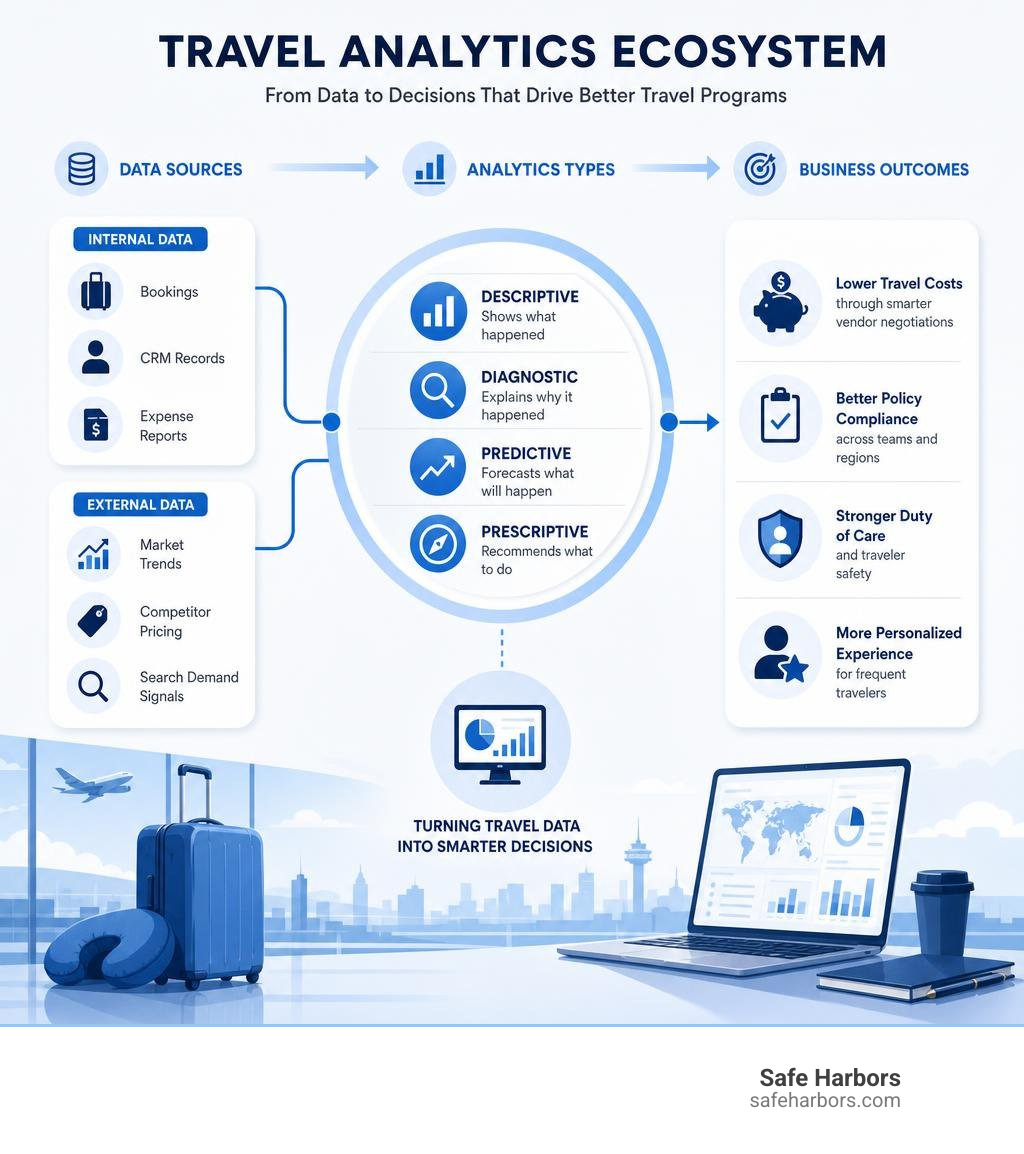
Here's a quick summary of what travel analytics covers:
| Type | What It Does | Example Use |
|---|---|---|
| Descriptive | Shows what happened | Total spend by department last quarter |
| Diagnostic | Explains why it happened | Why did costs spike in March? |
| Predictive | Forecasts what will happen | Expected demand for Q4 routes |
| Prescriptive | Recommends what to do | Adjust hotel policy to cut overspend |
Travel analytics pulls from two main source types:
- Internal data — bookings, CRM records, expense reports
- External data — market trends, competitor pricing, search demand signals
The core benefits for corporate travel programs include:
- Lower travel costs through smarter vendor negotiations
- Better policy compliance across teams and regions
- Stronger duty of care and traveler safety
- A more personalized experience for frequent travelers
The stakes are real. Up to 44% of travel companies expect data analytics to have the biggest impact on achieving their business goals — yet many programs still rely on slow, disconnected reporting tools that leave managers reacting instead of planning.
That gap between data and action is exactly what this guide addresses.
I'm Jay Ellenby, President of Safe Harbors Travel Group, and I've spent decades helping organizations navigate the complexity of global corporate travel — including building data-driven strategies that improve cost control, compliance, and traveler safety through smarter analytics for travel. In this guide, I'll walk you through everything you need to know to put your travel data to work.
The Four Pillars of Travel Data Analytics
To get the most out of your travel program, you need to look beyond standard monthly spreadsheets. True travel intelligence is built on four distinct analytical pillars. Each of these pillars answers a different business question, moving from retrospective reporting to proactive strategy.

The Core Types of Analytics for Travel
- Descriptive Analytics (What happened?): This is the baseline of travel reporting. It aggregates your historical booking data to show you exactly how much you spent on flights, hotels, and car rentals last month. It tells you which departments traveled the most and which routes were most popular.
- Diagnostic Analytics (Why did it happen?): When you notice a sudden spike in your travel budget, diagnostic analytics helps you dig into the "why." For example, did your spend increase because of a sudden rise in last-minute bookings, or did a major industry conference drive up hotel rates in your primary destination city?
- Predictive Analytics (What is likely to happen?): Predictive models use historical data, seasonal trends, and external market indicators to forecast future travel patterns. It helps you anticipate budget needs for the upcoming quarters, estimate price increases on key routes, and predict travel demand based on company growth.
- Prescriptive Analytics (What should we do?): This is the gold standard of travel data. Prescriptive analytics combines forecasts with your company's specific rules to recommend immediate actions. If a predictive model shows that airfares to a specific hub will rise by 20% next month, a prescriptive tool might recommend adjusting your travel policy to require a 14-day advance purchase window for that specific route.
By integrating these four pillars, corporate travel managers transition from passive observers to strategic planners. To see how these analytical types function in a corporate setting, explore our comprehensive guide on Corporate Travel Data Analytics.
Internal vs. External Data Sources
A truly robust travel analytics strategy requires a balance of internal and external data. Relying on only one side of the coin leaves massive blind spots.
- Internal Data Sources: These are generated directly within your business operations. They include transaction details from your Passenger Service Systems (PSS) or Property Management Systems (PMS), customer profiles in your CRM, expense reports, and corporate card records. This data is highly accurate and represents your actual, historical travel footprint.
- External Data Sources: These provide the market context your internal data lacks. External sources include search query trends, competitor pricing, global flight schedules, weather patterns, and regional economic indicators.
For instance, platforms like Travel Intelligence | Amadeus allow organizations to benchmark their internal booking patterns against broader global schedules, air searches, and hotel occupancy trends. When you overlay your internal booking data with external market trends, you can easily spot whether you are paying above-market rates or if there are emerging, lower-cost routes you should leverage.
Optimizing Revenue, Demand, and the Traveler Experience
Whether you are managing a corporate travel program or operating a hospitality business, the ultimate goal of travel analytics is to optimize performance. This optimization occurs at the intersection of pricing efficiency and traveler satisfaction.
Dynamic Pricing and Demand Forecasting
Dynamic pricing is no longer just for airlines. Today, hotels, rail operators, and corporate travel programs use real-time demand forecasting to optimize their spend and inventory.
By analyzing historical booking curves, seasonal demand, and real-time search volume, machine learning algorithms can predict future occupancy rates and price elasticity. For example, if data shows that hotel occupancy in a target city is rising rapidly for an upcoming week, corporate travel managers can proactively secure blocks of rooms at negotiated rates before dynamic pricing algorithms drive public rates through the roof.
To understand how search trends translate into real-world accommodation opportunities, travel managers can monitor resources like Destination Trends: Accommodations - Travel Analytics Center Help. These tools reveal shifts in destination popularity, lookahead windows, and regional demand, allowing businesses to adjust their procurement strategies before rates peak.
Personalization and Customer Segmentation
Modern travelers expect their journeys to feel tailored to their needs. In fact, over 70% of customers expect companies to consider their unique needs and desires when delivering services.

Travel analytics makes this level of personalization possible through advanced customer segmentation, such as RFM (Recency, Frequency, Monetary) modeling. By tracking traveler preferences, past behaviors, and sentiment analysis, travel programs can deliver a highly customized traveler experience.
- RFM Segmentation: Grouping travelers based on how recently they traveled, how often they book, and their total spend. This helps identify your most frequent road warriors who might require high-touch concierge services.
- Sentiment Analysis: Using natural language processing (NLP) to scan post-trip reviews, feedback surveys, and customer support logs. This allows travel managers to spot and resolve recurring issues — such as persistent check-in delays at a preferred hotel partner — before they impact traveler morale.
Using a specialized Travel analytics platform — customer segmentation and revenue data allows organizations to unify historical bookings, sentiment trends, and external demand signals. This deep personalization ensures that travelers feel supported, reducing travel fatigue and improving overall program satisfaction.
Enhancing Corporate Travel Programs and Policy Compliance
For corporate travel managers, data analytics is the ultimate tool for enforcing corporate travel policy, reducing operational risk, and protecting the company's bottom line.
Enforcing Policy Compliance and Risk Management
Out-of-policy bookings are one of the fastest ways to blow a corporate travel budget. Travel analytics helps you identify non-compliance patterns in real time.
Perhaps employees are regularly booking business class for short domestic flights, or booking luxury hotels outside of your approved vendor network. By tracking compliance rates, travel managers can pinpoint exactly which departments or individuals are bypassing corporate guidelines and implement targeted training or system controls.
Furthermore, compliance tracking plays a critical role in risk mitigation and duty of care. If a geopolitical event or natural disaster occurs, real-time travel tracking data allows you to locate and contact your employees instantly.
To gain complete visibility over where your travel dollars are going and ensure compliance, businesses rely on tools like Automated Spend Analysis and targeted Spend Category Analysis. These automated audits flag fraudulent transactions, highlight duplicate bookings, and ensure that every dollar spent aligns with corporate guidelines.
Key Metrics and KPIs for Travel Managers
To successfully manage a travel program, you need to track the right metrics. Here are the key performance indicators (KPIs) that every travel manager should have on their dashboard:
| Metric | What It Measures | Why It Matters |
|---|---|---|
| Cost per Trip | The average total cost of a business trip, including air, hotel, and ground transport. | Helps benchmark spending across different departments and projects. |
| Online Booking Rate | The percentage of trips booked through your approved online booking tool versus agent-assisted bookings. | High online booking rates lower transaction fees and ensure policy compliance. |
| Preferred Vendor Share | The percentage of spend directed toward negotiated airline, hotel, and car rental partners. | Essential for meeting volume commitments and negotiating better corporate discounts. |
| Advance Purchase Window | The average number of days between the booking date and the departure date. | Booking flights 14+ days in advance can reduce airfare costs by up to 30%. |
| Policy Compliance Rate | The percentage of bookings that strictly adhere to your corporate travel policy guidelines. | Directly correlates with overall travel program savings. |
Tracking these metrics allows you to identify immediate areas for improvement. For a deeper dive into controlling your travel budget, read our guides on how to Optimize Business Travel Spend, explore our Travel Spend Management Complete Guide, and leverage our comprehensive Corporate Travel Spend Guide.
Implementing Analytics for Travel: Key Challenges and Best Practices
While the benefits of travel analytics are clear, implementing a solution is not without its hurdles. Success requires careful planning, robust data governance, and the right technology partnerships.
Choosing Specialized Platforms for Analytics for Travel
When choosing an analytics platform, organizations must decide between general business intelligence (BI) tools and specialized travel intelligence software. Specialized platforms are built specifically to handle the unique complexities of travel data, such as multi-leg flights, dynamic hotel taxes, and GDS integration.
Several leading platforms offer distinct advantages:
- Google Travel Analytics: Focuses heavily on consumer intent, search trends, and destination demand, helping organizations anticipate market shifts. Explore how these tools function via About Travel Analytics - Google Help.
- Amadeus Travel Intelligence: Provides deep, industry-wide data on global flight schedules, passenger traffic, and historical booking trends.
- StreetLight Data: Offers advanced mobility analytics, allowing travel planners to analyze nationwide transportation patterns and ground travel demand.
Cost, Timeline, and ROI of Custom Solutions
For organizations with highly specific travel programs, a custom travel analytics solution may be the best path forward. However, this requires a clear understanding of the investment involved.
- Development Costs: Custom travel analytics solutions typically range from $30,000 to $500,000 depending on the complexity of the integrations, the volume of data, and whether the platform utilizes advanced machine learning or generative AI.
- Implementation Timeline: Developing a Minimum Viable Product (MVP) typically takes 2 to 6 months. This phase involves connecting core databases, establishing data pipelines, and building primary dashboards.
- ROI and Business Outcomes: The return on investment can be substantial. For example, American Airlines saved up to 10 hours of taxi time per day and thousands of gallons of jet fuel per year by implementing intelligent gating analytics. For corporate travel programs, a well-implemented analytics tool typically pays for itself within the first year by identifying 10% to 15% in direct travel cost savings.
Frequently Asked Questions about Travel Analytics
What are the main benefits of travel analytics for corporate programs?
Travel analytics helps corporate travel programs reduce overall travel spend, enforce policy compliance, and improve traveler safety. By analyzing booking patterns, travel managers can identify cost-saving opportunities, negotiate better rates with preferred vendors, and ensure that employees book within corporate guidelines.
How do airlines and hotels use predictive analytics?
Airlines and hotels use predictive analytics for demand forecasting, dynamic pricing, and inventory management. By analyzing search trends, historical booking curves, and external factors like weather and local events, they can adjust their pricing in real time to maximize revenue and optimize occupancy or load factors.
What is the typical cost of implementing a travel analytics solution?
The cost of a travel analytics solution varies widely. Off-the-shelf reporting tools integrated into your travel management platform are often included in your service fees. However, developing or adopting a custom, enterprise-grade travel analytics platform can range from $30,000 to $500,000, depending on system complexity and data integration requirements.
Conclusion
In the modern business landscape, managing a travel program without data is like flying a plane in a dense fog. Analytics for travel provides the visibility, clarity, and predictive insight you need to guide your program safely and efficiently. By transforming raw booking numbers into compelling data stories, you can control costs, keep your travelers safe, and optimize your entire travel ecosystem.
At Safe Harbors, we combine industry-leading travel technology with personalized, white-glove service to help you unlock the full potential of your travel data. Let us handle the complexities of global travel management while you reap the benefits of a highly optimized, compliant, and cost-effective travel program.
Ready to transform your corporate travel program with smarter data insights? Harness global business travel solutions with Safe Harbors today.